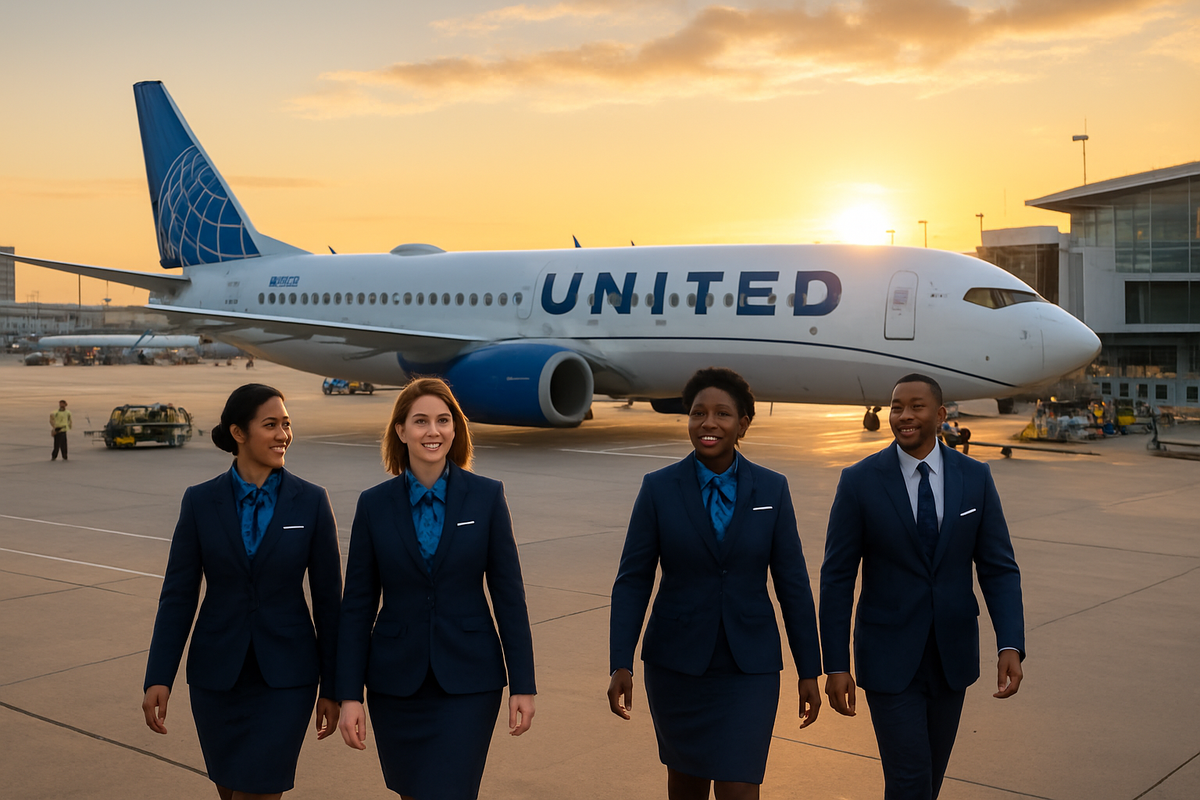
In a definitive move to stabilize its operations and finalize a years-long period of labor uncertainty, United Airlines (NASDAQ: UAL) announced a landmark tentative agreement with the Association of Flight Attendants-CWA (AFA) on March 26, 2026. The deal, reached after nearly six years of contentious negotiations and federal mediation, represents one of the most significant labor milestones for the carrier in the post-pandemic era. By securing this agreement, United effectively removes a massive "labor overhang" that has weighed on its stock valuation and operational planning, signaling a new chapter of industrial peace for the Chicago-based airline.
The immediate implications of the agreement are twofold: it provides a clear roadmap for United’s cost structure through 2031 and ensures that the carrier’s ambitious "United Next" expansion strategy will not be derailed by industrial action. While the financial commitments are substantial—including a $740 million pool for retroactive pay and signing bonuses—the market has reacted positively to the resolution of the dispute. Investors and analysts alike view the contract as the final piece of the puzzle for United’s labor relations, following similar deals already secured with its pilots and technicians.
The Road to TA2: A Six-Year Standoff Ends in D.C.
The path to this agreement, colloquially known as "TA2," was characterized by intense friction and high-stakes maneuvering. Negotiations began in earnest in 2020 but were hampered by the global pandemic and subsequent economic volatility. By late 2023, the AFA, led by International President Sara Nelson, requested assistance from the National Mediation Board (NMB) after progress stalled on key economic issues. Tensions reached a fever pitch in August 2024, when United flight attendants voted with a staggering 99.99% majority to authorize a strike—a move that, while restricted by the Railway Labor Act, signaled a workforce at its breaking point.
The final breakthrough occurred during a marathon four-day mediated session in Washington, D.C., from March 24 to March 27, 2026. Key players, including United CEO Scott Kirby and NMB mediators, worked through the night to bridge the gap on "quality of life" issues and industry-leading wages. The resulting five-year contract includes immediate double-digit raises and a path for top-tier flight attendants to reach $100 per hour by the end of the term. Notably, the deal introduces "boarding pay" and "sit pay"—long-standing demands of the union—which compensate attendants for time spent on the ground between flights.
Winners and Losers: Financial Stability vs. Near-Term Margin Pressure
The primary beneficiary of this deal is undoubtedly United Airlines (NASDAQ: UAL) itself. By locking in labor costs, the company can now provide more accurate long-term guidance to Wall Street. CFO Michael Leskinen has noted that while the $740 million signing bonus pool will create a one-time drag on quarterly earnings, the ongoing costs were largely anticipated in the company’s 2026 EPS guidance. The removal of the "strike threat" discount on the stock is expected to narrow the valuation gap between United and its peers.
Conversely, the deal places renewed pressure on competitors like Delta Air Lines (NYSE: DAL) and American Airlines (NASDAQ: AAL). While American ratified its contract in late 2024, United’s "industry-leading" rates may force American and Southwest Airlines (NYSE: LUV) to revisit their own pay scales sooner than expected to remain competitive in the labor market. Delta, which remains the only major non-unionized carrier among the "Big Three," will likely have to implement a proactive raise in 2026 to match United’s new benchmarks and prevent renewed unionization drives among its own workforce.
A New Era for Labor Relations in the Aviation Industry
This agreement fits into a broader trend of "labor resurgence" that has swept the aviation industry since 2023. Following massive contracts for pilots at United, Delta, and American, flight attendants across the sector have demanded their share of the industry's record revenues. The United deal effectively sets the "new gold standard" for flight attendant compensation in the United States, marking a shift from the concessions of the early 2000s to a period of significant wage growth and improved work-life balance.
The deal also highlights the enduring relevance of the Railway Labor Act (RLA) in preventing major transport disruptions. Despite years of picketing and strike authorizations, the mediated process forced both parties to stay at the table until a compromise was reached. This outcome serves as a historical precedent, mirroring the 2024 settlements at Southwest and American, and confirms that the federal government remains a critical stakeholder in maintaining the stability of the U.S. national airspace.
Looking Ahead: Operational Visibility and Strategic Pivots
With the labor dispute settled, United is now free to focus entirely on its "United Next" strategy, which involves the integration of hundreds of new narrow-body aircraft and a push into more premium international markets. The operational visibility provided by a five-year contract allows the airline to optimize its scheduling and staffing without the looming fear of a "Day of Action" or work slowdowns. In the short term, the market will be watching for the formal ratification vote by the AFA membership, expected to conclude in late April 2026.
Strategic challenges remain, however. As labor costs rise across the industry, United and its peers will likely need to find new ways to maintain margins, potentially through higher airfares or increased ancillary revenue. The carrier must also manage the logistical challenge of training thousands of new hires to staff its expanding fleet, all while maintaining the high service standards promised to premium travelers. The ability to execute on these growth plans without the distraction of a hostile workforce is a significant strategic advantage that cannot be overstated.
Final Assessment: A Milestone for Investors and Employees
The March 2026 agreement between United Airlines and the AFA is a watershed moment for the carrier. It successfully balances the need for competitive wages with the company's requirement for long-term fiscal predictability. For the employees, it represents a hard-fought victory that addresses decades of stagnant pay and recognizes the essential nature of their role in the modern travel ecosystem. For the market, it eliminates the last major piece of labor uncertainty that has clouded United’s investment thesis for the past half-decade.
Moving forward, investors should keep a close eye on United’s unit cost (CASM-ex) trends as the new pay scales take effect. The ultimate success of this deal will be measured by United’s ability to turn a satisfied workforce into a competitive advantage, driving higher customer satisfaction scores and brand loyalty. As the "labor overhang" dissipates, the focus returns to the fundamentals: fleet renewal, international expansion, and the ongoing battle for the premium traveler in an increasingly consolidated industry.
This content is intended for informational purposes only and is not financial advice.