As the Q2 earnings season wraps, let’s dig into this quarter’s best and worst performers in the consumer subscription industry, including Netflix (NASDAQ: NFLX) and its peers.
Consumers today expect goods and services to be hyper-personalized and on demand. Whether it be what music they listen to, what movie they watch, or even finding a date, online consumer businesses are expected to delight their customers with simple user interfaces that magically fulfill demand. Subscription models have further increased usage and stickiness of many online consumer services.
The 7 consumer subscription stocks we track reported a mixed Q2. As a group, revenues beat analysts’ consensus estimates by 1.6% while next quarter’s revenue guidance was 2.4% below.
While some consumer subscription stocks have fared somewhat better than others, they have collectively declined. On average, share prices are down 2.6% since the latest earnings results.
Weakest Q2: Netflix (NASDAQ: NFLX)
Launched by Reed Hastings as a DVD mail rental company until its famous pivot to streaming in 2007, Netflix (NASDAQ: NFLX) is a pioneering streaming content platform.
Netflix reported revenues of $12.56 billion, up 13.4% year on year. This print was in line with analysts’ expectations, but overall, it was a softer quarter for the company with EPS guidance for next quarter missing analysts’ expectations and full-year revenue guidance meeting analysts’ expectations.
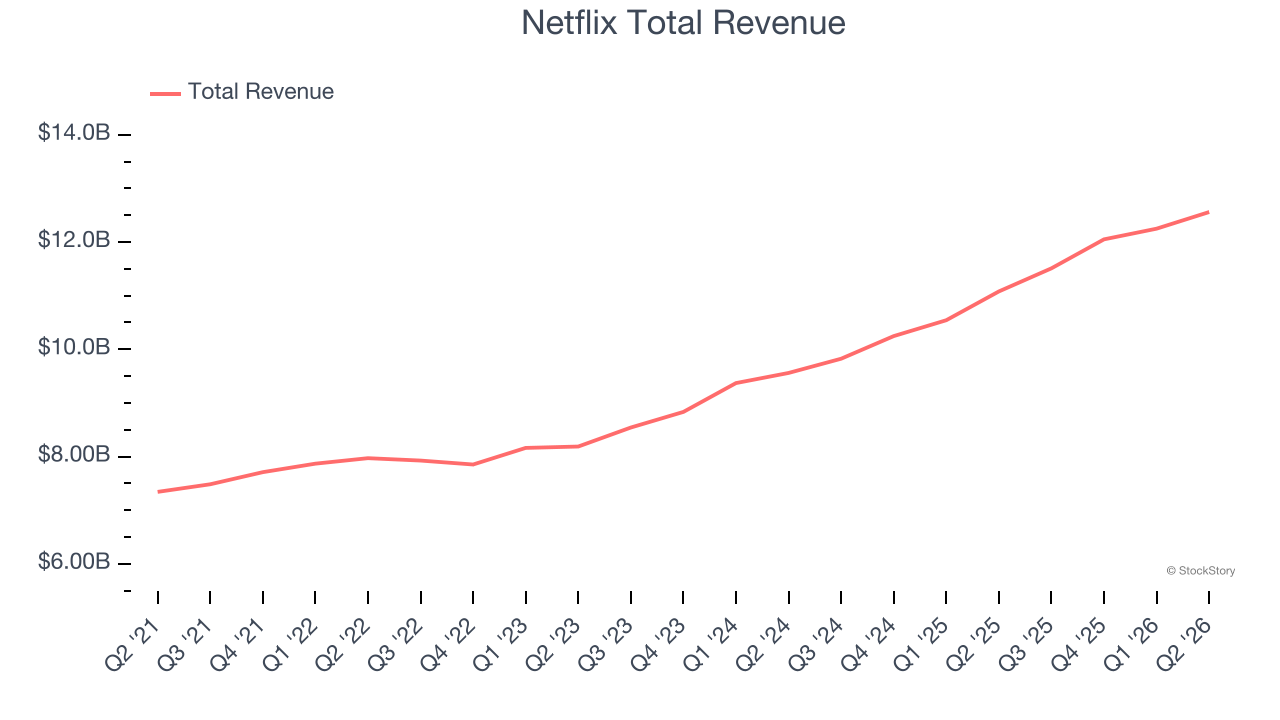
Netflix delivered the weakest full-year guidance update of the whole group. Interestingly, the stock is up 7.7% since reporting and currently trades at $80.09.
Is now the time to buy Netflix? Access our full analysis of the earnings results here, it’s free.
Best Q2: Roku (NASDAQ: ROKU)
With a name meaning six in Japanese because it was the founder's sixth company that he started, Roku (NASDAQ: ROKU) makes hardware players that offer access to various online streaming TV services.
Roku reported revenues of $1.35 billion, up 21.9% year on year, outperforming analysts’ expectations by 4.4%. The business had an exceptional quarter with an impressive beat of analysts’ EBITDA estimates and solid growth in its requests.
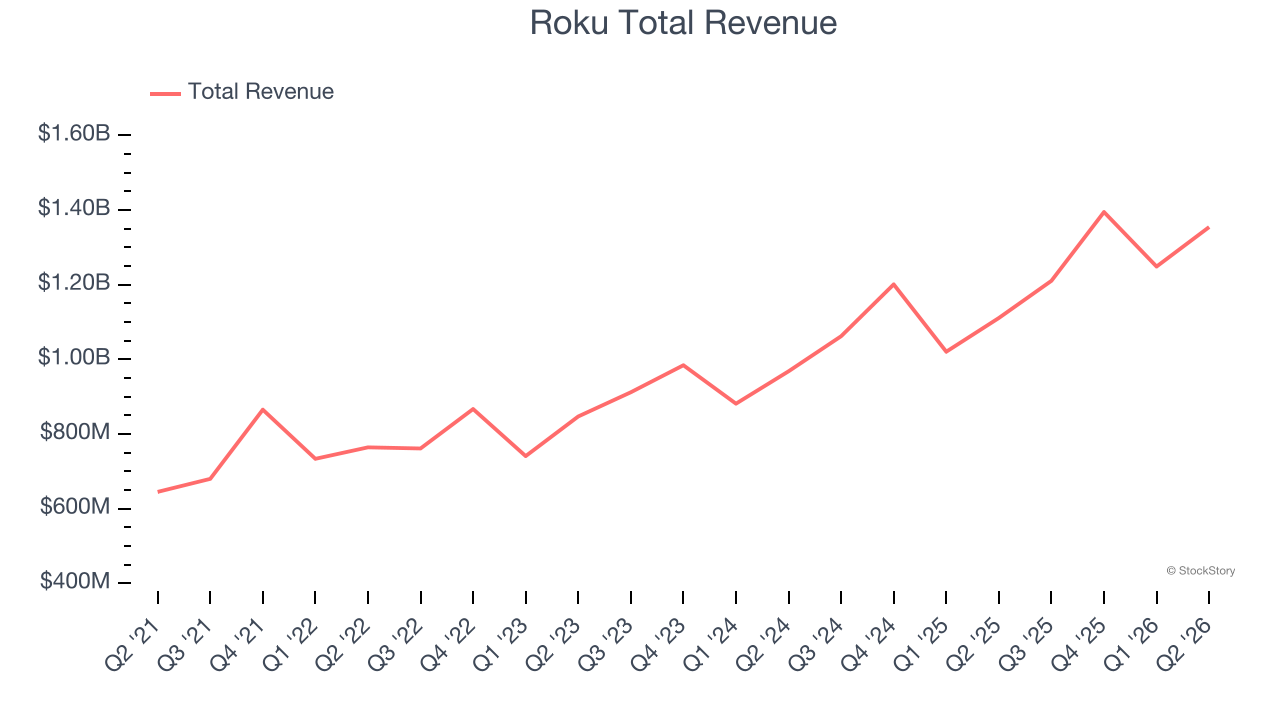
The market seems content with the results as the stock is up 4.5% since reporting. It currently trades at $156.78.
Is now the time to buy Roku? Access our full analysis of the earnings results here, it’s free.
Bumble (NASDAQ: BMBL)
Started by the co-founder of Tinder, Whitney Wolfe Herd, Bumble (NASDAQ: BMBL) is a leading dating app built with women at the center.
Bumble reported revenues of $210.5 million, down 15.2% year on year, in line with analysts’ expectations. It was a slower quarter as it posted a decline in its buyers and revenue guidance for next quarter missing analysts’ expectations significantly.
As expected, the stock is down 7.6% since the results and currently trades at $2.81.
Read our full analysis of Bumble’s results here.
Chegg (NYSE: CHGG)
Started as a physical textbook rental service, Chegg (NYSE: CHGG) is now a digital platform addressing student pain points by providing study and academic assistance.
Chegg reported revenues of $51.85 million, down 50.7% year on year. This print beat analysts’ expectations by 4.8%. Zooming out, it was a slower quarter as it logged revenue guidance for next quarter missing analysts’ expectations significantly and EBITDA guidance for next quarter missing analysts’ expectations significantly.
Chegg delivered the biggest analyst estimate beat but had the weakest guidance update and slowest revenue growth among its peers. The stock is down 25% since reporting and currently trades at $0.77.
Read our full, actionable report on Chegg here, it’s free.
Duolingo (NASDAQ: DUOL)
Founded by a Carnegie Mellon computer science professor and his Ph.D. student, Duolingo (NASDAQ: DUOL) is a mobile app helping people learn new languages.
Duolingo reported revenues of $298.5 million, up 18.3% year on year. This number surpassed analysts’ expectations by 0.9%. Overall, it was a strong quarter as it also produced an impressive beat of analysts’ EBITDA estimates and full-year EBITDA guidance exceeding analysts’ expectations.
The stock is up 8.8% since reporting and currently trades at $147.18.
Read our full, actionable report on Duolingo here, it’s free.
Market Update
Over the past year, investors have been forced to repeatedly answer the same question: what is the market’s biggest risk? The answer has changed several times, and each shift has reshaped market leadership.
Late in 2025 and early 2026, artificial intelligence became the market’s primary uncertainty. Investors questioned whether AI would erode software pricing power and weaken competitive moats as AI made it easier to replicate once-differentiated products.
By the spring, technology took a back seat to geopolitics. The U.S. conflict with Iran briefly became the market’s dominant narrative, raising concerns about oil prices, inflation, and global growth. But as energy markets remained orderly and fears of a prolonged supply disruption faded, investors quickly turned their focus back to fundamentals.
Want to invest in winners with rock-solid fundamentals? Check out our 9 Best Market-Beating Stocks and add them to your watchlist. These companies are poised for growth regardless of the political or macroeconomic climate.