
Shareholders of PennyMac Mortgage Investment Trust would probably like to forget the past six months even happened. The stock dropped 23.9% and now trades at $9.41. This was partly driven by its softer quarterly results and may have investors wondering how to approach the situation.
Is now the time to buy PennyMac Mortgage Investment Trust, or should you be careful about including it in your portfolio? Get the full breakdown from our expert analysts, it’s free.
Why Do We Think PennyMac Mortgage Investment Trust Will Underperform?
Despite the more favorable entry price, we’re passing on PennyMac Mortgage Investment Trust for now. Here are three reasons why PMT doesn’t excite us, plus one stock we’d rather own.
1. Revenue Spiraling Downwards
Two primary revenue streams drive bank earnings. While net interest income, which is earned by charging higher rates on loans than paid on deposits, forms the foundation, fee-based services across banking, credit, wealth management, and trading operations provide additional income.
Over the last five years, PennyMac Mortgage Investment Trust’s demand was weak and its revenue declined by 14.3% per year. This wasn’t a great result and signals it’s a low quality business.
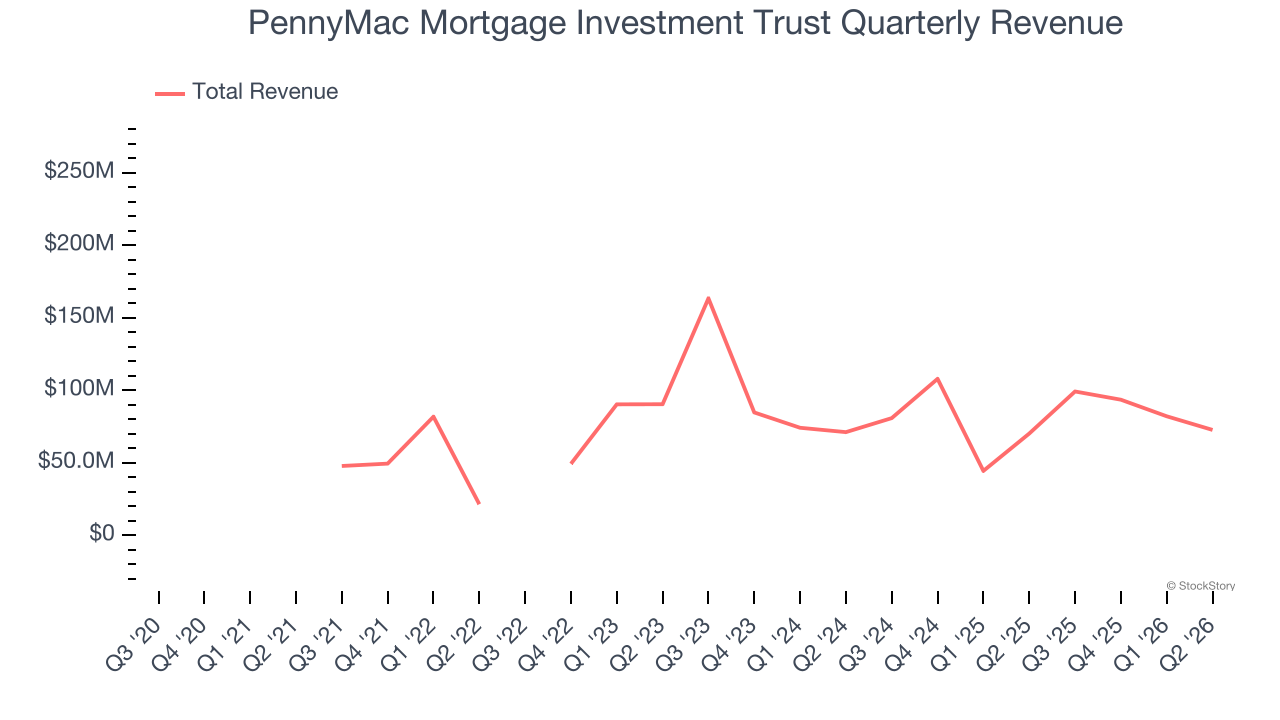 Note: Quarters not shown were determined to be outliers because they were impacted by outsized investment gains/losses that are not indicative of the recurring fundamentals of the business.
2. EPS Trending Down
Analyzing the long-term change in earnings per share (EPS) shows whether a company’s incremental sales were profitable — for example, revenue could be inflated through excessive spending on advertising and promotions.
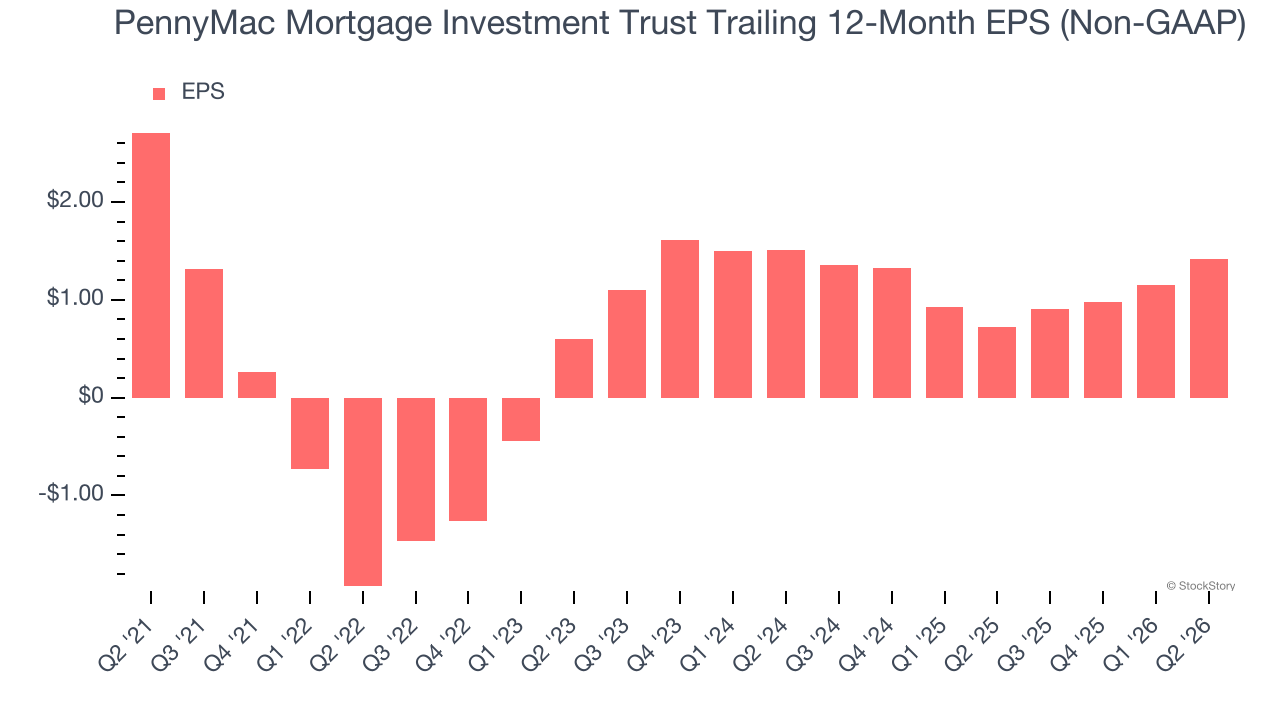
Sadly for PennyMac Mortgage Investment Trust, its EPS and revenue declined by 12.1% and 14.3% annually over the last five years. We tend to steer our readers away from companies with falling revenue and EPS, where diminishing earnings could imply changing secular trends and preferences. If the tide turns unexpectedly, PennyMac Mortgage Investment Trust’s low margin of safety could leave its stock price susceptible to large downswings.
3. Declining TBVPS Reflects Erosion of Asset Value
In the banking industry, tangible book value per share (TBVPS) provides the clearest picture of shareholder value, as it focuses on concrete assets while excluding intangible items that may not hold value during challenging times.
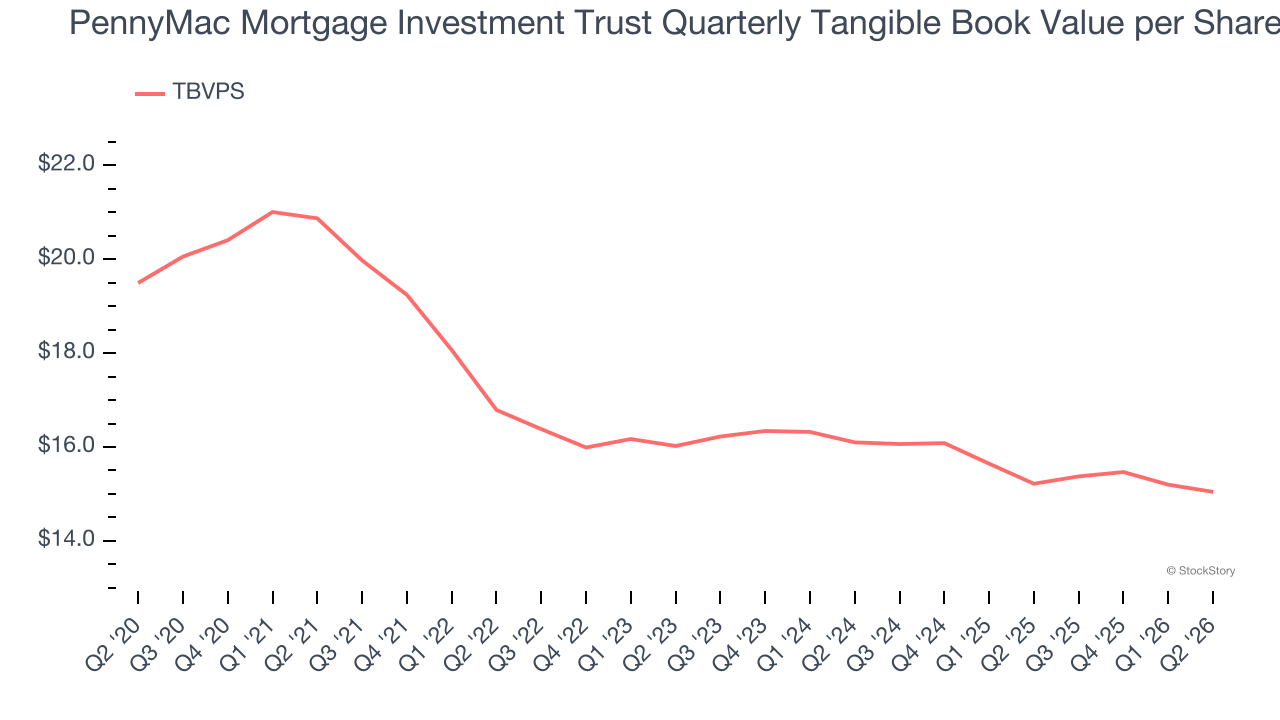
Disappointingly for investors, PennyMac Mortgage Investment Trust’s TBVPS declined at a 3.3% annual clip over the last two years.
Final Judgment
PennyMac Mortgage Investment Trust falls short of our quality standards. After the recent drawdown, the stock trades at 0.7× forward P/B (or $9.41 per share). While this valuation is optically cheap, the potential downside is huge given its shaky fundamentals. There are better investments elsewhere. We’d suggest looking at one of our all-time favorite software stocks.
High-Quality Stocks for All Market Conditions
ONE MORE THING: Top 6 Stocks for This Week. This market is separating quality stocks from expensive ones fast. AI is taking down whole sectors with no warning. In a rotation this fast, you need more than a list of good companies.
Our AI system flagged Palantir before it ran 1,662% between October 2022 and February 2026. AppLovin before it ran 753% between February 2024 and February 2026. Nvidia before it ran 1,178% between January 2023 and February 2026. Each week it produces 6 new names that pass the same tests. Get Our Top 6 Stocks for Free HERE.
Stocks that have made our list include now familiar names such as Nvidia (+1,460% between June 2020 and June 2025) as well as under-the-radar businesses like the once-small-cap company Comfort Systems (+1,154% between June 2020 and June 2025). Find your next big winner with StockStory today.