
Pangaea Logistics (NASDAQ: PANL) fell short of the market’s revenue expectations in Q2 CY2026, but sales rose 19.4% year on year to $187.1 million. Its non-GAAP profit of $0.26 per share was 10.6% above analysts’ consensus estimates.
Is now the time to buy Pangaea? Find out by accessing our full research report, it’s free.
Pangaea (PANL) Q2 CY2026 Highlights:
- Revenue: $187.1 million vs analyst estimates of $192.8 million (19.4% year-on-year growth, 2.9% miss)
- Adjusted EPS: $0.26 vs analyst estimates of $0.24 (10.6% beat)
- Adjusted EBITDA: $35.01 million vs analyst estimates of $33.96 million (18.7% margin, 3.1% beat)
- Operating Margin: 11.4%, up from 2.3% in the same quarter last year
- Free Cash Flow Margin: 12%, up from 8.5% in the same quarter last year
- Market Capitalization: $485.4 million
"Our strong execution, fleet positioning and favorable market conditions combined to generate robust year-over-year growth on both our top and bottom line in the second quarter," stated Mads Boye Petersen, President and Chief Executive Officer of Pangaea Logistics Solutions.
Company Overview
Established in 1996, Pangaea Logistics (NASDAQ: PANL) specializes in global logistics and transportation services, focusing on the shipment of dry bulk cargoes.
Revenue Growth
A company’s long-term performance is an indicator of its overall quality. Any business can experience short-term success, but top-performing ones enjoy sustained growth for years. Thankfully, Pangaea’s 7.8% annualized revenue growth over the last five years was decent. Its growth was slightly above the average industrials company and shows its offerings resonate with customers.
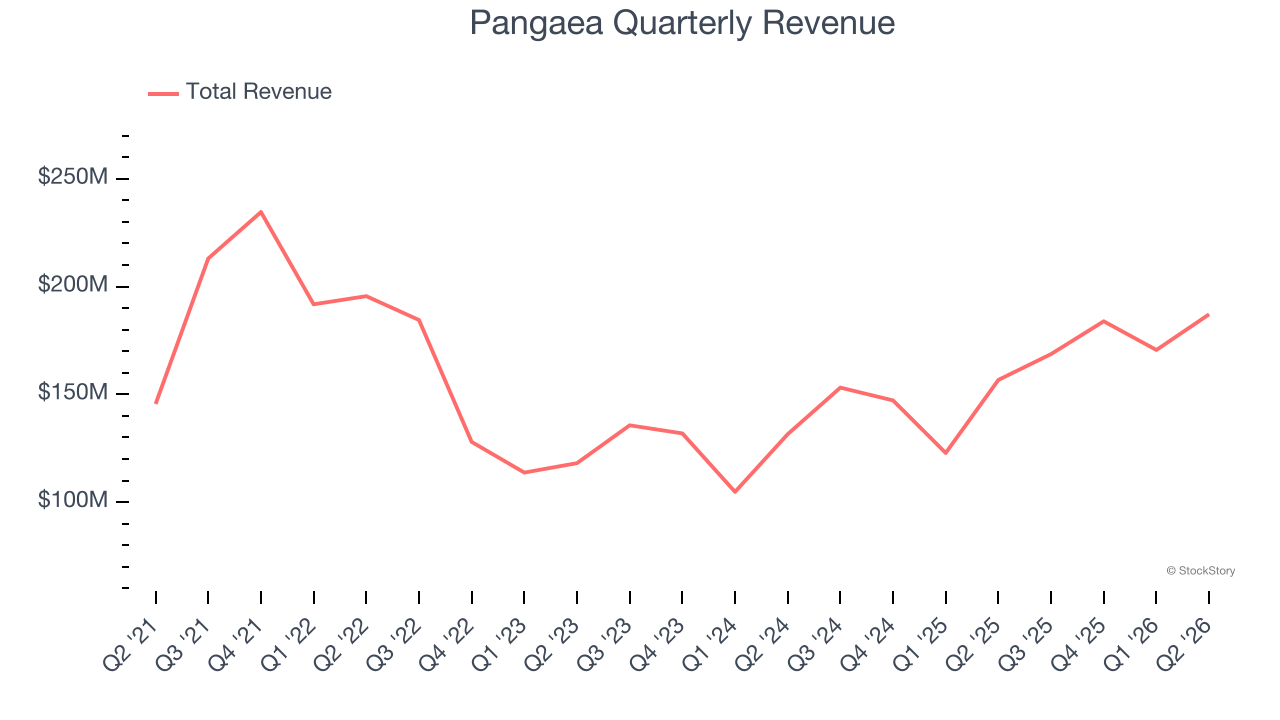
We at StockStory place the most emphasis on long-term growth, but within industrials, a half-decade historical view may miss cycles, industry trends, or a company capitalizing on catalysts such as a new contract win or a successful product line. Pangaea’s annualized revenue growth of 18.7% over the last two years is above its five-year trend, suggesting its demand recently accelerated. 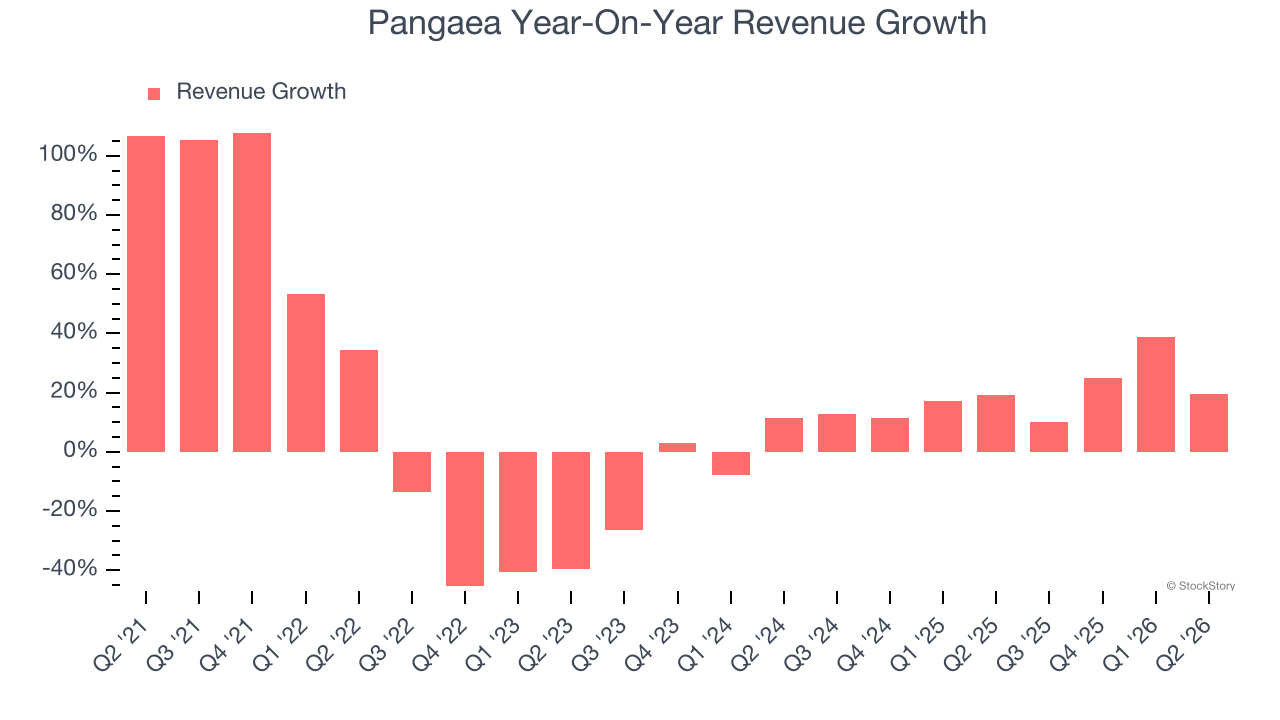
This quarter, Pangaea’s revenue grew by 19.4% year on year to $187.1 million but fell short of Wall Street’s estimates.
Looking ahead, sell-side analysts expect revenue to grow 6.5% over the next 12 months, a deceleration versus the last two years. This projection is underwhelming and indicates its products and services will face some demand challenges.
ONE MORE THING: 3 Hidden Platforms Growing 3X Faster than Amazon, Google, and PayPal. Amazon, Google, and Meta all followed the same playbook: Dominate an ignored market. Build an unbeatable moat. Scale until you’re unstoppable.
These three platforms are running that exact playbook right now. The early investors in Amazon made fortunes. The early investors in these could do the same. Get All 3 Stocks Here for FREE.
Operating Margin
Operating margin is one of the best measures of profitability because it tells us how much money a company takes home after procuring and manufacturing its products, marketing and selling those products, and most importantly, keeping them relevant through research and development.
Pangaea has managed its cost base well over the last five years. It demonstrated solid profitability for an industrials business, producing an average operating margin of 10.4%. This result was particularly impressive because of its low gross margin, which is mostly a factor of what it sells and takes huge shifts to move meaningfully. Companies have more control over their operating margins, and it’s a show of well-managed operations if they’re high when gross margins are low.
Analyzing the trend in its profitability, Pangaea’s operating margin decreased by 4.9 percentage points over the last five years. This raises questions about the company’s expense base because its revenue growth should have given it leverage on its fixed costs, resulting in better economies of scale and profitability.
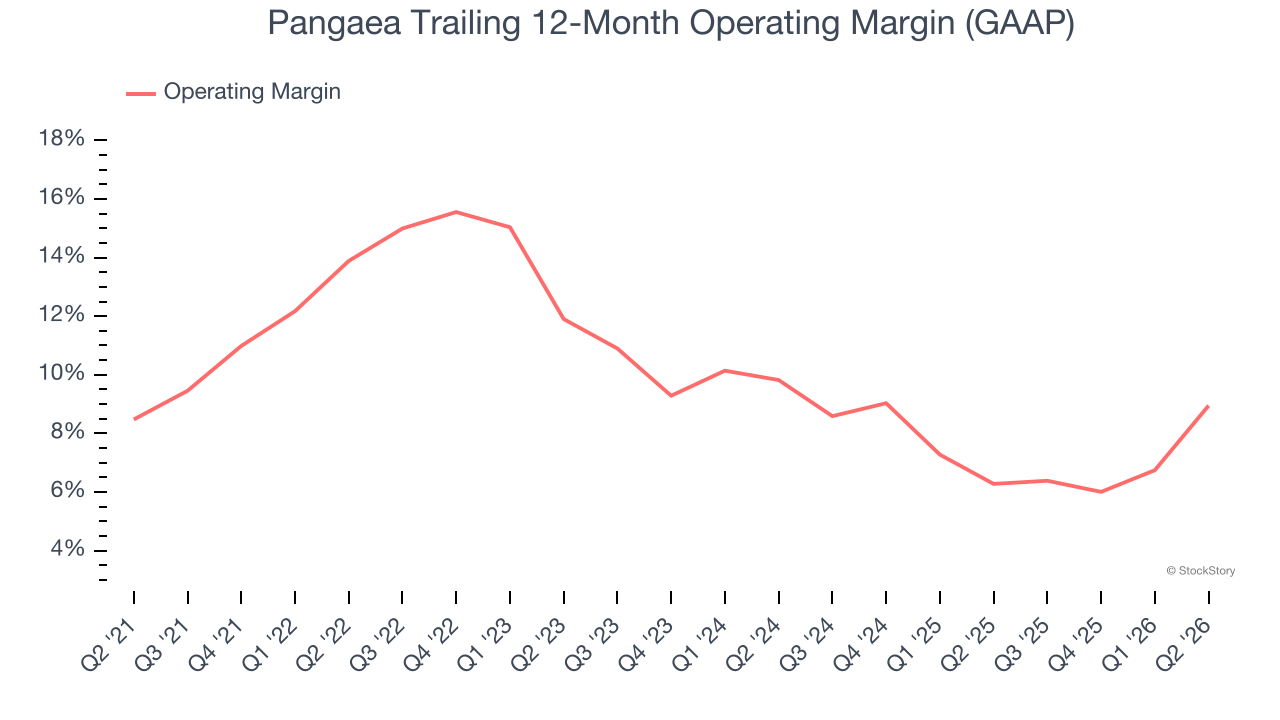
In Q2, Pangaea generated an operating margin profit margin of 11.4%, up 9.1 percentage points year on year. The increase was driven by stronger leverage on its cost of sales (not higher efficiency with its operating expenses), as indicated by its larger rise in gross margin.
Earnings Per Share
Revenue trends explain a company’s historical growth, but the long-term change in earnings per share (EPS) points to the profitability of that growth — for example, a company could inflate its sales through excessive spending on advertising and promotions.
Pangaea’s full-year EPS dropped 132%, or 23.4% annually, over the last four years. We tend to steer our readers away from companies with falling revenue and EPS, where diminishing earnings could imply changing secular trends and preferences. If the tide turns unexpectedly, Pangaea’s low margin of safety could leave its stock price susceptible to large downswings.
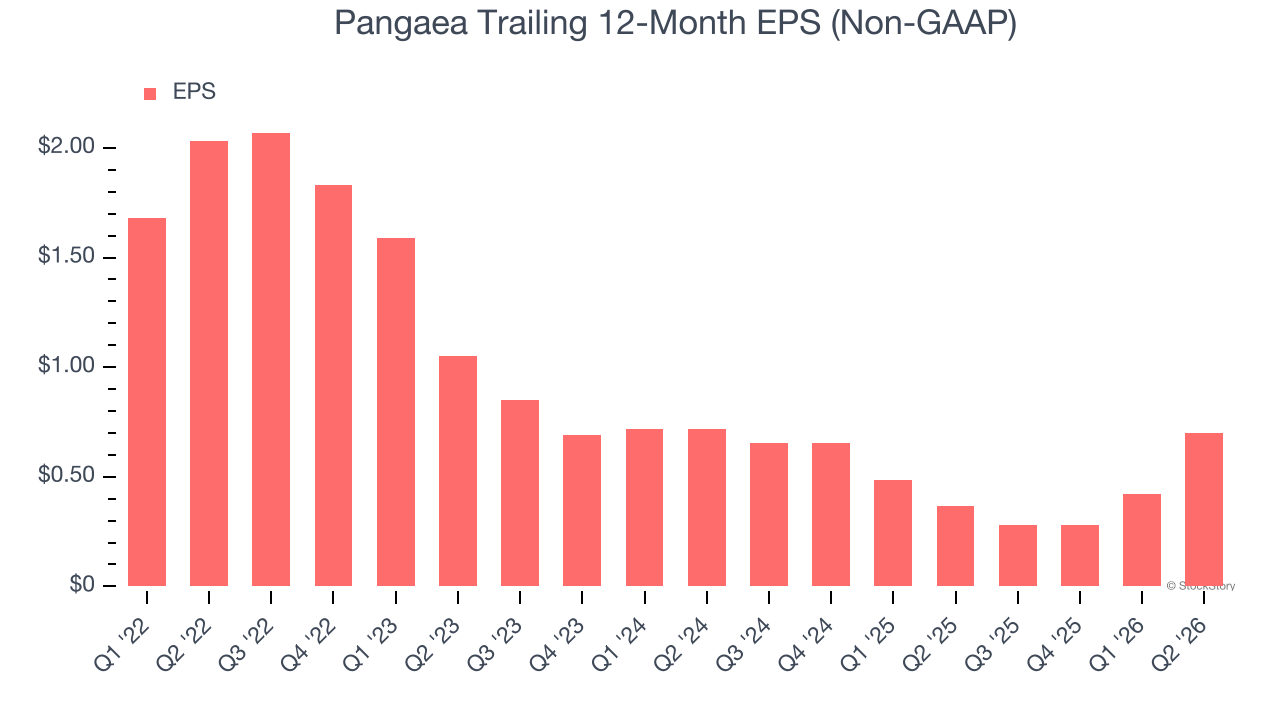
Like with revenue, we analyze EPS over a more recent period because it can provide insight into an emerging theme or development for the business.
Sadly for Pangaea, its EPS declined by 1.4% annually over the last two years while its revenue grew by 18.7%. This tells us the company became less profitable on a per-share basis as it expanded.
Diving into the nuances of Pangaea’s earnings can give us a better understanding of its performance. A two-year view shows Pangaea has diluted its shareholders, growing its share count by 41.3%. This dilution overshadowed its increased operational efficiency and has led to lower per share earnings. 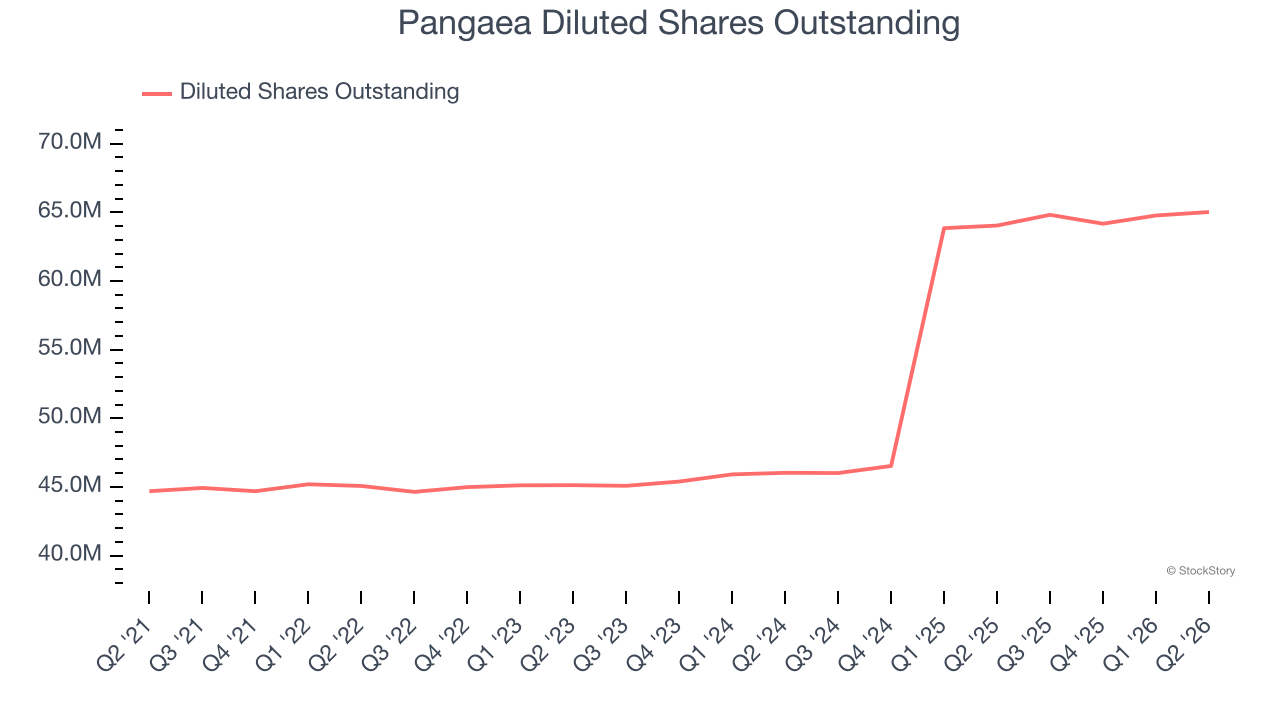
In Q2, Pangaea reported adjusted EPS of $0.26, up from negative $0.02 in the same quarter last year. This print easily cleared analysts’ estimates, and shareholders should be content with the results. Over the next 12 months, Wall Street expects Pangaea’s full-year EPS to grow 27.9% from $0.70 to $0.90.
Key Takeaways from Pangaea’s Q2 Results
It was good to see Pangaea beat analysts’ EPS expectations this quarter. We were also happy its EBITDA outperformed Wall Street’s estimates. On the other hand, its revenue missed. Overall, this was a weaker quarter. The stock traded down 4% to $7.07 immediately after reporting.
Is Pangaea an attractive investment opportunity at the current price? What happened in the latest quarter matters, but not as much as longer-term business quality and valuation, when deciding whether to invest in this stock. We cover that in our actionable full research report which you can read here (it’s free).