
Navient has gotten torched over the last six months - since November 2025, its stock price has dropped 25.1% to $8.79 per share. This may have investors wondering how to approach the situation.
Is there a buying opportunity in Navient, or does it present a risk to your portfolio? See what our analysts have to say in our full research report, it’s free.
Why Do We Think Navient Will Underperform?
Despite the more favorable entry price, we're sitting this one out for now. Here are three reasons there are better opportunities than NAVI and a stock we'd rather own.
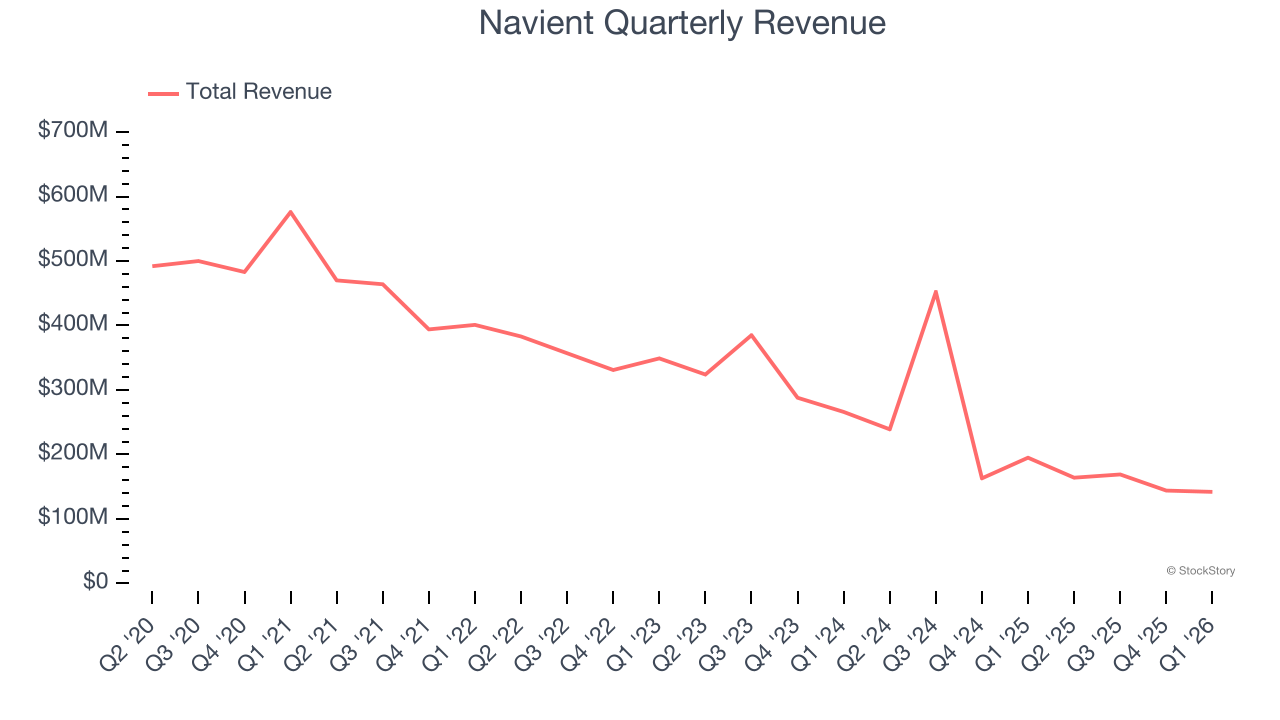
1. Revenue Spiraling Downwards
Reviewing a company’s long-term sales performance reveals insights into its quality. Even a bad business can shine for one or two quarters, but a top-tier one grows for years.
Navient struggled to consistently generate demand over the last five years as its revenue dropped at a 21.3% annual rate. This was below our standards and is a sign of poor business quality.
2. EPS Trending Down
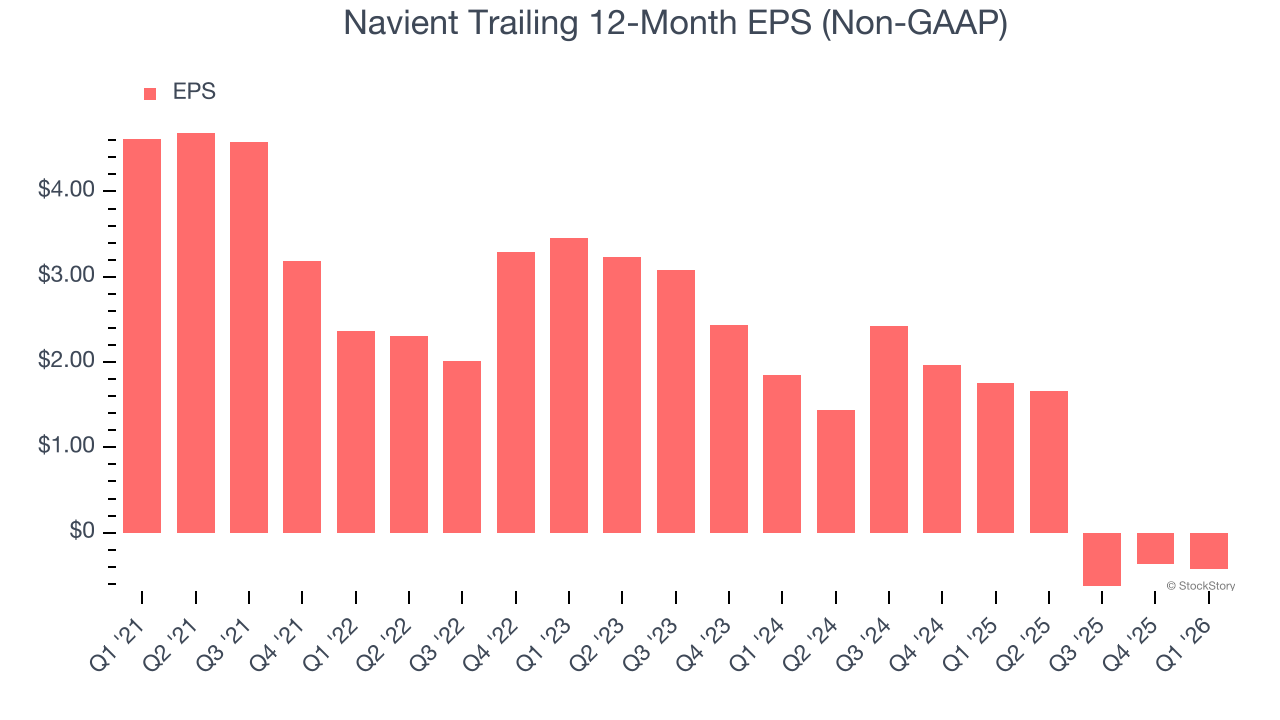
We track the long-term change in earnings per share (EPS) because it highlights whether a company’s growth is profitable.
Sadly for Navient, its EPS and revenue declined by 15.9% and 21.3% annually over the last five years. We tend to steer our readers away from companies with falling revenue and EPS, where diminishing earnings could imply changing secular trends and preferences. If the tide turns unexpectedly, Navient’s low margin of safety could leave its stock price susceptible to large downswings.
The debt-to-equity ratio is a widely used measure to assess a company's balance sheet health. A higher ratio means that a business aggressively financed its growth with debt. This can result in higher earnings (if the borrowed funds are invested profitably) but also increases risk.
If debt levels are too high, there could be difficulties in meeting obligations, especially during economic downturns or periods of rising interest rates if the debt has variable-rate payments.
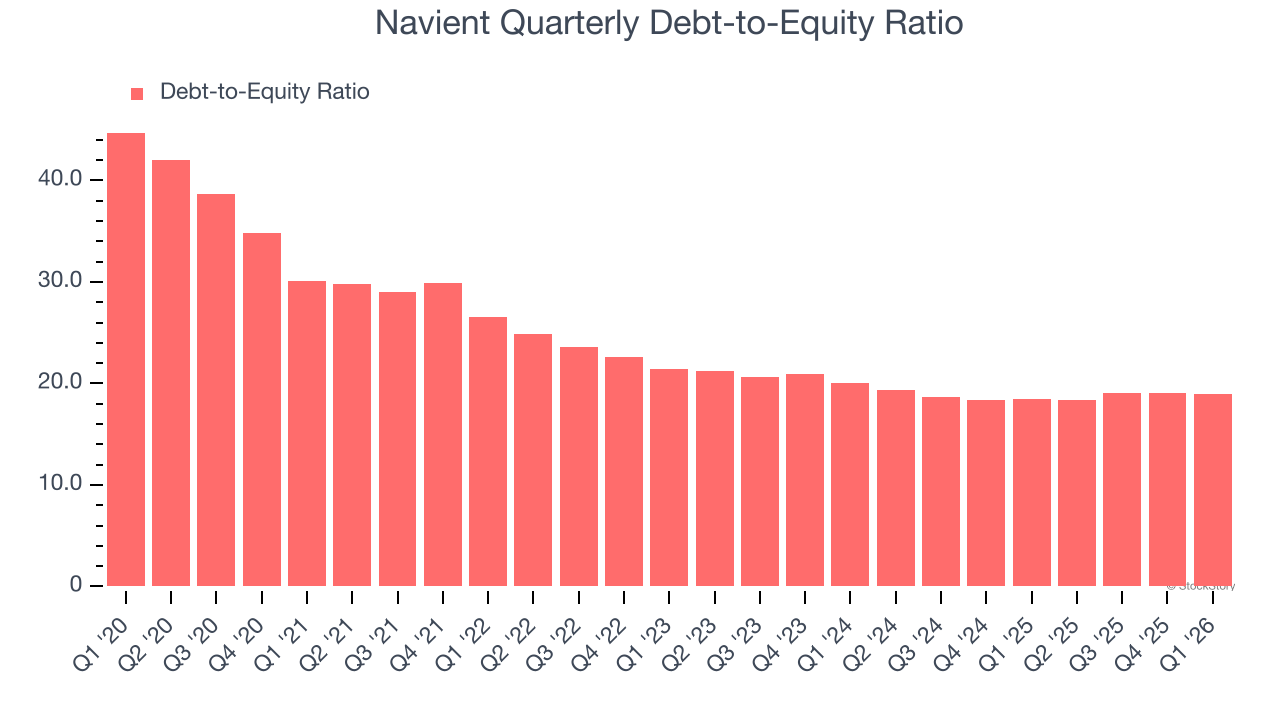
Navient currently has $45.2 billion of debt and $2.38 billion of shareholder's equity on its balance sheet, and over the past four quarters, has averaged a debt-to-equity ratio of 18.9×. We think this is dangerous - for a financials business, anything above 3.5× raises red flags.
Final Judgment
We cheer for all companies supporting the economy, but in the case of Navient, we’ll be cheering from the sidelines. Following the recent decline, the stock trades at 11.8× forward P/E (or $8.79 per share). This valuation tells us a lot of optimism is priced in - we think there are better opportunities elsewhere. We’d recommend looking at a fast-growing restaurant franchise with an A+ ranch dressing sauce.
Stocks We Would Buy Instead of Navient
ONE MORE THING: Top 5 Growth Stocks. The biggest stock winners almost always had one thing in common before they ran. Revenue growing like crazy. Meta. CrowdStrike. Broadcom. Our AI flagged all three. They returned 315%, 314%, and 455%, respectively.
Find out which 5 stocks it's flagging for this month - FREE. Get Our Top 5 Growth Stocks for Free HERE.
Stocks that have made our list include now familiar names such as Nvidia (+1,326% between June 2020 and June 2025) as well as under-the-radar businesses like the once-micro-cap company Tecnoglass (+1,754% five-year return). Find your next big winner with StockStory today.