
Over the last six months, Molson Coors shares have sunk to $41.74, producing a disappointing 7.9% loss - worse than the S&P 500’s 1.9% drop. This might have investors contemplating their next move.
Is now the time to buy Molson Coors, or should you be careful about including it in your portfolio? Get the full stock story straight from our expert analysts, it’s free.
Why Do We Think Molson Coors Will Underperform?
Despite the more favorable entry price, we're sitting this one out for now. Here are three reasons we avoid TAP and a stock we'd rather own.
1. Demand Slipping as Sales Volumes Decline
Revenue growth can be broken down into changes in price and volume (the number of units sold). While both are important, volume is the lifeblood of a successful staples business as there’s a ceiling to what consumers will pay for everyday goods; they can always trade down to non-branded products if the branded versions are too expensive.
Molson Coors’s average quarterly sales volumes have shrunk by 6.8% over the last two years. This decrease isn’t ideal because the quantity demanded for consumer staples products is typically stable. 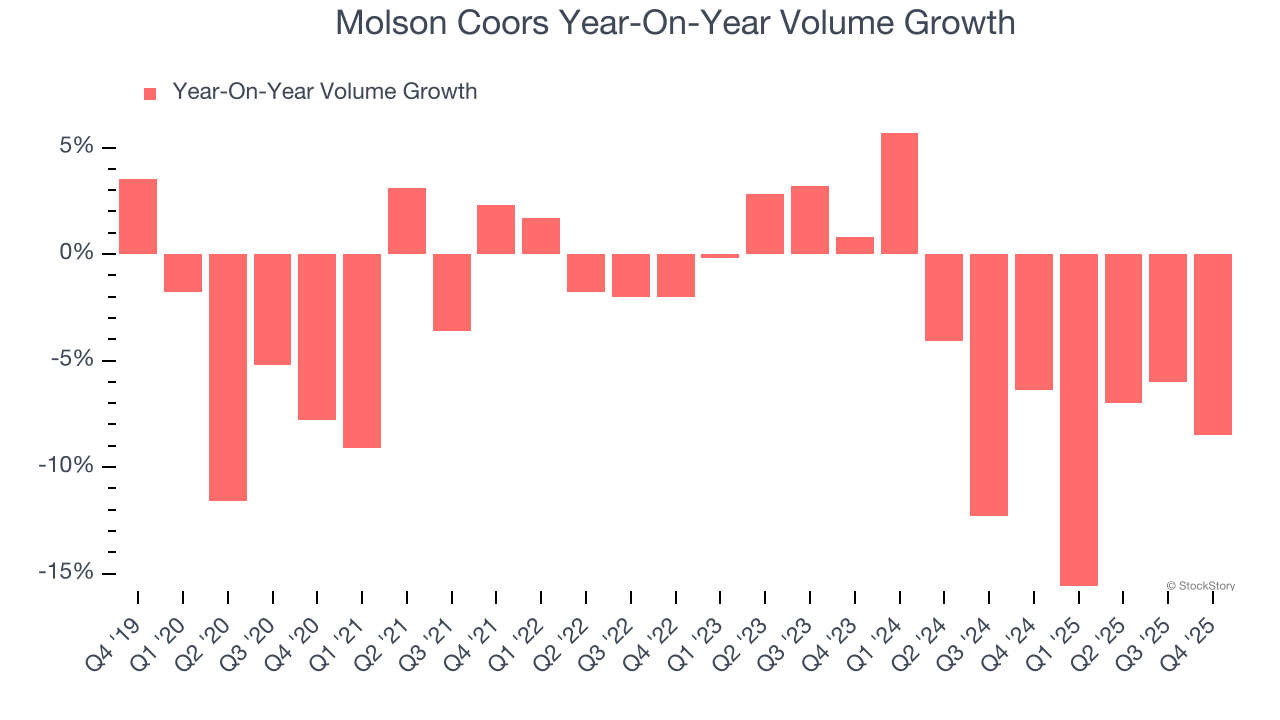
2. Shrinking Operating Margin
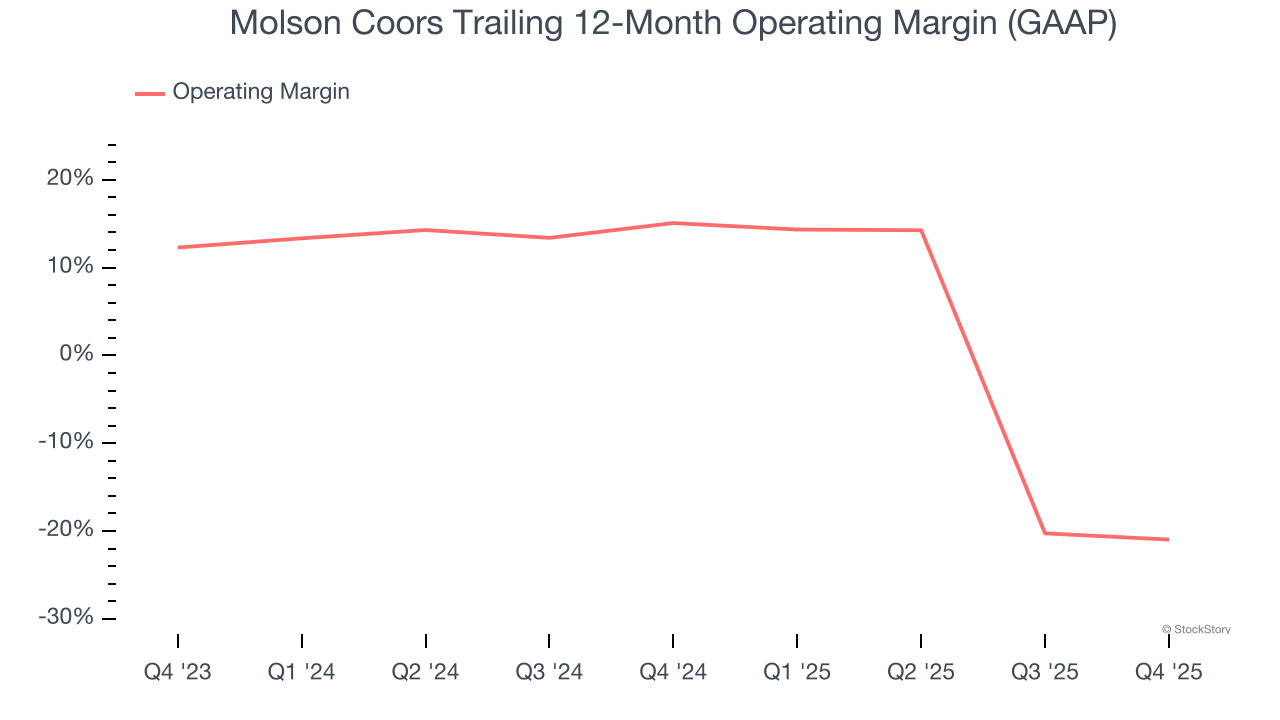
Operating margin is an important measure of profitability accounting for key expenses such as marketing and advertising, IT systems, wages, and other administrative costs.
Looking at the trend in its profitability, Molson Coors’s operating margin decreased by 36.1 percentage points over the last year. This raises questions about the company’s expense base because its revenue growth should have given it leverage on its fixed costs, resulting in better economies of scale and profitability. Molson Coors’s performance was poor no matter how you look at it - it shows that costs were rising and it couldn’t pass them onto its customers. Its operating margin for the trailing 12 months was negative 21%.
3. Previous Growth Initiatives Haven’t Paid Off Yet
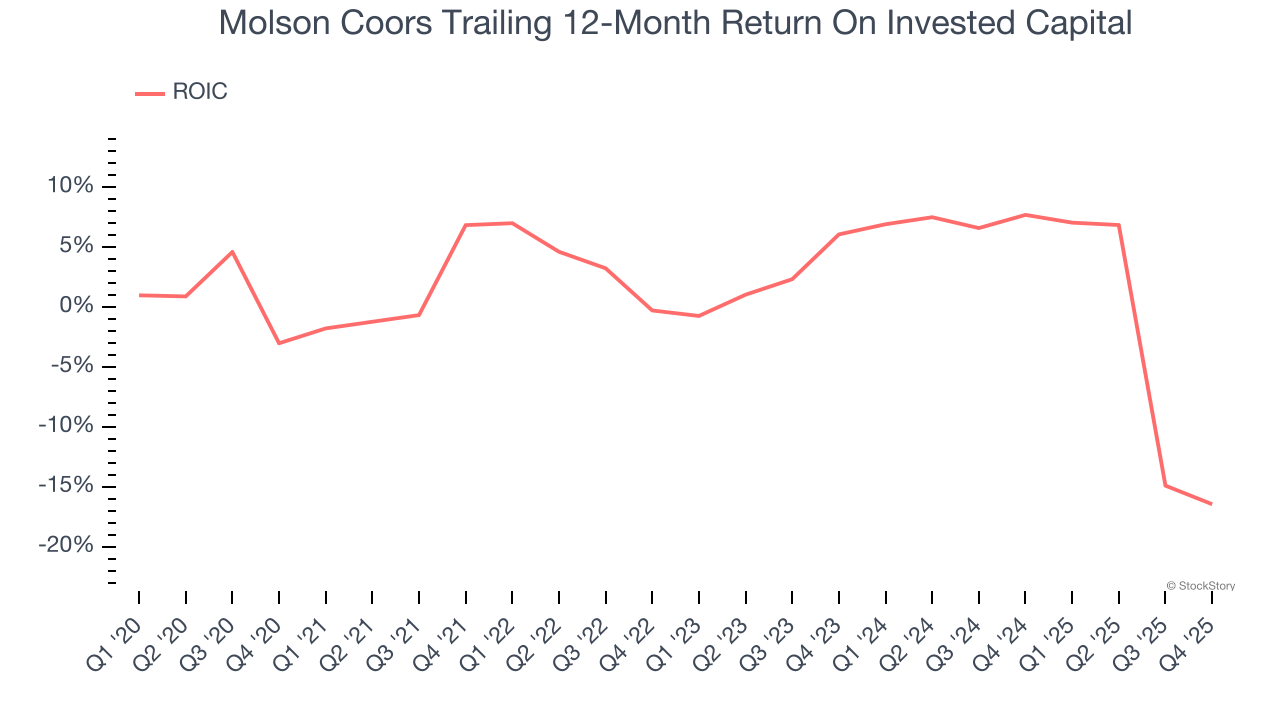
Growth gives us insight into a company’s long-term potential, but how capital-efficient was that growth? A company’s ROIC explains this by showing how much operating profit it makes compared to the money it has raised (debt and equity).
Molson Coors historically did a mediocre job investing in profitable growth initiatives. Its five-year average ROIC was 0.8%, lower than the typical cost of capital (how much it costs to raise money) for consumer staples companies.
Final Judgment
We cheer for all companies serving everyday consumers, but in the case of Molson Coors, we’ll be cheering from the sidelines. Following the recent decline, the stock trades at 8.7× forward P/E (or $41.74 per share). While this valuation is optically cheap, the potential downside is huge given its shaky fundamentals. There are better stocks to buy right now. We’d suggest looking at one of Charlie Munger’s all-time favorite businesses.
High-Quality Stocks for All Market Conditions
ALSO WORTH WATCHING: Top 5 Momentum Stocks. The best time to own a great stock is when the market is finally noticing it. These aren't just high-quality businesses. Something is happening with them right now. Elite fundamentals meeting near-term momentum — both boxes checked at the same time.
Find out which stocks our AI platform is flagging this week. See this week's Strong Momentum stocks — FREE. Get Our Strong Momentum Stocks for Free HERE.
Stocks that have made our list include now familiar names such as Nvidia (+1,326% between June 2020 and June 2025) as well as under-the-radar businesses like the once-small-cap company Exlservice (+354% five-year return). Find your next big winner with StockStory today.