What a time it’s been for Lincoln Educational. In the past six months alone, the company’s stock price has increased by a massive 78.3%, setting a new 52-week high of $39.61 per share. This was partly thanks to its solid quarterly results, and the performance may have investors wondering how to approach the situation.
Is there a buying opportunity in Lincoln Educational, or does it present a risk to your portfolio? Dive into our full research report to see our analyst team’s opinion, it’s free.
Why Do We Think Lincoln Educational Will Underperform?
We’re glad investors have benefited from the price increase, but we're sitting this one out for now. Here are three reasons you should be careful with LINC and a stock we'd rather own.
1. Weak Growth in Enrolled Students Points to Soft Demand
Revenue growth can be broken down into changes in price and volume (for companies like Lincoln Educational, our preferred volume metric is enrolled students). While both are important, the latter is the most critical to analyze because prices have a ceiling.
Lincoln Educational’s enrolled students came in at 17,046 in the latest quarter, and over the last two years, averaged 13.1% year-on-year growth. This performance was underwhelming and suggests it might have to lower prices or invest in product improvements to accelerate growth, factors that can hinder near-term profitability. 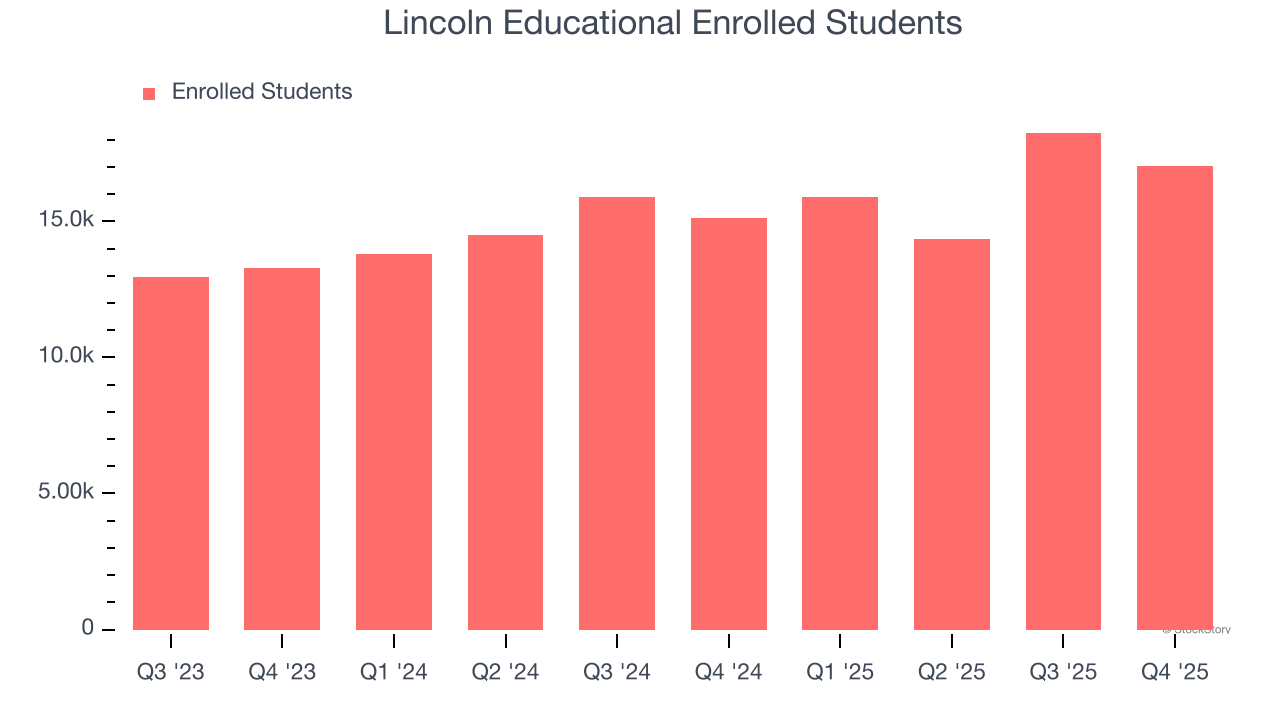
2. Cash Burn Ignites Concerns
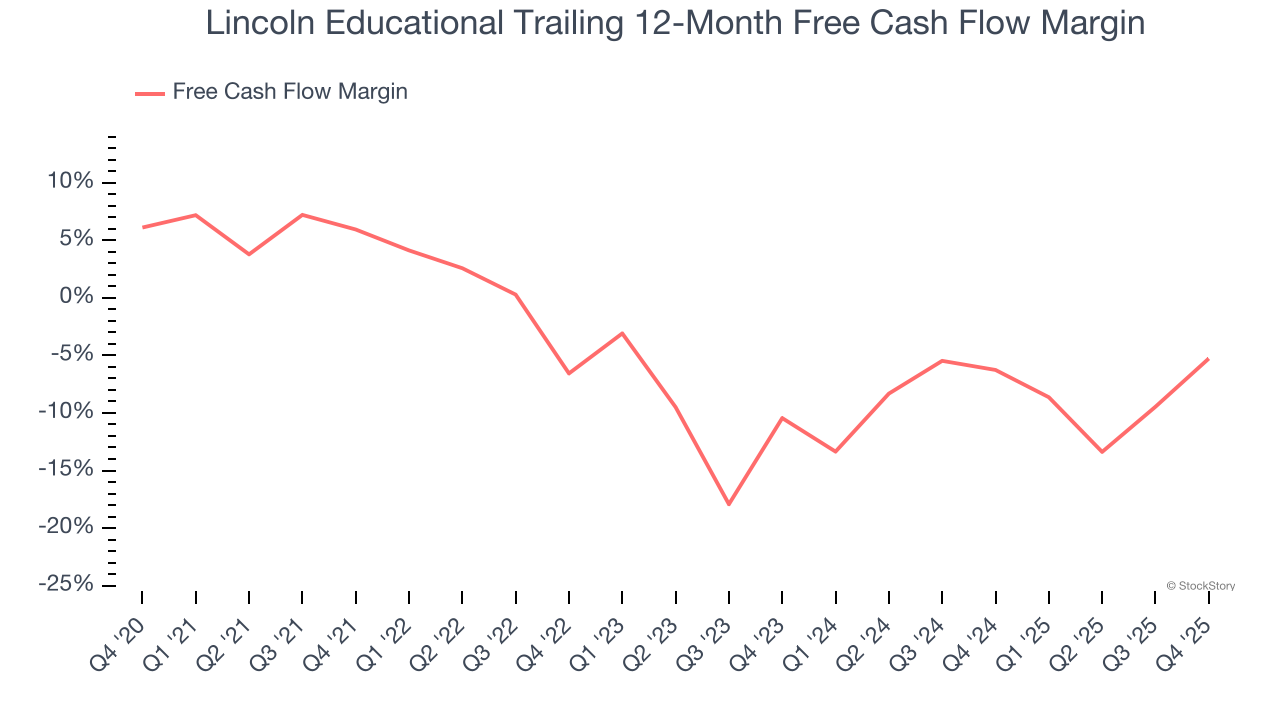
Free cash flow isn't a prominently featured metric in company financials and earnings releases, but we think it's telling because it accounts for all operating and capital expenses, making it tough to manipulate. Cash is king.
While Lincoln Educational posted positive free cash flow this quarter, the broader story hasn’t been so clean. Over the last two years, Lincoln Educational’s demanding reinvestments to stay relevant have drained its resources, putting it in a pinch and limiting its ability to return capital to investors. Its free cash flow margin averaged negative 5.7%, meaning it lit $5.73 of cash on fire for every $100 in revenue.
3. New Investments Fail to Bear Fruit as ROIC Declines
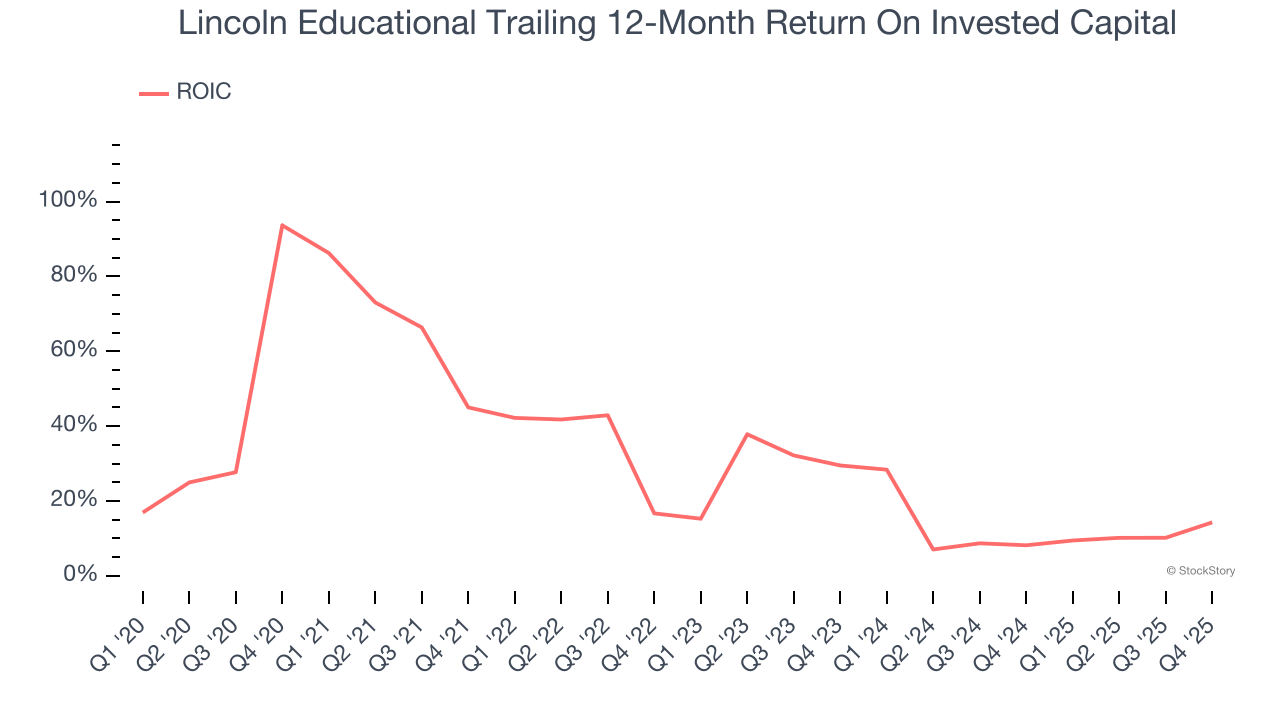
ROIC, or return on invested capital, is a metric showing how much operating profit a company generates relative to the money it has raised (debt and equity).
We like to invest in businesses with high returns, but the trend in a company’s ROIC is what often surprises the market and moves the stock price. Over the last few years, Lincoln Educational’s ROIC has unfortunately decreased significantly. Paired with its already low returns, these declines suggest its profitable growth opportunities are few and far between.
Final Judgment
We cheer for all companies serving everyday consumers, but in the case of Lincoln Educational, we’ll be cheering from the sidelines. Following the recent rally, the stock trades at 52.7× forward P/E (or $39.61 per share). This multiple tells us a lot of good news is priced in - we think there are better stocks to buy right now. Let us point you toward our favorite semiconductor picks and shovels play.
High-Quality Stocks for All Market Conditions
ALSO WORTH WATCHING: Top 5 Momentum Stocks. The best time to own a great stock is when the market is finally noticing it. These aren't just high-quality businesses. Something is happening with them right now. Elite fundamentals meeting near-term momentum — both boxes checked at the same time.
Find out which stocks our AI platform is flagging this week. See this week's Strong Momentum stocks — FREE. Get Our Strong Momentum Stocks for Free HERE.
Stocks that have made our list include now familiar names such as Nvidia (+1,326% between June 2020 and June 2025) as well as under-the-radar businesses like the once-micro-cap company Kadant (+351% five-year return). Find your next big winner with StockStory today.