
What a brutal six months it’s been for Clover Health. The stock has dropped 42.4% and now trades at $1.86, rattling many shareholders. This may have investors wondering how to approach the situation.
Is there a buying opportunity in Clover Health, or does it present a risk to your portfolio? See what our analysts have to say in our full research report, it’s free.
Why Is Clover Health Not Exciting?
Even though the stock has become cheaper, we're swiping left on Clover Health for now. Here are three reasons we avoid CLOV and a stock we'd rather own.
1. Fewer Distribution Channels Limit its Ceiling
Larger companies benefit from economies of scale, where fixed costs like infrastructure, technology, and administration are spread over a higher volume of goods or services, reducing the cost per unit. Scale can also lead to bargaining power with suppliers, greater brand recognition, and more investment firepower. A virtuous cycle can ensue if a scaled company plays its cards right.
With just $1.92 billion in revenue over the past 12 months, Clover Health is a small company in an industry where scale matters. This makes it difficult to build trust with customers because healthcare is heavily regulated, complex, and resource-intensive.
2. Cash Burn Ignites Concerns
Free cash flow isn't a prominently featured metric in company financials and earnings releases, but we think it's telling because it accounts for all operating and capital expenses, making it tough to manipulate. Cash is king.
Clover Health’s demanding reinvestments have consumed many resources over the last five years, contributing to an average free cash flow margin of negative 6.8%. This means it lit $6.77 of cash on fire for every $100 in revenue.
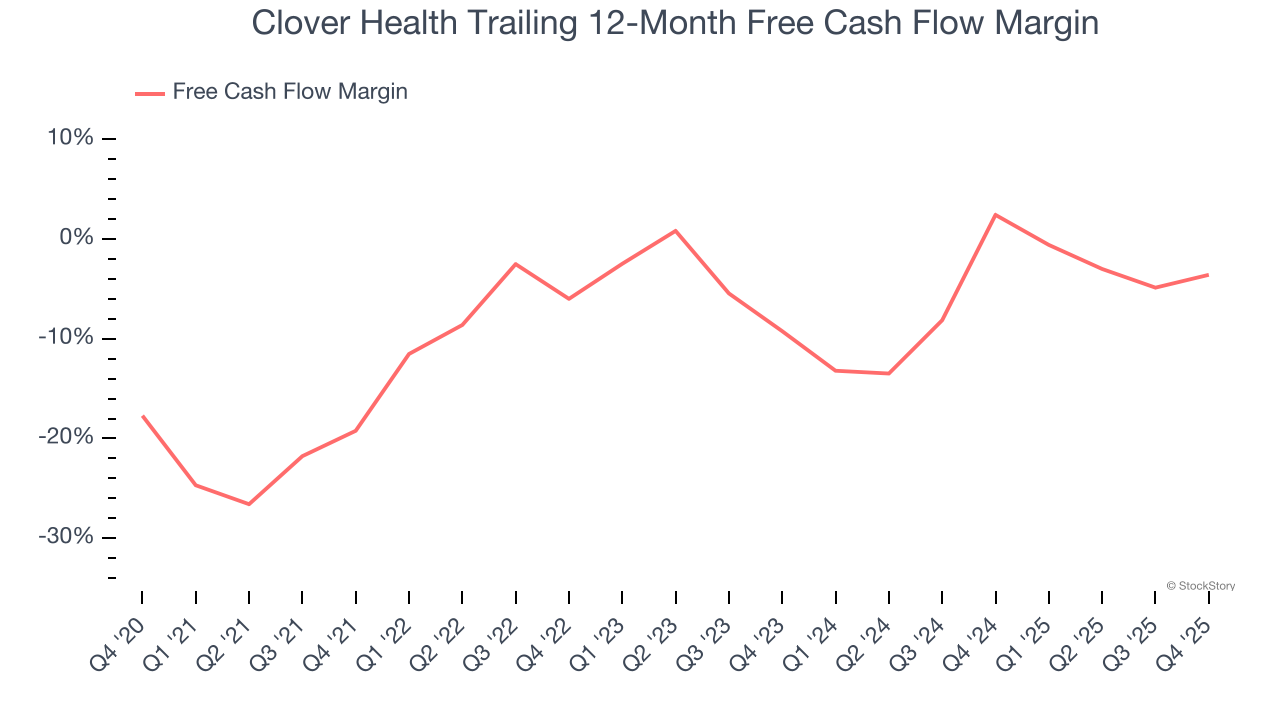
3. Short Cash Runway Exposes Shareholders to Potential Dilution
As long-term investors, the risk we care about most is the permanent loss of capital, which can happen when a company goes bankrupt or raises money from a disadvantaged position. This is separate from short-term stock price volatility, something we are much less bothered by.
Clover Health burned through $68.98 million of cash over the last year. With $120.3 million of cash and no debt on its balance sheet, the company has around 21 months of runway left.
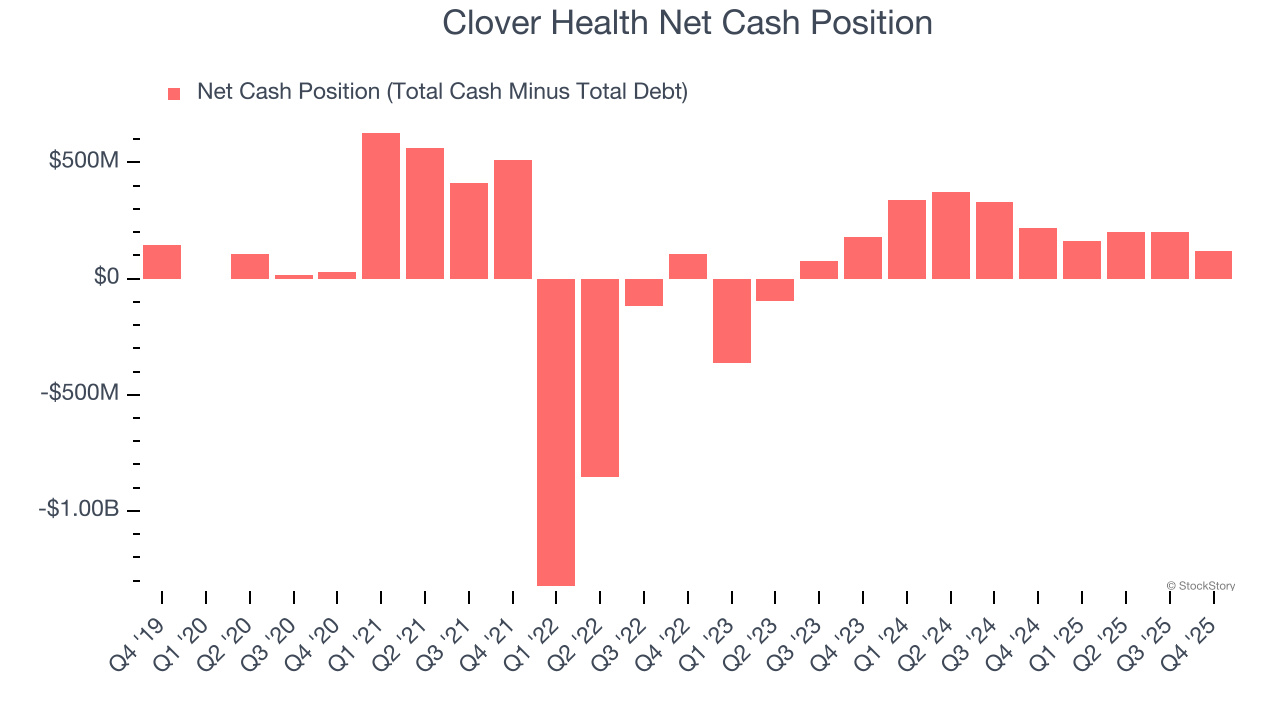
Unless the Clover Health’s fundamentals change quickly, it might find itself in a position where it must raise capital from investors to continue operating. Whether that would be favorable is unclear because dilution is a headwind for shareholder returns.
We remain cautious of Clover Health until it generates consistent free cash flow or any of its announced financing plans materialize on its balance sheet.
Final Judgment
Clover Health’s business quality ultimately falls short of our standards. Following the recent decline, the stock trades at 23.6× forward P/E (or $1.86 per share). While this valuation is reasonable, we don’t really see a big opportunity at the moment. We're pretty confident there are more exciting stocks to buy at the moment. We’d suggest looking at one of our top digital advertising picks.
Stocks We Would Buy Instead of Clover Health
ALSO WORTH WATCHING: Top 5 Momentum Stocks. The best time to own a great stock is when the market is finally noticing it. These aren't just high-quality businesses. Something is happening with them right now. Elite fundamentals meeting near-term momentum — both boxes checked at the same time.
Find out which stocks our AI platform is flagging this week. See this week's Strong Momentum stocks — FREE. Get Our Strong Momentum Stocks for Free HERE.
Stocks that have made our list include now familiar names such as Nvidia (+1,326% between June 2020 and June 2025) as well as under-the-radar businesses like the once-micro-cap company Kadant (+351% five-year return). Find your next big winner with StockStory today.