Animal health company Zoetis (NYSE: ZTS) reported revenue ahead of Wall Street’s expectations in Q3 2026, but revenue fell by 1.3% year on year to $2.39 billion. The company expects the full year’s revenue to be around $9.27 billion, close to analysts’ consensus estimates. Its non-GAAP profit of $1.75 per share was 15.8% above analysts’ consensus estimates.
For more on Zoetis, read our free full research report.
Zoetis (ZTS) Q3 2026 highlights:
- Revenue $2.39 billion vs S&P analysts’ consensus estimates of $2.33 billion (1.3% year-on-year decline, 2.6% beat)
- Adjusted EPS $1.75 vs S&P analysts’ consensus estimates of $1.51 (15.8% beat)
- Revenue guidance The company slightly lifted its revenue guidance for the full year to $9.27 billion at the midpoint from $9.22 billion
- Adjusted EPS guidance Management raised its full-year adjusted EPS guidance to $6.30 at the midpoint, a 1.6% increase
- Market capitalization $36.86 billion
"Our third-quarter performance was in line with our expectations. Continued pressure in Companion Animal was partially offset by growth in Livestock and Diagnostics, reflecting the breadth of our portfolio," said Kristin Peck, Chief Executive Officer of Zoetis. "We remain focused on defending our position and directing our resources where they can have the greatest impact. And with the scale, expertise, and pipeline to keep setting the pace of innovation in animal health, we are confident in our ability to create long-term value for customers and shareholders."
Revenue growth
A company’s long-term revenue performance can indicate its overall quality. Any business can deliver a good quarter or two, but the best consistently grow over the long haul. Over the last five years, Zoetis grew its revenue at a mediocre 4.3% compounded annual growth rate, falling short of the healthcare sector standard.
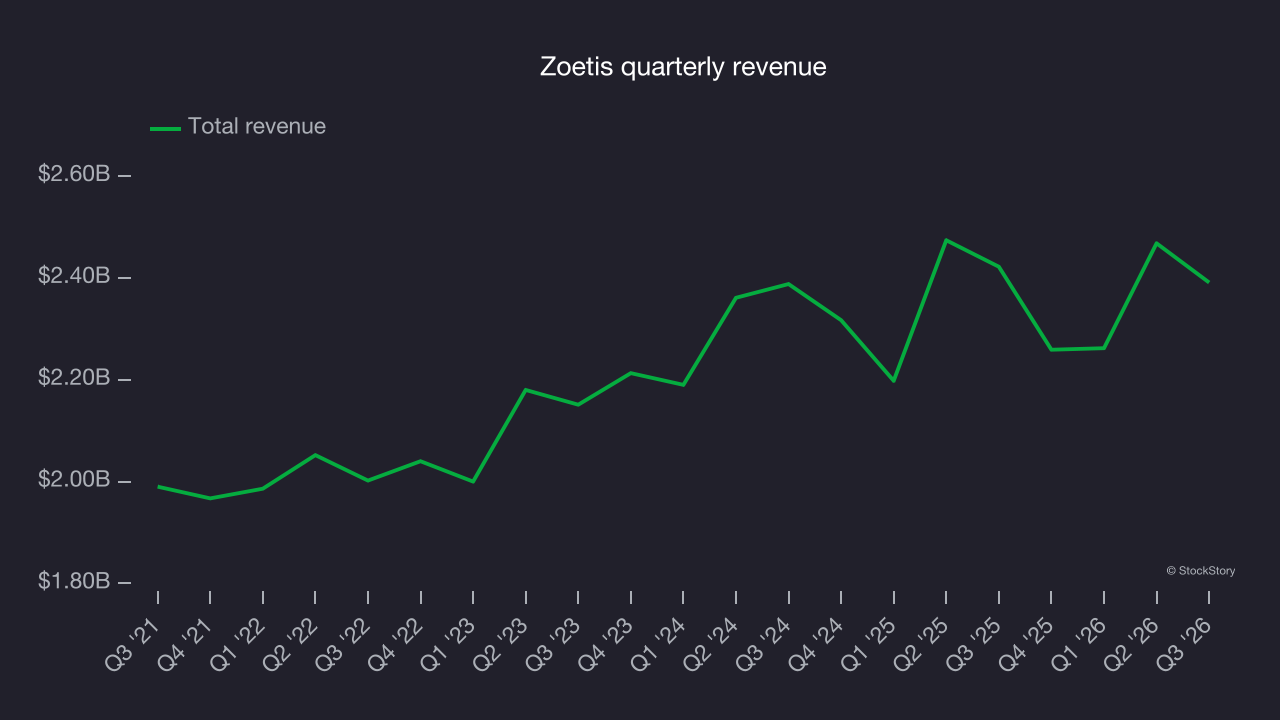
Long-term growth is the most important, but within healthcare, a half-decade historical view may miss new innovations or demand cycles. Zoetis’s recent performance shows its demand has slowed as its annualized revenue growth of 1.2% over the last two years was below its five-year trend. Decelerating revenue growth in the sector is a concern, as it could signal changing consumer tastes aided by low switching costs. 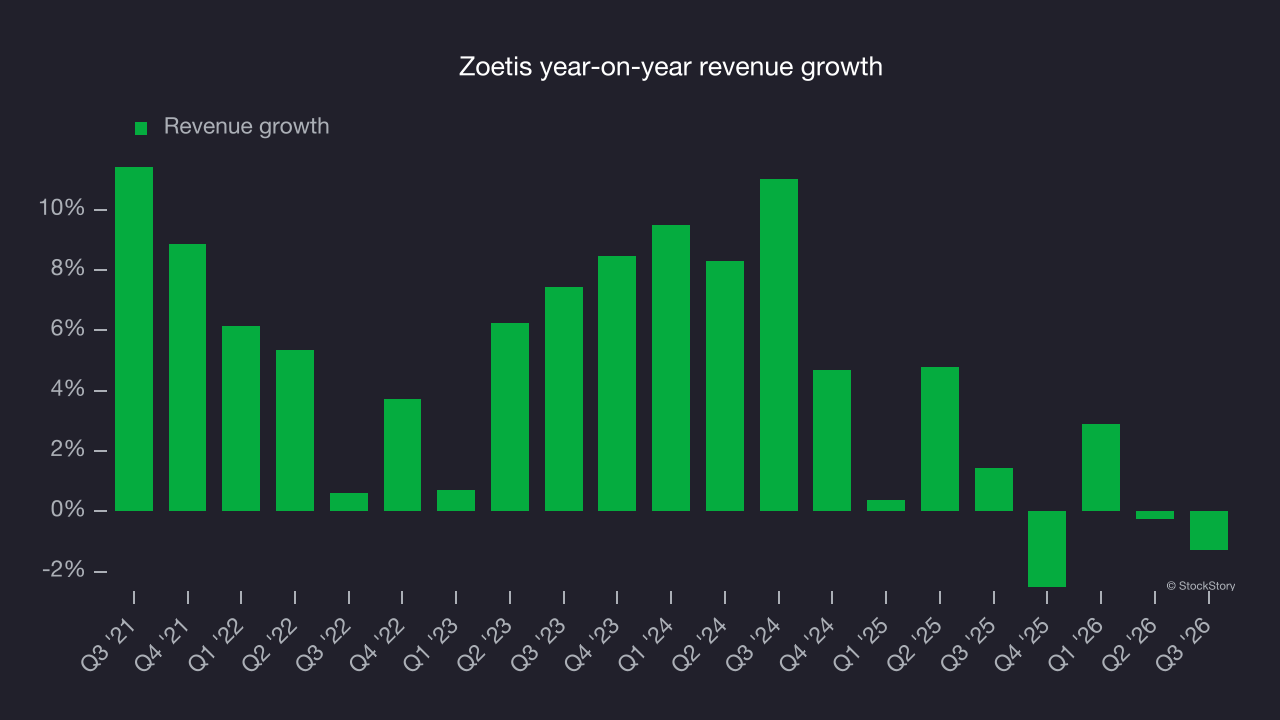
This quarter, Zoetis’s revenue fell by 1.3% year on year to $2.39 billion but beat Wall Street’s consensus estimates by 2.6%.
Looking ahead, sell-side analysts expect revenue to remain flat over the next 12 months, according to S&P, a slight deceleration versus the last two years. This uninspiring projection suggests its products and services will see some demand headwinds.
Operating margin
Zoetis has operated efficiently over the last five years. It demonstrated strong profitability for a healthcare business, with an average operating margin of 36%.
Looking at the trend in its profitability, Zoetis’s operating margin rose by 1.2 percentage points over the last five years, as its revenue growth gave it operating leverage. The company’s two-year trajectory shows its performance was mostly driven by its recent improvements.
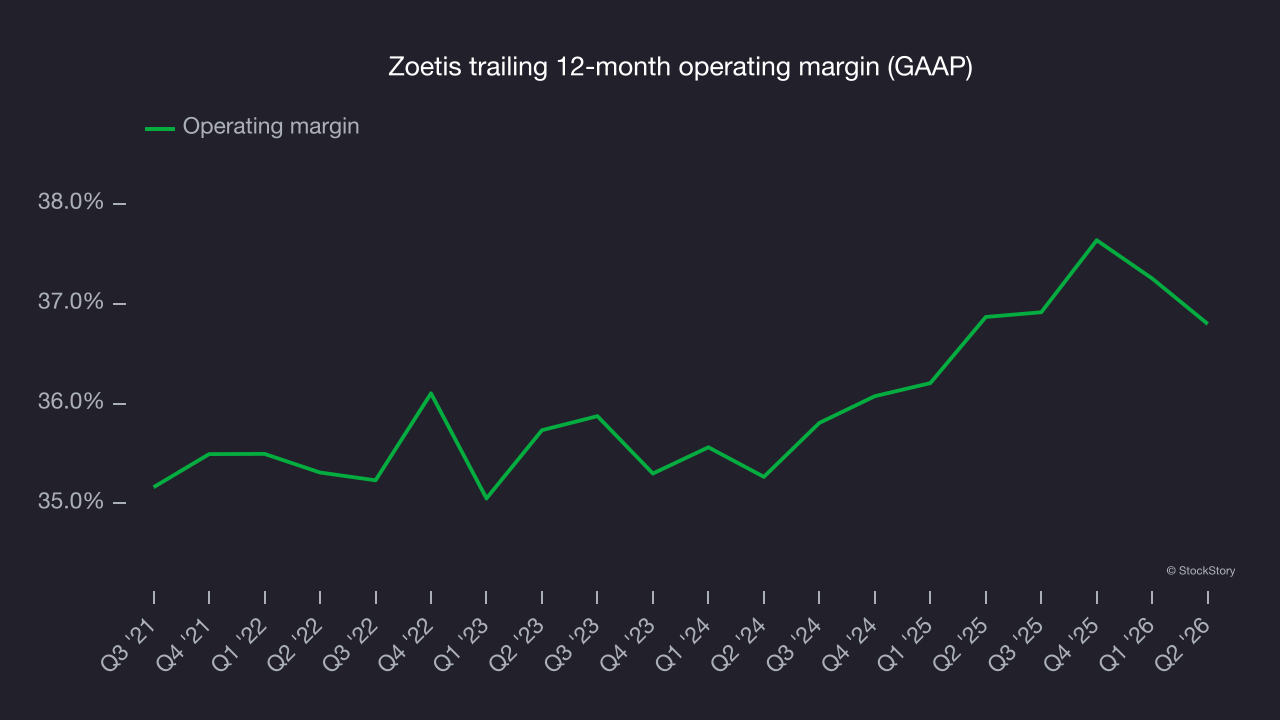
in line with the same quarter last year. This indicates the company’s overall cost structure has been relatively stable.
Earnings per share
Revenue trends explain a company’s historical growth, but the long-term change in earnings per share (EPS) points to the profitability of that growth. For example, a company could inflate its revenue through excessive spending on advertising and promotions.
Zoetis’s EPS grew at a 7.5% compounded annual growth rate over the last five years, higher than its 4.3% annualized revenue growth. This indicates the company became more profitable on a per-share basis as it expanded.
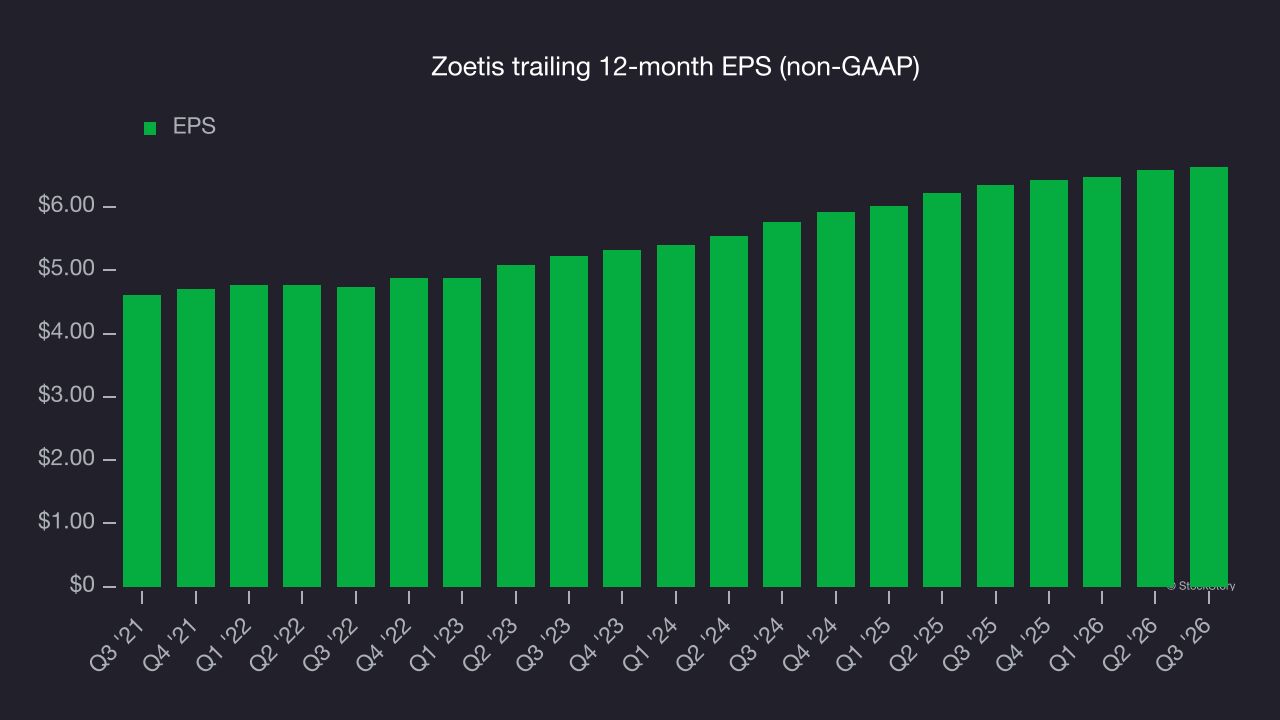
A closer look at Zoetis’s earnings quality can provide a better understanding of its performance. As mentioned earlier, Zoetis’s operating margin expanded by 1.2 percentage points over the last five years. In addition, its share count shrank by 13.6%. These are positive signs for shareholders because improving profitability and share buybacks boost EPS growth relative to revenue growth. 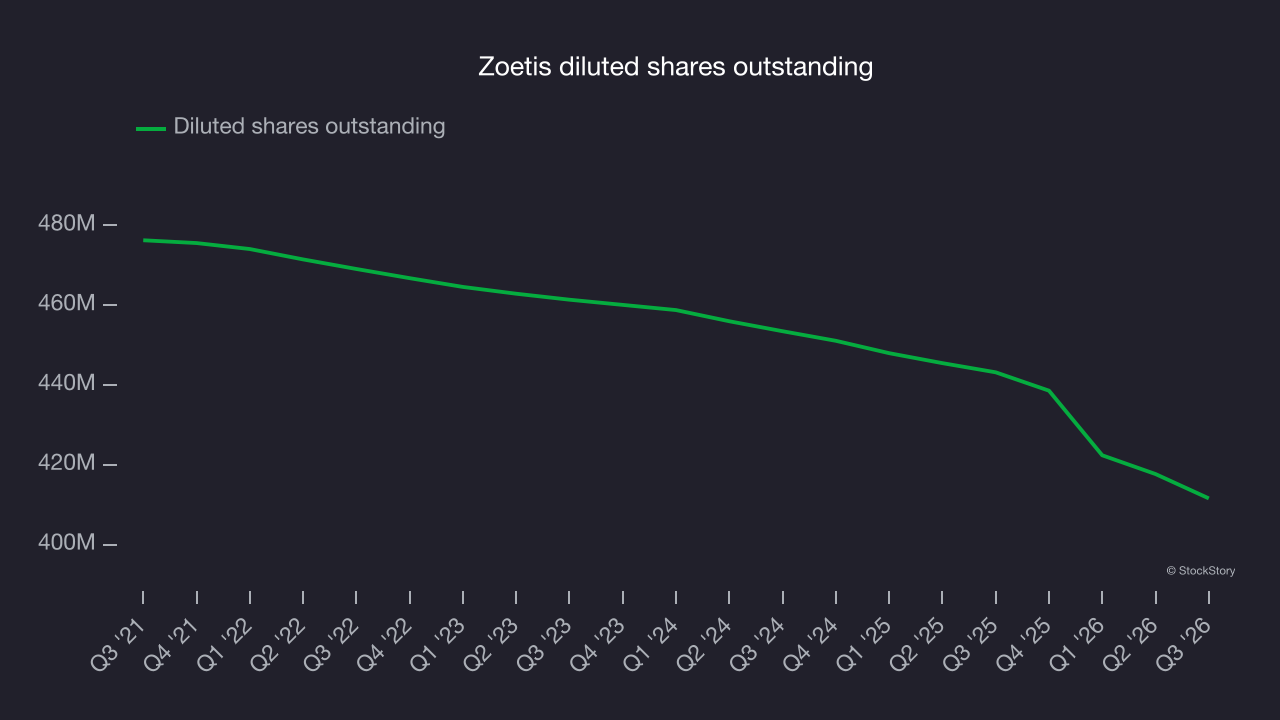
In Q3, Zoetis reported adjusted EPS of $1.75, up from $1.70 in the same quarter last year. The result comfortably beat analysts’ consensus estimates, a positive outcome for shareholders. Over the next 12 months, Wall Street expects Zoetis’s full-year EPS to shrink by 6.5% from $6.63 to $6.20, according to S&P.
Key takeaways from Zoetis’s Q3 results
Zoetis delivered a solid Q3, topping analysts’ consensus estimates for both EPS and revenue. Shares rose 3.9% to $92.74 immediately after the report.
Zoetis had a solid quarter, but is the stock a buy? That decision depends on its valuation and business quality, as well as the latest quarterly results. For more on those factors, read the free full research report here.