E-commerce software company Commerce (NASDAQ: CMRC) beat Wall Street’s revenue expectations in Q3 2026, but revenue fell by 2.1% year on year to $84.25 million. The company expects next quarter’s revenue to be around $84.9 million, close to analysts’ consensus estimates. Its non-GAAP profit of $0.08 per share was significantly above analysts’ consensus estimates.
For more on Commerce, read our free full research report.
Commerce (CMRC) Q3 2026 highlights:
- Revenue $84.25 million vs S&P analysts’ consensus estimates of $83.38 million (2.1% year-on-year decline, 1% beat)
- Adjusted EPS $0.08 vs S&P analysts’ consensus estimates of $0.04 (significant beat)
- Adjusted EBITDA $9.85 million vs analysts’ consensus estimates of $3.62 million (11.7% margin, significant beat)
- Revenue guidance $84.9 million at the midpoint for Q4 2026, roughly in line with what analysts were expecting
- Operating margin -2.1%, down from -0.5% in the same quarter last year
- Free cash flow margin 6.8%, up from 0.1% in the previous quarter
- Annual recurring revenue $357.6 million vs analysts’ consensus estimates of $357.3 million (flat year on year, in line)
- Billings $83.31 million at quarter end, down 6.9% year on year
- Market capitalization $285.9 million
“Our third quarter results reflect another period of disciplined execution, with total ARR of $357.6 million, 14% GMV growth to $9.0 billion, and $9.4 million in operating cash flow,” said Travis Hess, CEO of Commerce. “Just as important, the strategic operating plan we initiated in September is driving greater efficiency and profitability while protecting investments in our highest-impact growth areas: product intelligence, AI-driven agentic commerce and the open architecture merchants need as commerce becomes increasingly distributed. We believe this disciplined approach positions Commerce to deliver stronger merchant outcomes and create long-term value for our customers and shareholders.”
Revenue growth
Reviewing a company’s long-term revenue performance reveals insights into its quality. Any business can experience short-term success, but top-performing ones sustain growth for years. Over the last five years, Commerce grew its revenue at an 11.7% compounded annual growth rate. Though this growth is acceptable on an absolute basis, revenue growth alone is not enough in the software sector, which can display significant earnings volatility. The bar for the sector is particularly high, reflecting the non-essential and hit-driven nature of the products and services offered. Additionally, the five-year growth rate starts around Covid, when revenue was depressed before rebounding.
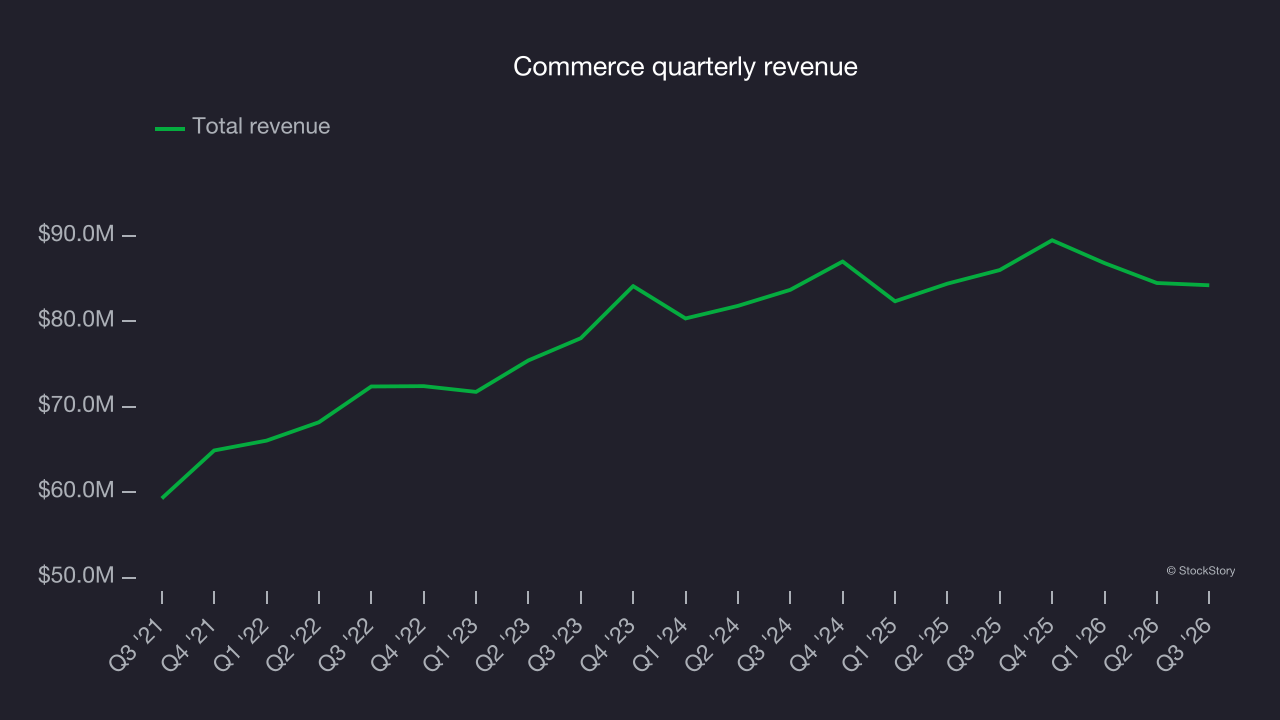
Long-term growth matters most, but within software, a half-decade historical view may miss new innovations or demand cycles. Commerce’s recent performance shows its demand has slowed as its annualized revenue growth of 2.3% over the last two years was below its five-year trend. Decelerating revenue growth in the sector is a concern, as it could signal changing consumer tastes aided by low switching costs. 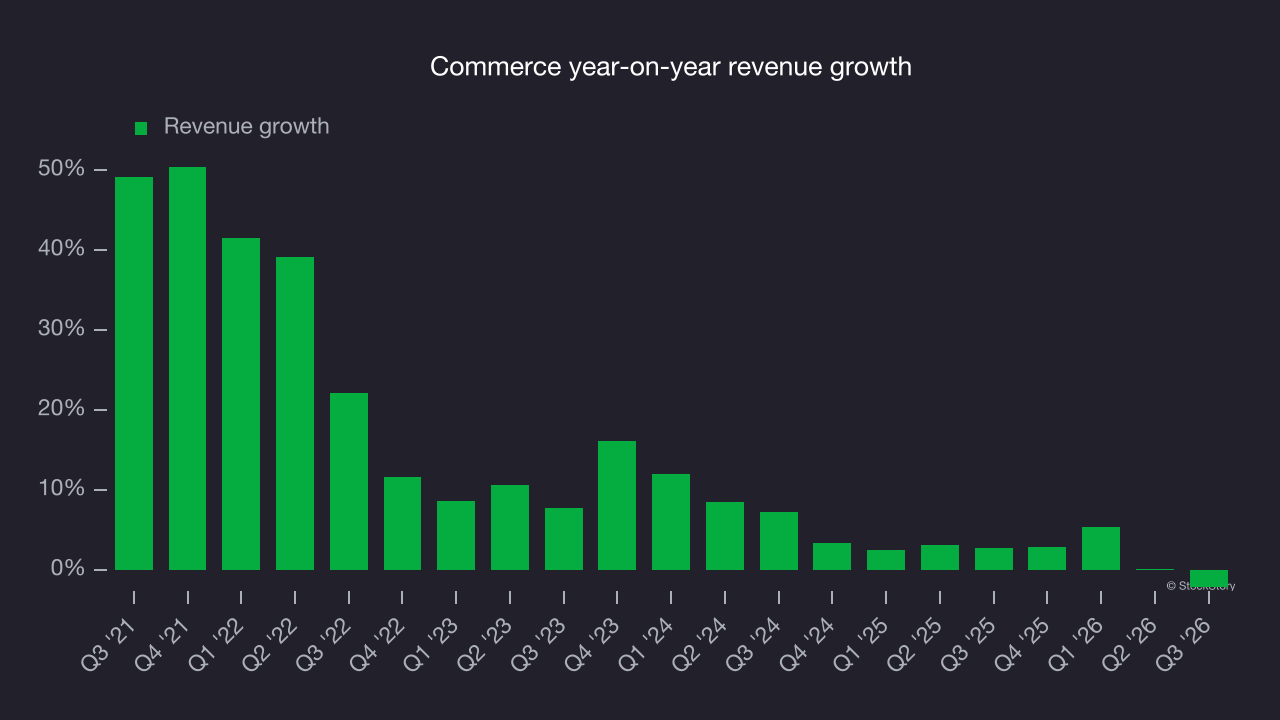
This quarter, Commerce’s revenue fell by 2.1% year on year to $84.25 million but beat Wall Street’s consensus estimates by 1%. Company management is currently guiding for a 5.2% year-on-year decline in revenue next quarter.
Looking further ahead, sell-side analysts expect revenue to decline by 2.3% over the next 12 months, according to S&P, a deceleration versus the last two years. This underwhelming projection implies its products and services will face some demand challenges.
Annual recurring revenue
While reported revenue for a software company can include low-margin items like implementation fees, annual recurring revenue, or ARR, is a sum of the next 12 months of contracted revenue purely from software subscriptions, or the high-margin, predictable revenue streams that make software-as-a-service businesses valuable.
Commerce’s ARR came in at $357.6 million in Q3, and over the last four quarters, its growth was underwhelming as it averaged 1.9% year-on-year increases. This performance mirrored its total revenue and suggests that increasing competition is causing challenges in securing longer-term commitments. 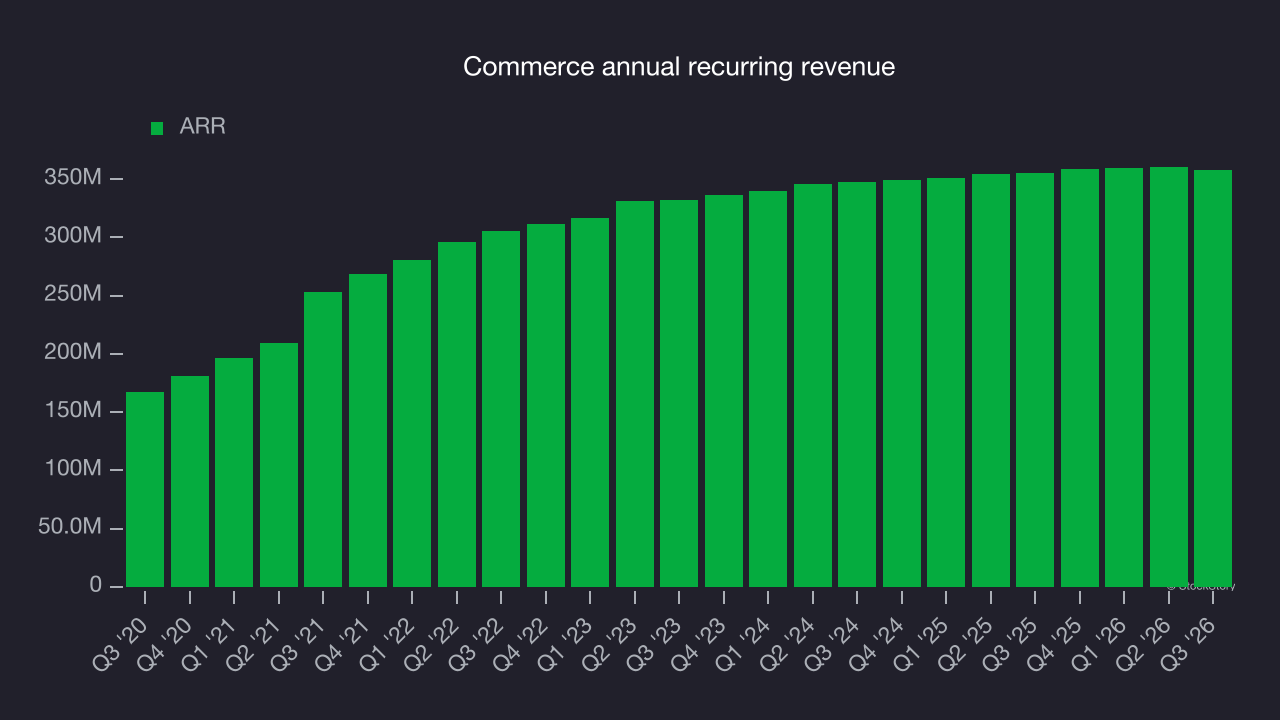
Customer acquisition efficiency
The customer acquisition cost payback period, or CAC payback period, represents the months required to recover the cost of acquiring a new customer. Essentially, it’s the break-even point for sales and marketing investments. A shorter CAC payback period is ideal, as it implies better returns on investment and business scalability.
Commerce’s recent customer acquisition efforts haven’t yielded returns as its CAC payback period was negative this quarter, meaning its incremental sales and marketing investments outpaced its revenue. The company’s inefficiency indicates it operates in a highly competitive environment where there is little differentiation between Commerce’s products and those of its peers.
Key takeaways from Commerce’s Q3 results
Commerce delivered a solid Q3, with adjusted operating income well above analysts’ consensus estimates and billings also topping Wall Street’s consensus. Those beats were key positives for the quarter. Shares surged 5.2% to $3.63 immediately after the results.
Commerce may have had a good quarter, but that alone does not determine whether the stock is a buy. The latest quarter matters, but longer-term fundamentals and valuation carry more weight when deciding whether to invest. For more on Commerce, read the full research report here (it’s free).