Business development company Capital Southwest (NASDAQ: CSWC) beat Wall Street’s revenue expectations in calendar Q3 2026 (fiscal Q2 2027), with revenue up 17.9% year on year to $67.16 million. Its GAAP profit of $0.33 per share was 36% below analysts’ consensus estimates.
For more on Capital Southwest, read our free full research report.
Capital Southwest (CSWC) Q3 CY2026 highlights:
- Revenue $67.16 million vs S&P analysts’ consensus estimates of $65.64 million (17.9% year-on-year growth, 2.3% beat)
- Pre-tax profit $37.17 million (55.3% margin)
- EPS (GAAP) $0.33 vs analysts’ consensus estimates of $0.52 (miss)
- Market capitalization $1.48 billion
Revenue growth
Reviewing a company’s long-term revenue performance reveals insights into its quality. Any business can have short-term success, but a top-tier one grows for years. Capital Southwest’s 26.9% annualized revenue growth over the last five years was strong. Its growth beat the average financials company and shows its offerings resonate with customers.
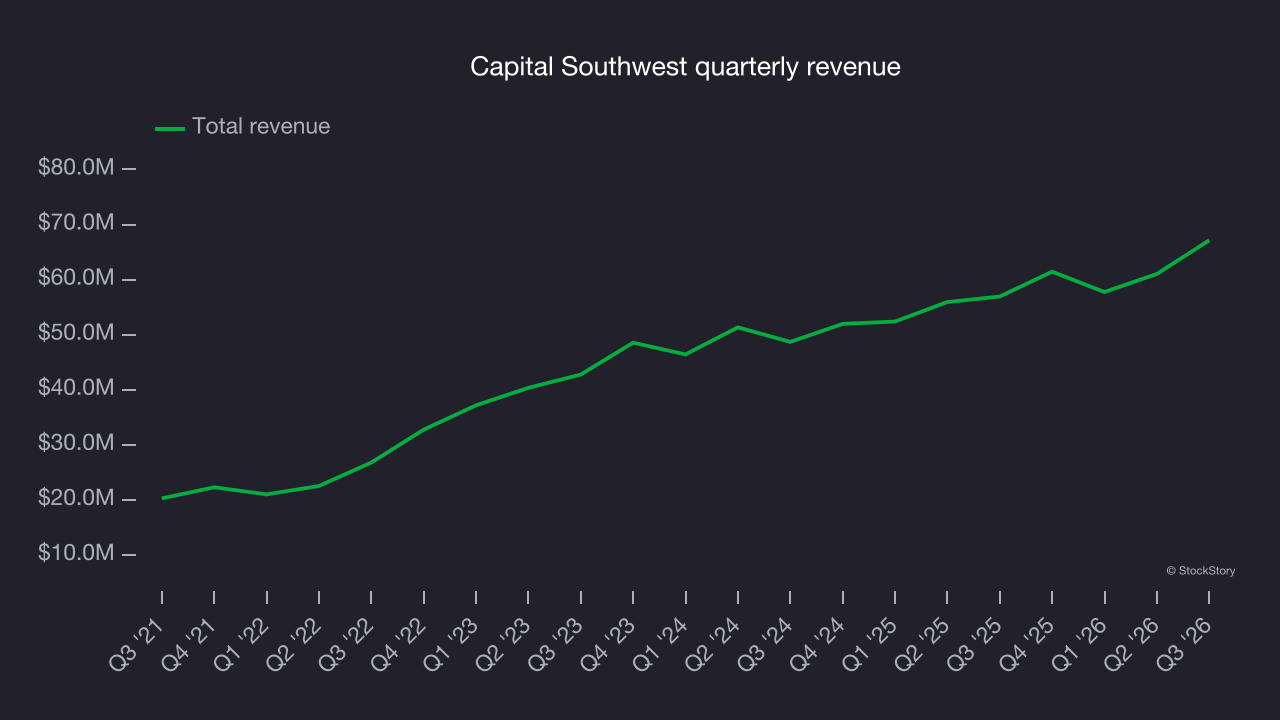
Long-term growth matters most, but within financials, a half-decade historical view may miss recent interest rate changes, market returns and industry trends. Capital Southwest’s annualized revenue growth of 12.6% over the last two years is below its five-year trend, but the results still suggest healthy demand.
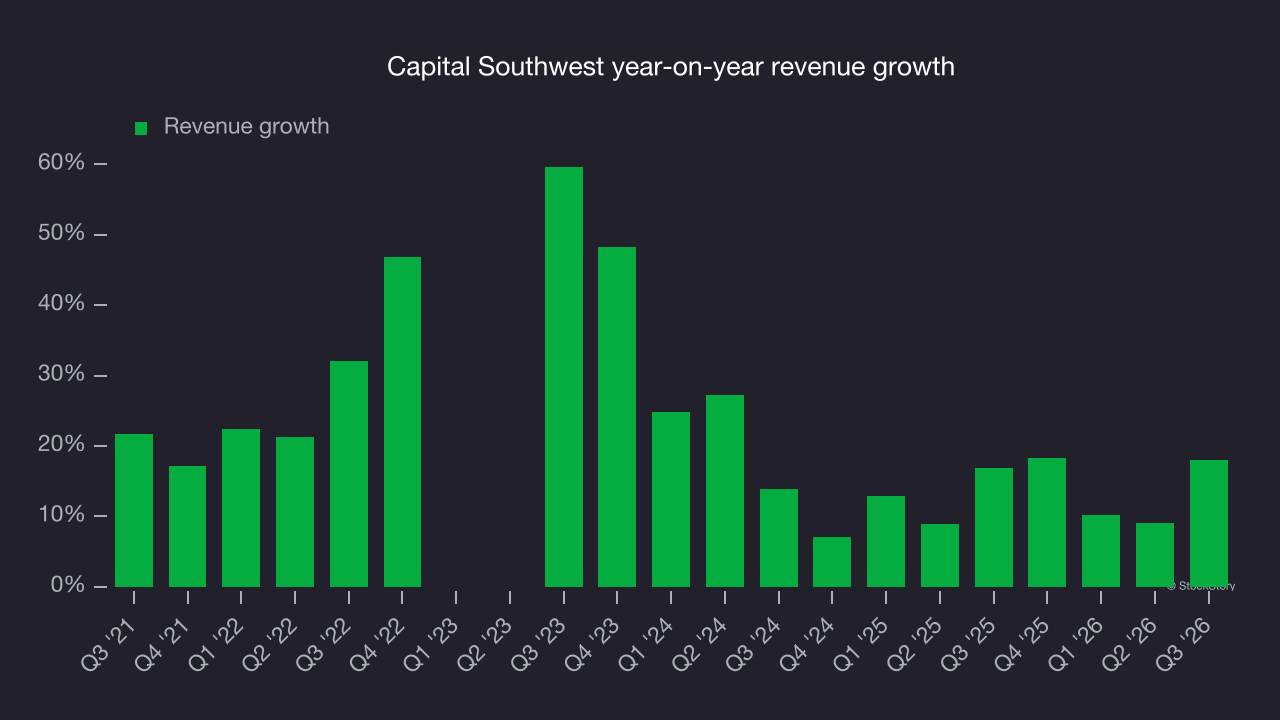
Note: Quarters not shown were determined to be outliers because they were impacted by outsized investment gains/losses that are not indicative of the recurring fundamentals of the business.
This quarter, Capital Southwest reported year-on-year revenue growth of 17.9%, and its $67.16 million of revenue exceeded Wall Street’s consensus estimates by 2.3%.
Key takeaways from Capital Southwest’s Q3 results
Capital Southwest’s revenue beat analysts’ consensus estimates, but the EPS miss left this a weaker quarter overall. Shares remained flat at $23.35 immediately after the results.
Capital Southwest’s latest quarter was underwhelming. One earnings report doesn’t define a company’s quality, though. The latest quarter matters when assessing whether the stock is a buy at its current price, but longer-term fundamentals and valuation matter much more. For more on Capital Southwest, read the full research report here (it’s free).