Time Off Editing has announced a continued focus on refining its real estate photo editing services, reflecting broader changes in how property visuals are created, reviewed, and communicated across digital platforms. As real estate listings increasingly rely on visual content to convey property details, the announcement emphasizes the role of structured image editing practices in supporting clarity, consistency, and accurate visual representation.
The company notes that real estate photo editing has evolved from a supplementary task into a core component of property communication. Digital listings are often the first point of interaction between a property and potential viewers, making visual accuracy and consistency essential. Time Off Editing’s real estate photo editing approach reflects this shift, as images are now viewed across a wide range of platforms, including listing portals, agency websites, mobile devices, and virtual viewing tools—each with different display conditions and user expectations.
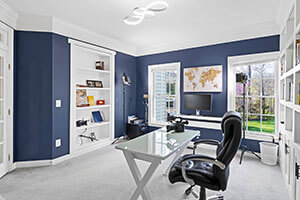
According to Time Off Editing, this shift has increased the importance of disciplined editing workflows that prioritize technical accuracy over stylistic enhancement. Real estate images must communicate spatial relationships, materials, lighting conditions, and overall layout in a way that supports informed decision-making. Editing processes that introduce excessive visual alterations can undermine trust and create discrepancies between digital presentation and physical reality.
The real estate photo editing service provided by Time Off Editing is structured around correcting technical limitations commonly associated with on-site photography. Factors such as uneven lighting, camera exposure constraints, lens distortion, and environmental conditions can result in images that do not accurately reflect a property’s appearance. The editing process focuses on addressing these issues to produce balanced and neutral visuals that align more closely with how spaces are perceived under standard viewing conditions.
Lighting correction is identified as a fundamental component of the editing workflow. Interior property images often include a mix of natural and artificial light sources, which can create color imbalance and uneven exposure. Time Off Editing explains that controlled adjustments are applied to highlights, shadows, and midtones to restore balance without introducing artificial lighting effects. This approach supports a consistent interpretation of room dimensions and spatial depth.
Color accuracy is also emphasized as a critical factor in real estate photo editing. Inaccurate color representation can mislead viewers regarding finishes, materials, and overall ambiance. Time Off Editing applies calibrated color correction techniques to ensure that surfaces such as walls, flooring, cabinetry, and fixtures appear realistic and consistent across image sets. Maintaining color fidelity supports transparency and reduces the likelihood of miscommunication.
Perspective correction is another key aspect addressed in the announcement. Wide-angle lenses are frequently used in real estate photography to capture larger portions of a space, but they can introduce distortion that affects vertical alignment and proportions. Time Off Editing notes that its editing process includes geometric correction techniques designed to restore architectural accuracy. Straightening vertical lines and correcting lens distortion help ensure that spaces are represented faithfully.
Exterior property images present a distinct set of challenges that require a different editing approach. Outdoor photography is influenced by weather conditions, time of day, and surrounding environments. Time Off Editing states that exterior editing focuses on tonal balance, clarity, and cohesion while preserving the natural context of the property. Adjustments are applied conservatively to avoid altering permanent features or misrepresenting environmental conditions.
Consistency across image sets is highlighted as a central requirement in real estate listings. Property images are typically viewed as a sequence rather than individually, making visual coherence essential. Time Off Editing explains that its editing workflow includes consistency checks across all images associated with a property. These checks ensure uniform brightness, contrast, color temperature, and tonal balance, contributing to a cohesive viewing experience.
The announcement also addresses the importance of workflow reliability in real estate photo editing services. Property marketing schedules often involve tight timelines and coordinated activities, including listing publication and promotional planning. Time Off Editing notes that its internal processes are structured around defined stages of editing, review, and delivery. This structured workflow supports predictability and reduces uncertainty for teams managing property launches.
Quality assurance is described as an integral part of the editing process. Each image set undergoes multiple review stages to verify alignment with technical standards and project requirements. These evaluations assess factors such as exposure balance, color accuracy, perspective alignment, and the absence of visual artifacts. Structured quality control helps ensure consistent output across different property types and project volumes.
Ethical considerations are also addressed in the announcement. Time Off Editing emphasizes that its real estate photo editing practices avoid manipulations that could mislead viewers. Structural elements, spatial dimensions, and permanent fixtures are preserved without alteration. Editing is limited to technical enhancements that improve clarity and balance, supporting responsible and transparent property presentation.
Device accessibility is identified as another important consideration. Property images are viewed on a range of screen sizes and resolutions, from desktop monitors to mobile devices. Time Off Editing explains that edited images are optimized to maintain clarity and detail across different display environments. This ensures that important visual information remains accessible regardless of how content is consumed.
Integration with broader real estate workflows is also discussed. Edited images are often used across listing systems, marketing materials, virtual tours, and internal documentation. Time Off Editing notes that its service supports these use cases by maintaining consistent file formats, aspect ratios, and organizational conventions. This structured approach helps reduce friction during content distribution and reuse.
The announcement acknowledges the diversity of properties served through real estate photo editing. Residential homes, commercial spaces, and mixed-use developments each present unique visual requirements related to scale, layout, and context. Time Off Editing explains that editing parameters can be adapted based on property type while maintaining consistent technical standards across projects.
Continuous refinement is identified as an ongoing component of the editing process. Feedback from photographers, real estate professionals, and marketing teams contributes to the periodic review of editing guidelines. Changes in platform requirements, display technologies, and viewer behavior are evaluated to ensure that editing practices remain aligned with current industry conditions.
In conclusion, Time Off Editing positions real estate photo editing as a foundational element of modern property communication. As digital listings continue to shape how properties are evaluated and understood, structured image editing practices play an essential role in supporting clarity, consistency, and trust. The company states that its continued focus on disciplined workflows and technical accuracy reflects an understanding of the evolving demands placed on property visuals in digital environments.
For more information, visit:
###
For more information about Time Off Editing, contact the company here:
Time Off Editing
Daren
info@timeoffedit.com