In a move that solidifies the marriage between advanced nuclear technology and the artificial intelligence boom, NextEra Energy (NYSE: NEE) and TerraPower have announced a landmark partnership to deploy a fleet of Small Modular Reactors (SMRs) across the United States. This strategic alliance is specifically designed to meet the astronomical 24/7 power demands of next-generation AI data centers operated by industry giants Microsoft (NASDAQ: MSFT) and Alphabet Inc. (NASDAQ: GOOGL). By integrating TerraPower’s Natrium™ technology with NextEra’s massive development pipeline, the partnership aims to solve the "energy trilemma" of reliability, affordability, and sustainability that has threatened to stall the growth of large-scale AI models.
The implications for the energy and technology sectors are profound. For the first time, the world’s largest renewable energy provider is shifting significant capital toward advanced nuclear, signaling a shift in how the industry views carbon-free baseload power. As Google and Microsoft sign on as anchor tenants for the first wave of reactors, the deal establishes a new blueprint for "AI-Nuclear" infrastructure, where the tech sector’s deep pockets provide the necessary financial floor to bring experimental nuclear designs into commercial reality.
The Dawn of the Natrium Fleet: Inside the Multi-Billion Dollar Deal
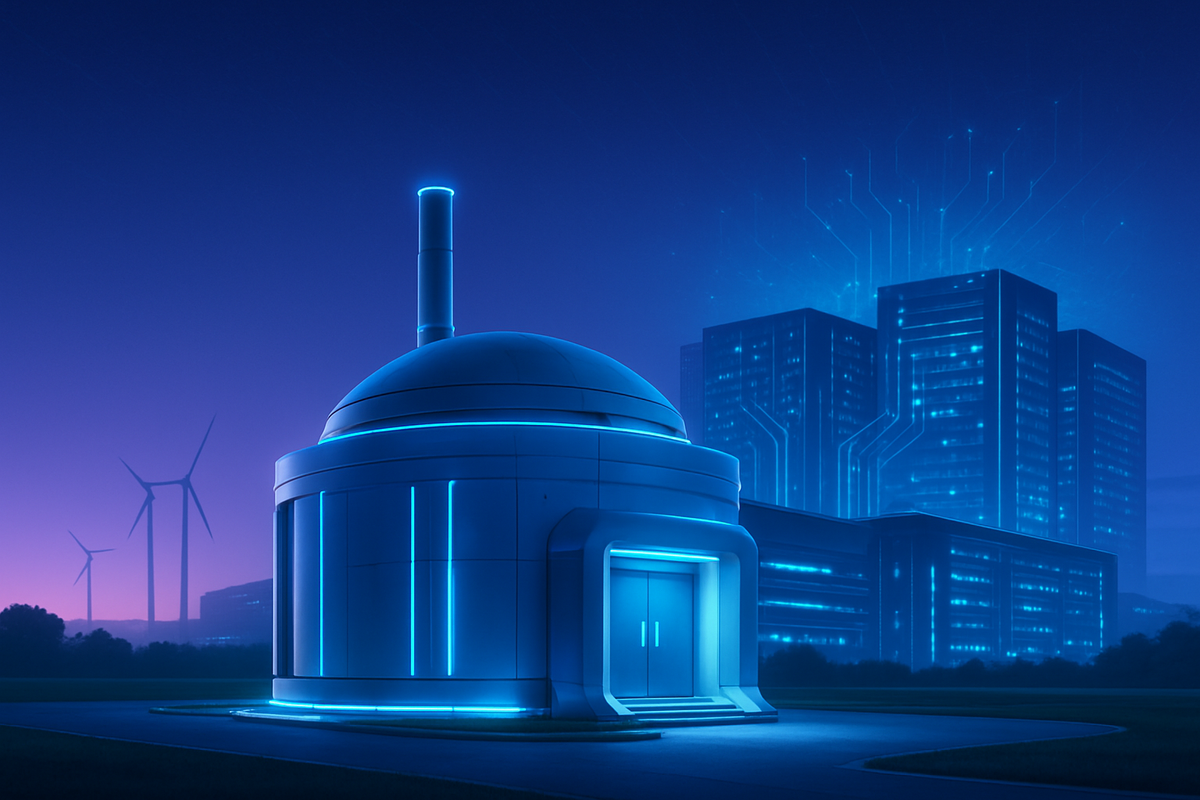
The partnership, formalized in the final months of 2025 and moving into its site-selection phase by April 2026, centers on a multi-unit "fleet" rollout of TerraPower’s Natrium reactors. Each unit is a 345 MW sodium-cooled fast reactor equipped with a molten salt energy storage system, a feature that allows the plant to temporarily boost output to 500 MW to accommodate the variable processing surges of AI training cycles. The framework targets an initial deployment of 2.5 GW to 3 GW of capacity, with a projected capital expenditure between $15 billion and $20 billion.
The timeline leading to this moment has been a swift escalation of the "nuclear renaissance." Throughout 2024 and 2025, tech companies struggled with the intermittency of wind and solar, which frequently failed to meet the rigorous 99.999% uptime requirements of hyperscale data centers. NextEra Energy, which had previously focused almost exclusively on renewables and traditional gas, recognized the market shift and pivoted toward SMRs to capture the high-margin "green premium" being offered by Big Tech. Initial market reactions have been overwhelmingly positive, with NextEra Energy (NYSE: NEE) shares hitting all-time highs as the company successfully transitioned its narrative from a regulated utility to a high-growth AI infrastructure player.
Winners and Losers: A New Hierarchy in Energy and Tech
NextEra Energy (NYSE: NEE) stands as the primary winner, leveraging its massive balance sheet to act as the developer and grid operator for these complex projects. By securing 20-year Power Purchase Agreements (PPAs) with Microsoft and Google, NextEra has effectively de-risked the construction of advanced nuclear, a feat that has eluded the industry for decades. Meanwhile, Microsoft (NASDAQ: MSFT) and Alphabet Inc. (NASDAQ: GOOGL) gain a critical competitive advantage: a guaranteed, 24/7 carbon-free power supply that allows them to scale their AI clusters without violating their net-zero pledges.
Conversely, traditional fossil-fuel utilities that have been slow to pivot toward advanced nuclear or high-capacity storage may find themselves at a disadvantage in the race for data center contracts. Publicly traded nuclear suppliers are also seeing a windfall; companies like Cameco (NYSE: CCJ), a primary supplier of uranium, and BWX Technologies (NYSE: BWXT), which manufactures reactor components, have seen their order books swell. The "losers" in this scenario could be secondary data center markets that lack the water rights or grid stability to host an SMR site, as Big Tech capital increasingly clusters around these "Nuclear AI Parks."
A Strategic Pivot in the Global Energy Landscape
This partnership is more than a simple supply deal; it represents a major shift in the broader energy industry. For years, SMRs were viewed as a "someday" technology, plagued by regulatory hurdles and high upfront costs. However, the urgency of the AI race has compressed the innovation cycle. The NextEra-TerraPower deal fits into a broader trend of "private-sector-led industrial policy," where tech giants effectively replace the government as the primary financier of national energy infrastructure.
From a regulatory standpoint, the deal is a test case for the Nuclear Regulatory Commission (NRC). The success of these sites, particularly the prioritized Duane Arnold location in Iowa, will determine the pace of SMR licensing for the next decade. Historically, nuclear projects in the U.S. have suffered from massive cost overruns (e.g., the Vogtle plant). By opting for the "modular" approach of SMRs, NextEra and TerraPower are betting that smaller, factory-built components will break the cycle of delays, providing a more predictable and scalable alternative to traditional large-scale reactors.
What Comes Next: The Roadmap to 2030
In the short term, the partnership will focus on environmental impact assessments and the detailed engineering required for the first sites in Iowa and the Southeast US. Investors should expect a series of regulatory filings and potential local community engagement sessions throughout the remainder of 2026. The true test will come in the late 2020s when the first units are scheduled to go online. If successful, this pilot fleet will likely expand, with TerraPower’s Wyoming site serving as a blueprint for a nationwide network of SMR-powered AI hubs.
Strategic pivots may still be required. While the molten salt storage technology offers a unique advantage for load balancing, it is still relatively unproven at this commercial scale. Any technical setbacks in the initial units could lead to significant strategic shifts, perhaps forcing NextEra to lean more heavily back into gas-fired generation with carbon capture. However, the market remains optimistic that the combined expertise of Bill Gates’ TerraPower and the operational excellence of NextEra will be enough to overcome these technical hurdles.
The Wrap-Up: A Paradigm Shift for Investors
The NextEra-TerraPower partnership marks a definitive moment where AI computing power became inextricably linked with nuclear energy. The key takeaway for investors is that the "AI trade" is no longer just about chips and software; it is increasingly about the physical infrastructure and the electrons required to run them. The massive capital commitments from Google and Microsoft provide a level of revenue certainty that is rare in the energy sector, making NextEra a unique hybrid of a stable utility and a high-growth tech partner.
Moving forward, the market will be closely watching for any signs of "SMR fatigue" or regulatory bottlenecks. However, as of April 2026, the momentum is clearly behind the nuclear-AI convergence. Investors should keep a close eye on the NRC’s approval timelines and any expansion of the PPA agreements to other tech players like Amazon or Meta. For now, the NextEra-TerraPower alliance has set the gold standard for how the world’s most power-hungry companies will fuel their future.
This content is intended for informational purposes only and is not financial advice.