In a move that has permanently altered the trajectory of the global technology and aerospace industries, SpaceX has finalized its acquisition of xAI in a historic $1.25 trillion deal. This unprecedented consolidation, officially termed an all-stock reverse triangular merger, brings Elon Musk’s primary artificial intelligence and space exploration ventures under a single corporate roof. The merger creates a vertically integrated "innovation engine" that aims to solve the growing terrestrial energy crisis by moving massive AI compute workloads into the vacuum of space.
The immediate implications of this merger are staggering. By combining the low-latency global connectivity of the Starlink satellite constellation with the frontier generative models of xAI, the new entity—currently preparing for a record-breaking $75 billion Initial Public Offering (IPO) in June 2026—is positioned to dominate the burgeoning "Orbital Data Center" market. Investors are already rerouting capital from traditional cloud providers, betting that the future of artificial general intelligence (AGI) lies not on Earth, but in the stars.
The Dawn of 'Project Sentient Sun'
The merger was officially announced on February 2, 2026, following months of intense speculation regarding Musk’s "Muskonomy" consolidation strategy. At the time of the announcement, SpaceX was valued at approximately $1 trillion, while xAI was appraised at $250 billion. However, as of late March 2026, market optimism surrounding the combined entity's S-1 filing with the SEC has pushed the internal valuation targets toward a colossal $1.75 trillion. To facilitate the deal, SpaceX established two Nevada-based entities, K2 Merger Sub Inc. and K2 Merger Sub 2 LLC, to manage the complex stock swap.
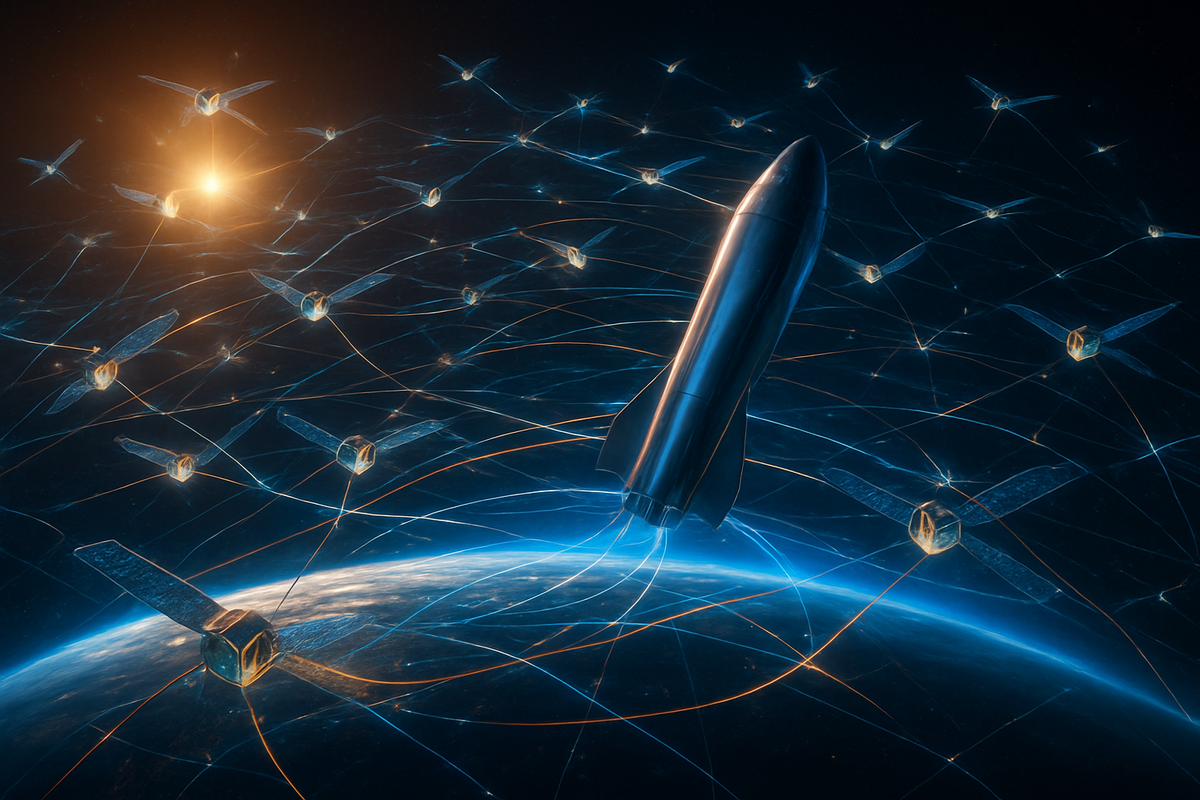
At the heart of this event is "Project Sentient Sun," a strategic initiative to deploy the next generation of Starlink V3 satellites equipped with specialized AI processing chips. These "Orbital Data Centers" will utilize near-constant solar energy and the natural radiative cooling of space to bypass the power grid and water-cooling constraints currently crippling terrestrial data centers. The merger also addresses a critical talent shift; while nine of the eleven original xAI co-founders have departed the firm—citing the transition from academic research to "military-grade" engineering—Musk has replaced them with a cohort of SpaceX engineers tasked with integrating the Grok AI model directly into the Starship flight computers.
Market Shakedown: Winners and Losers in the New Space Race
The financial fallout of the $1.25 trillion merger has created a clear divide in the "Magnificent Seven" and the broader aerospace sector. NVIDIA (NASDAQ: NVDA) appears to be a primary beneficiary in the short term, as its CEO Jensen Huang has praised the merger as a "singular engineering feat." NVIDIA remains the lead hardware partner for the specialized chips required for the Starlink V3 AI nodes, solidifying its role as the backbone of both terrestrial and orbital compute. Similarly, investment banks Morgan Stanley (NYSE: MS) and Goldman Sachs (NYSE: GS) are set to reap massive advisory fees as lead underwriters for the upcoming $75 billion IPO.
Conversely, traditional cloud and aerospace incumbents are facing a period of intense volatility. Microsoft (NASDAQ: MSFT) saw its stock price slide by 24% following the announcement, as investors voiced concerns over the long-term viability of Azure’s energy-heavy terrestrial footprint compared to SpaceX’s solar-powered orbital alternative. Amazon (NASDAQ: AMZN), whose Project Kuiper continues to lag behind Starlink’s deployment scale, is also under pressure to accelerate its own AI integrations. In the aerospace sector, Boeing (NYSE: BA) continues to struggle with internal restructuring and cash flow issues, now finding itself dwarfed by a competitor with nearly ten times its market valuation and a significantly more advanced technology stack.
A Fiduciary Stress Test and National Security Implications
The convergence of xAI and SpaceX fits into a broader industry trend of "sovereign compute," where massive tech conglomerates seek to own every layer of the stack—from the energy source and the hardware to the connectivity and the software. However, this level of vertical integration has raised significant regulatory red flags. The Federal Trade Commission (FTC) and European Union regulators are currently investigating whether the merger creates an unbreakable monopoly on global internet delivery and frontier AI intelligence. Critics have characterized the deal as a "fiduciary stress test," drawing parallels to Musk’s 2016 acquisition of SolarCity by Tesla (NASDAQ: TSLA), with some arguing the merger acts as a strategic "bailout" for xAI’s high operational costs using SpaceX’s profitable Starlink revenues.
Furthermore, the national security implications are profound. SpaceX is a critical partner for NASA and the Department of Defense (DoD). Integrating a frontier AI laboratory like xAI into the same entity that manages classified satellite launches and the Starshield network has triggered intense reviews from the Committee on Foreign Investment in the United States (CFIUS). The historical precedent for such a massive defense-tech merger is non-existent, making this a landmark case for how the U.S. government balances private sector innovation with the protection of sensitive algorithmic data and aerospace infrastructure.
Looking Ahead: The Road to Mars and the June IPO
In the short term, all eyes are on the June 2026 IPO, which is expected to be the largest in history, surpassing even the 2019 debut of Saudi Aramco. The success of this public offering will depend on SpaceX’s ability to prove that the "Orbital Intelligence" model is technically feasible. The company must demonstrate that it can effectively manage the heat dissipation of high-density AI chips in a vacuum—a challenge that has never been solved at the scale Musk is proposing. If successful, the strategic pivot will allow SpaceX to offer AI-as-a-Service (AIaaS) to any point on Earth with zero reliance on local power infrastructure.
Longer-term, the merger is the cornerstone of Musk’s Mars colonization roadmap. By 2027, the company intends to use xAI’s models to facilitate autonomous lunar base construction and manage the complex logistics of multi-planetary life without the 20-minute communication delay inherent in Earth-based mission control. While the market remains wary of the high "burn rate" associated with such ambitious goals, the promise of a trillion-dollar orbital monopoly has kept investor appetite at a fever pitch.
Final Assessment for Investors
The SpaceX-xAI merger represents the ultimate consolidation of the "Muskonomy," transforming a rocket company into the world's first truly extraterrestrial AI powerhouse. The key takeaway for the market is that the boundaries between aerospace, telecommunications, and artificial intelligence have effectively dissolved. This deal is not just about building better rockets; it is about building a new kind of decentralized, orbital computer that operates beyond the reach of terrestrial regulations and resource constraints.
Moving forward, investors should watch for the SEC's response to the S-1 prospectus and any potential anti-trust filings from the FTC. The June IPO will serve as the ultimate referendum on Musk’s vision. If the market absorbs the $75 billion offering at the targeted $1.75 trillion valuation, it will signal a new era where the most valuable companies in the world are those that can transcend the limitations of Earth itself.
This content is intended for informational purposes only and is not financial advice