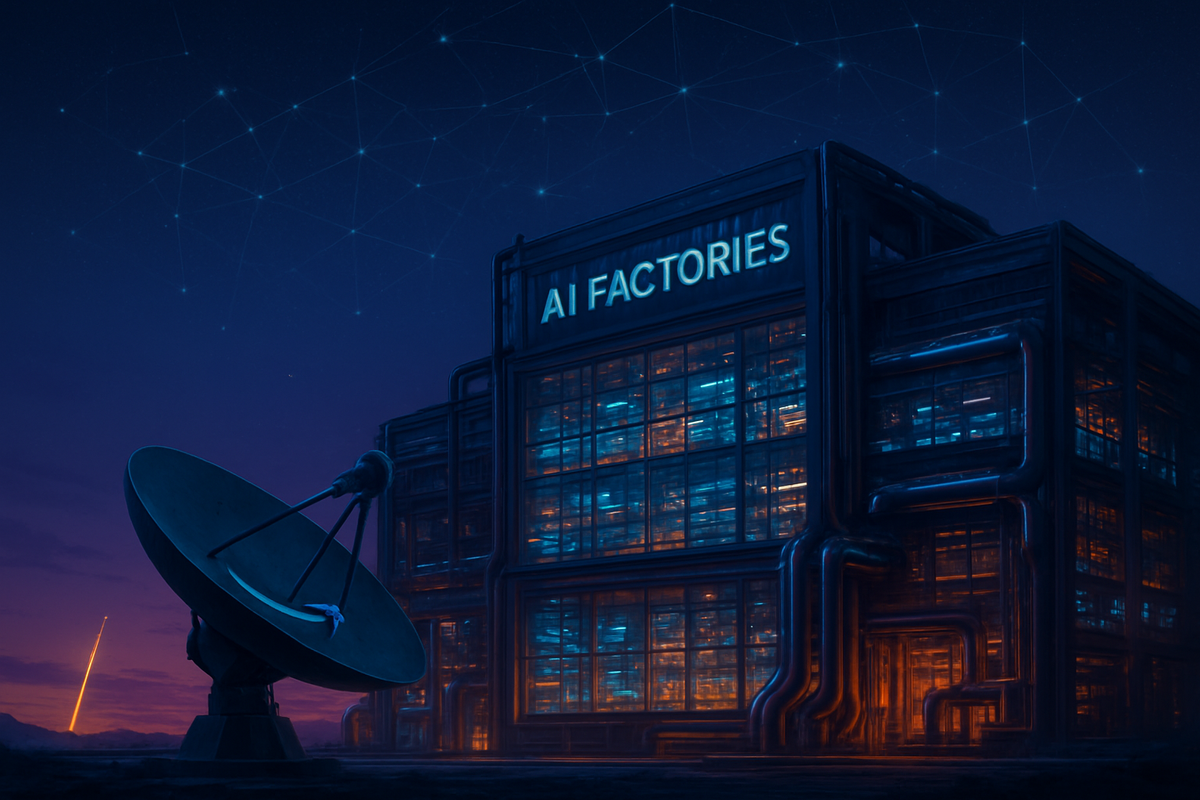
SEATTLE — In a move that has sent shockwaves through both Silicon Valley and Wall Street, Amazon.com, Inc. (NASDAQ: AMZN) has officially unveiled a record-breaking $200 billion capital expenditure plan for the 2026 fiscal year. CEO Andy Jassy, speaking from the company’s headquarters, framed the aggressive spending as a necessary foundation for a new era of “AI factories” and global connectivity. However, the sheer magnitude of the investment—nearly double the company's historical annual averages—triggered an immediate bout of “sticker shock” among investors, leading to a 6.4% midday decline in the company’s stock price as markets grappled with the implications for near-term profitability.
The record-shattering budget represents a bold bet on the long-term dominance of Amazon Web Services (AWS) and the company’s burgeoning satellite network, formerly known as Project Kuiper. Despite the market's nervous reaction, Jassy remained steadfast, pointing to a staggering $244 billion AWS contractual backlog as proof that the demand for high-end AI compute is outstripping supply. "We aren't just building data centers; we are building the industrial engines of the next century," Jassy remarked during the briefing, signaling that the company is willing to sacrifice current margins to capture a generational shift in technology.
The Architect of the AI Factory: Breaking Down the $200 Billion Plan
The cornerstone of Amazon’s 2026 strategy is the total reimagining of its infrastructure into what Jassy calls "AI Factories." Unlike traditional data centers that handle general web traffic and storage, these new facilities are specialized hubs designed for the liquid cooling and massive power draws required by trillion-parameter large language models. Over 60% of the $200 billion allocation is dedicated specifically to AWS infrastructure, which includes the rapid deployment of Amazon’s custom silicon—the Trainium3 and Trainium4 chips—aimed at reducing reliance on external hardware providers and lowering the long-term cost of AI training.
The timeline for this massive rollout accelerated following a blockbuster Q4 2025 earnings report where the $244 billion backlog was first revealed. Throughout early 2026, Amazon moved quickly to secure the necessary resources, including a record-setting $53 billion bond issuance in mid-March to finance the expansion. This influx of capital is already being put to work; the company has added roughly 4 gigawatts of power capacity over the last year and plans to double that figure by late 2027. This aggressive roadmap is not without its hurdles, as the company faces increasing pressure to secure renewable energy sources and navigate a tightening global supply chain for high-performance cooling systems and electrical components.
Beyond the cloud, a significant portion of the budget is earmarked for "Amazon Leo," the recently rebranded satellite connectivity initiative. As of late March 2026, Amazon has successfully placed over 200 production satellites in orbit. The company is currently racing against a July 30, 2026, FCC deadline to have 50% of its constellation active. While the company recently filed for a 24-month extension, the capital commitment for 2026 includes a relentless launch schedule, with the LA-05 mission slated for late March to carry the heaviest payload in the program's history.
Market Ripple Effects: Who Wins and Who Loses in the $200 Billion Blitz
The scale of Amazon's spending is so vast that it is creating distinct classes of winners and losers across the market. The most immediate beneficiaries are the energy and infrastructure providers required to keep the "AI factories" running. Companies like Constellation Energy (NASDAQ: CEG) and Vistra Corp. (NYSE: VST) have seen renewed interest as Amazon seeks long-term nuclear and renewable power purchase agreements. Similarly, data center real estate investment trusts like Equinix, Inc. (NASDAQ: EQIX) stand to benefit from the broader tide of infrastructure demand, even as Amazon builds more of its own proprietary sites.
Conversely, the "sticker shock" felt by investors highlights a potential losing group: short-term growth and dividend-seeking funds. The 6.4% midday dip reflects fears that the massive CapEx will suppress free cash flow for several years, potentially delaying stock buybacks or other shareholder-friendly moves. Traditional enterprise competitors like Oracle Corporation (NYSE: ORCL) also find themselves in a difficult position; while they are growing, they face an AWS behemoth that is outspending them by an order of magnitude, making it increasingly difficult to compete on raw capacity and specialized AI hardware.
Furthermore, the "Amazon Leo" expansion poses a direct threat to established satellite internet providers. While SpaceX’s Starlink remains the market leader, Amazon’s ability to bundle satellite connectivity with AWS and Prime services could erode the market share of legacy telecommunications firms. However, the high cost of this expansion means Amazon itself faces the "loser" risk of an overbuild if the generative AI hype cycle cools before the $244 billion backlog can be fully converted into realized revenue.
A New Industrial Revolution: The Significance of the Infrastructure Arms Race
Amazon’s $200 billion plan is more than just a corporate budget; it is a milestone in the broader "AI arms race" that has come to define the mid-2020s. By pivoting to "AI factories," Amazon is acknowledging that the cloud computing model of the last decade is no longer sufficient. This shift mirrors the industrial transformations of the 19th century, where companies moved from decentralized production to massive, integrated factories. In today's context, the raw materials are data and electricity, and the finished product is intelligence.
This event fits into a trend of "hyper-scale" consolidation, where only a handful of players—Amazon, Microsoft Corp. (NASDAQ: MSFT), and Alphabet Inc. (NASDAQ: GOOGL)—possess the balance sheets required to compete at the frontier of AI. The $200 billion figure dwarfs the total annual capital budgets of most sovereign nations, highlighting a shift where private corporations are responsible for the world's most critical technological infrastructure. This level of spending also invites intense regulatory scrutiny, as policymakers in the U.S. and EU begin to question the long-term competitive implications of such massive vertical integration in the AI supply chain.
Historically, Amazon has used this "spend big to win big" playbook before—most notably with the build-out of its retail logistics network and the early days of AWS. Each time, the market initially balked at the costs before rewarding the company for its foresight. However, the 2026 plan is different in its sheer intensity. Unlike the gradual build-out of logistics, the AI factory expansion is happening at a breakneck pace, driven by the fear of being left behind in a winner-take-all technological shift.
The Road Ahead: Executing the Vision Amidst Uncertainty
Looking toward the remainder of 2026 and into 2027, the primary challenge for Amazon will be execution. Converting a $244 billion backlog into operational revenue requires more than just money; it requires the successful deployment of millions of custom chips and the navigation of a complex global regulatory landscape for its "Amazon Leo" satellite network. In the short term, investors will be hyper-focused on quarterly margin reports to see if the "AI factory" efficiencies can offset the massive depreciation costs associated with such large capital outlays.
A potential strategic pivot may occur if the FCC denies Amazon’s request for a deadline extension on its satellite constellation. Should that happen, Amazon might be forced to even further accelerate its launch schedule, potentially leading to even higher costs or strategic partnerships with rival launch providers. On the AI front, if competitors like Microsoft or Google find more efficient ways to run models that require less specialized hardware, Amazon’s massive investment in "factories" could become a burden rather than an advantage.
Summary: A High-Stakes Bet on an AI-Driven World
Amazon’s $200 billion capital expenditure plan for 2026 is a defining moment for the company and the broader tech industry. By doubling down on "AI factories" and global satellite connectivity, Andy Jassy is positioning Amazon not just as a service provider, but as the essential infrastructure of the modern world. While the 6.4% stock decline highlights the immediate anxieties of the market, the $244 billion AWS backlog suggests that the demand for this infrastructure is real and growing.
Moving forward, the market will likely remain volatile as it weighs the "sticker shock" of the spending against the potential for massive future returns. Investors should keep a close eye on AWS revenue growth rates and the progress of the "Amazon Leo" satellite launches in the coming months. If Amazon can successfully navigate the transition to an AI-first infrastructure model, the $200 billion gamble of 2026 may be remembered as the foundation of the company's dominance for decades to come.
This content is intended for informational purposes only and is not financial advice.