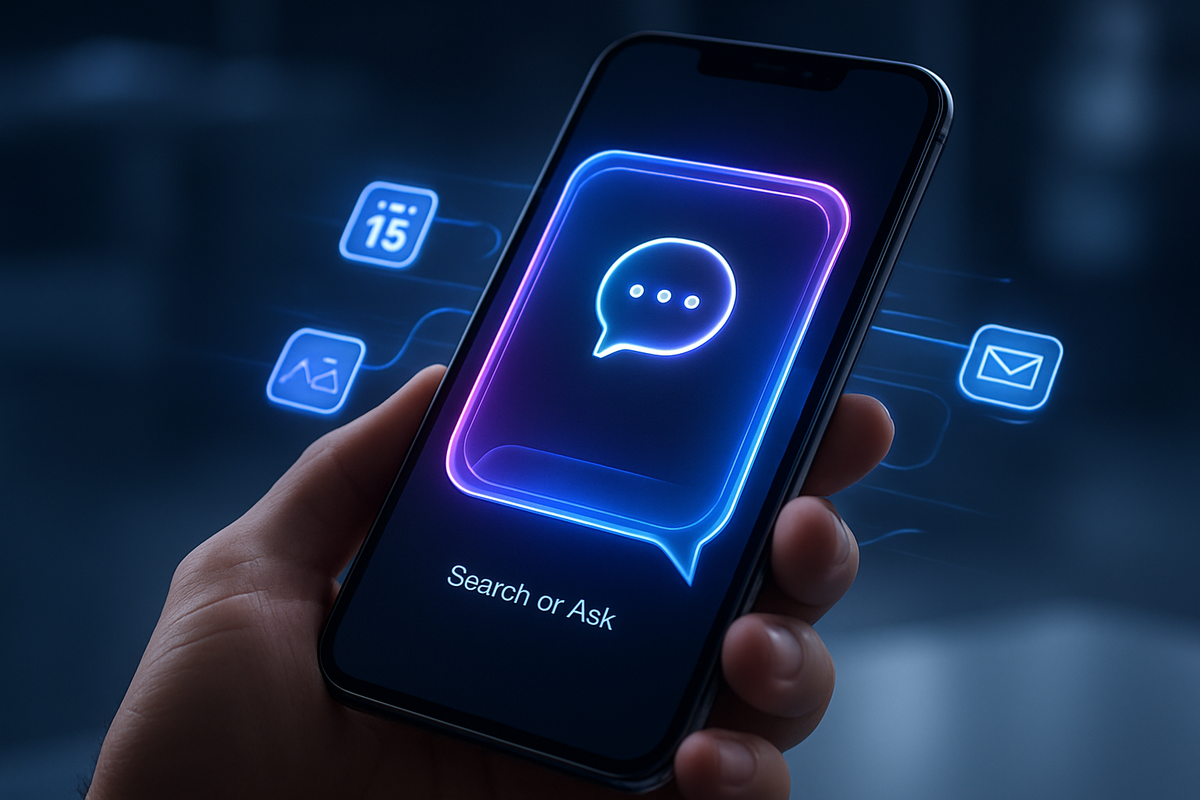
CUPERTINO, CA — As the tech world pivots toward the next generation of generative artificial intelligence, Apple (NASDAQ: AAPL) is reportedly preparing to unveil its most ambitious software overhaul in over a decade. Internal leaks and industry reports suggest that a completely redesigned Siri application, codenamed "Project Campos," is slated for a flagship reveal at the upcoming Worldwide Developers Conference (WWDC) in June 2026. This move marks a fundamental shift for Apple, transitioning Siri from a basic voice assistant into a sophisticated AI "agent" capable of cross-app reasoning and on-screen awareness.
The immediate implications are profound for both the consumer market and Apple’s financial standing. By moving toward a standalone Siri app with a dedicated chatbot interface, Apple is directly challenging the dominance of standalone AI tools like ChatGPT and Microsoft’s Copilot. This strategy aims to leverage Apple’s massive install base of over two billion devices to ensure that AI is not just a secondary tool, but the primary interface through which users interact with their hardware.
The Road to Siri 2.0: Architecture and Ambition
The journey to "Project Campos" began in earnest at WWDC 2024 with "Project Greymatter," which introduced basic generative features like notification summaries and writing tools. However, the 2026 iteration represents a "brain transplant" for the assistant. At the core of this transformation is the Apple Foundation Model (AFM) v11, a proprietary large language model (LLM) designed to run locally on Apple’s latest silicon. This model reportedly grants Siri the ability to understand "on-screen context," allowing the assistant to see what a user is looking at—whether a flight confirmation in an email or a photo in a message—and take complex actions based on that data.
This evolution has been meticulously timed. Throughout 2025, Apple expanded its Private Cloud Compute (PCC) infrastructure, a "stateless" server environment that allows for heavy AI processing without compromising user privacy. By March 2026, this infrastructure is reportedly robust enough to handle the massive traffic expected from a global rollout. The timeline suggests that while early versions of AI-enhanced Siri were iterative, the "Camos" update will be the first to offer true "agentic" capabilities, where the AI can perform multi-step tasks across different third-party applications without manual user intervention.
Key stakeholders in this transition include Apple’s Senior Vice President of Machine Learning and AI Strategy, John Giannandrea, and Craig Federighi, head of Software Engineering. Their "privacy-first" approach has dictated a unique hardware-software synergy: reports indicate that Siri 2.0 will require a minimum of 12GB of RAM to run its most advanced features locally. This hardware gate ensures that the "new Siri" will be a major driver for the upcoming iPhone 18 cycle, as older 8GB devices may only receive a cloud-dependent "Siri Lite."
Winners and Losers in the AI Arms Race
The primary winner in this shift appears to be Alphabet (NASDAQ: GOOGL). Despite Apple’s focus on its own foundation models, reports from early 2026 suggest a landmark $1 billion deal has positioned Google Gemini as the primary external engine for Siri’s broad-knowledge queries. This partnership provides Google with an unparalleled distribution channel, effectively making Gemini the "default" brain for the billions of queries that Apple's own models might defer to the cloud.
Conversely, OpenAI may find its influence within the Apple ecosystem waning. While ChatGPT was the high-profile partner in 2024, the shift toward Gemini as the core infrastructure suggests OpenAI has been relegated to an "optional" plugin for creative tasks. This highlights a strategic pivot by Apple to diversify its AI dependencies, likely to avoid over-reliance on a single partner that is closely tied to competitor Microsoft (NASDAQ: MSFT).
In the hardware sector, memory manufacturers such as Micron Technology (NASDAQ: MU) stand to benefit significantly. Apple’s decision to mandate 12GB of RAM for its flagship AI experience sets a new industry standard, likely forcing competitors like Samsung to follow suit and driving up demand for high-capacity LPDDR5X memory chips. For Apple itself, the "Project Campos" launch is a high-stakes play to defend its premium hardware margins by making AI-driven software the "must-have" feature that justifies an upgrade cycle.
Broader Industry Trends and Regulatory Hurdles
The relaunch of Siri fits into a broader industry trend toward "agentic AI"—systems that do not just talk, but act. We are moving away from the era of "chatting with a bot" and toward "delegating to an agent." This shift mirrors the early days of the App Store, where the platform itself became the primary value proposition. If Apple successfully integrates Siri into every facet of iOS, it could effectively disintermediate third-party apps, as users may simply ask Siri to "buy groceries" or "book a flight" rather than opening specific retail or travel applications.
However, this level of integration invites intense regulatory scrutiny, particularly under the European Union’s Digital Markets Act (DMA). Regulators are already eyeing how Apple might favor its own services or those of its partners (like Google) through the Siri interface. Historically, Apple has faced antitrust challenges regarding its "walled garden" approach; a Siri that acts as the sole gatekeeper for all on-device actions could be the next major battleground for competition authorities in Brussels and Washington.
This moment also invites comparisons to the 2011 launch of the original Siri. While that launch was revolutionary, it was followed by years of stagnation. The 2026 overhaul is an admission that the original architecture could no longer compete in the LLM era. The "Project Campos" launch is Apple’s attempt to reclaim the narrative that it is a leader in consumer-facing technology, rather than a laggard playing catch-up to the rapid innovations of the last three years.
The Road Ahead: What to Watch for in 2026
In the short term, all eyes are on the June 2026 WWDC keynote. Market analysts will be looking for a seamless demonstration of Siri’s "on-screen awareness" and the fluidity of the new "Liquid Glass" user interface. The success of the beta rollout in late 2026 (expected with iOS 27) will determine whether Apple can maintain its user loyalty or if consumers will continue to look toward third-party AI devices and software.
Long-term, the strategic pivot to "Invisible AI" remains Apple’s ultimate goal. If "Project Campos" succeeds, the iPhone becomes less of a portal to apps and more of a personal concierge. The challenge will be managing the technical debt of on-device processing and the massive energy requirements of Private Cloud Compute. If Apple can prove that it can offer high-performance AI without the privacy trade-offs of its rivals, it could secure its ecosystem for another decade.
Conclusion and Investor Takeaways
Apple’s reported launch of a standalone, LLM-powered Siri app represents a do-or-die moment for the company's AI strategy. By integrating Google's Gemini for broad tasks while keeping sensitive operations on-device via AFM v11, Apple is attempting to balance power with privacy. For investors, the key metric will be the iPhone 18 upgrade cycle; if the "12GB RAM requirement" for the new Siri successfully drives a "super-cycle" of hardware sales, Apple will have successfully monetized the AI revolution.
Moving forward, investors should watch for the official partnership details with Alphabet and any potential regulatory pushback from the EU regarding the Siri "agent" interface. The technology landscape is shifting from hardware specs to AI capabilities, and with "Project Campos," Apple is finally placing its bet on the table.
This content is intended for informational purposes only and is not financial advice.