In a decisive move to fortify its North American operations, The Kraft Heinz Company (NASDAQ: KHC) has finalized a $250 million (CAD) investment in its flagship Mont-Royal facility in Montreal. Announced on March 20, 2026, this massive capital infusion represents the largest modernization effort in the plant’s 70-year history. The investment is designed to repatriate production and bolster supply chain resilience as the food giant grapples with shifting consumer demands and a challenging macroeconomic environment that has seen its stock price languish near multi-year lows.
The immediate implications of this investment are two-fold: a significant reduction in cross-border logistics costs and a strategic pivot toward "Made in Canada" branding. By modernizing the facility’s 41 production lines, Kraft Heinz aims to secure the domestic supply of staples like Kraft Dinner, Philadelphia Cream Cheese, and Heinz Ketchup. For investors, the move is a tangible step toward the company’s ambitious goal of achieving $2.5 billion in gross efficiencies by 2027, even as the broader consumer staples sector faces intense pressure from private-label competition and volume declines.
A High-Stakes Modernization in Montreal
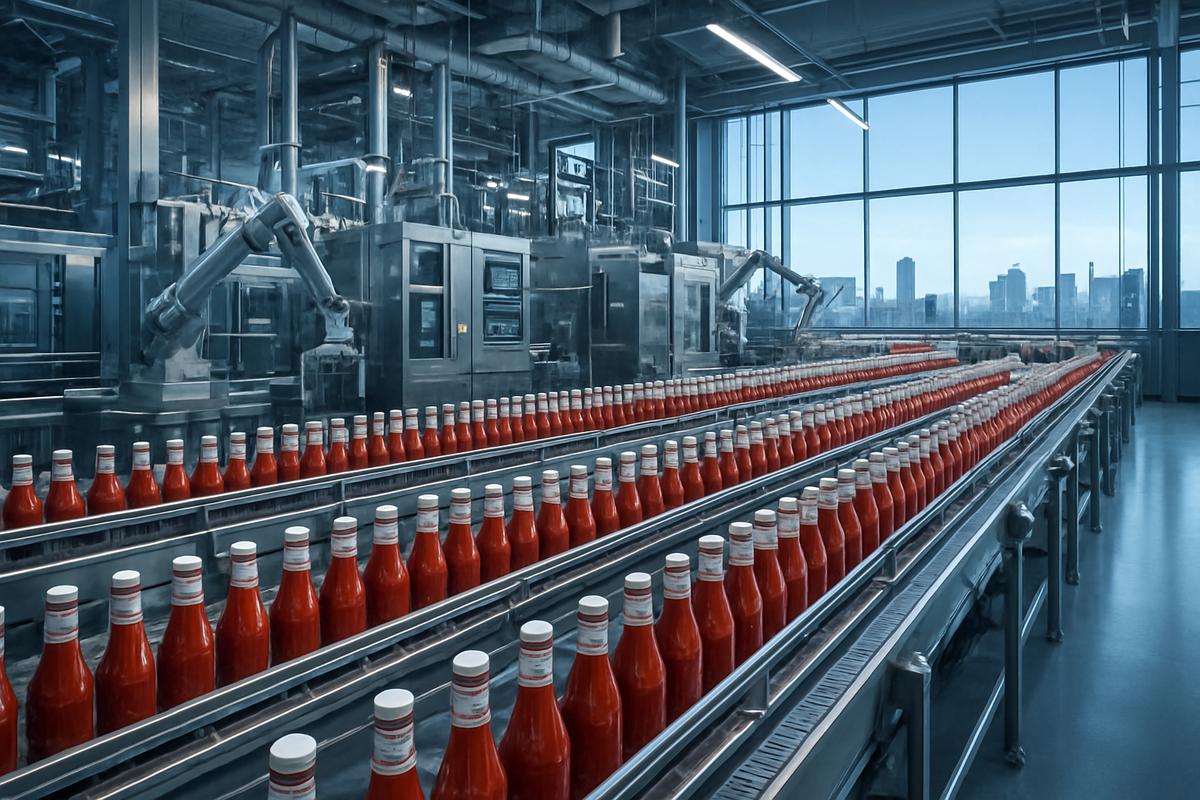
The finalization of this $250 million agreement on March 16, 2026, followed months of high-level negotiations between Kraft Heinz executives and the Canadian federal government. The project, which officially moved into its active implementation phase this week, focuses on replacing aging equipment with high-speed, AI-driven production systems. These upgrades are expected to significantly enhance the facility’s throughput while reducing energy consumption—a key component of the company’s broader sustainability mandates. Finance Minister François-Philippe Champagne hailed the move as a critical development for national food security, highlighting the partnership as a model for "near-shoring" essential manufacturing.
The timeline leading to this moment has been fraught with strategic pivots. In late 2025, Kraft Heinz (NASDAQ: KHC) leadership had reportedly explored a plan to split the company into two separate entities to unlock value. However, under the direction of the current leadership team, that split was formally paused in February 2026 in favor of a "One Kraft Heinz" strategy. This "Strategic Reset" prioritizes internal reinvestment over corporate restructuring, with the Montreal facility serving as the primary proving ground for this unified approach. The factory currently operates as the company's most complex site, and the successful integration of new technologies here is seen as a prerequisite for similar upgrades across its global footprint.
Market reaction to the announcement has been cautious but attentive. While industrial analysts praise the move toward operational efficiency, equity markets have remained skeptical. Kraft Heinz’s stock has struggled in early 2026, trading near a 52-week low of $21.57 as of March 23. The market is weighing the long-term benefits of a $250 million capital expenditure against the immediate reality of margin compression, which saw a 130-basis point drop in the most recent fiscal quarter. Industry insiders suggest that while the investment is necessary, the timeline for seeing a return on this capital in the form of earnings-per-share growth may extend into 2027 and beyond.
Identifying the Winners and Losers of the Efficiency Push
The primary winner in this strategic shift is undoubtedly the Canadian consumer and the local workforce in Quebec. By localizing production, Kraft Heinz (NASDAQ: KHC) reduces its exposure to currency fluctuations and international shipping delays that have plagued the industry since the early 2020s. Furthermore, the "Made in Canada" label provides a marketing tailwind in a region where consumer sentiment has increasingly shifted toward supporting domestic agriculture and manufacturing. Suppliers of raw ingredients in the region, particularly dairy and tomato farmers, stand to benefit from a more stable and high-volume purchaser as the Mont-Royal plant ramps up to replace imported goods from the U.S. and Europe.
Conversely, the "losers" in this scenario may include the company's export-heavy facilities in the United States and Europe, which are poised to lose the volume previously destined for the Canadian market. This shift in production logistics could lead to under-utilization at other plants, forcing Kraft Heinz (NASDAQ: KHC) to consider further consolidations or closures elsewhere to maintain overall portfolio health. Competitors like General Mills, Inc. (NYSE: GIS) and PepsiCo, Inc. (NASDAQ: PEP) may also find themselves at a disadvantage in the Canadian market as Kraft Heinz leverages its updated, lower-cost production base to maintain aggressive pricing strategies against private-label brands.
From an investment standpoint, the immediate losers are shareholders looking for short-term stock appreciation. The heavy capital expenditure required for the Montreal project—part of a larger $600 million reinvestment plan—diverts cash away from potential buybacks or further dividend increases at a time when the stock yield is already at an elevated 7.4% due to price depreciation. While long-term value investors may see this as a necessary "pain for gain" trade-off, those seeking defensive growth in the consumer staples sector have increasingly migrated toward companies like The Procter & Gamble Company (NYSE: PG), which have demonstrated stronger pricing power and more consistent volume growth in the current cycle.
Re-Shaping the Global Food Supply Chain
The Montreal investment is a microcosm of a much larger trend: the "de-globalization" of food supply chains. In the post-pandemic era, major food producers have realized that "just-in-time" delivery models are too fragile. Kraft Heinz (NASDAQ: KHC) is joining a chorus of multinational corporations that are moving toward "just-in-case" resilience. This involves bringing production closer to the end consumer—a practice known as "friend-shoring"—to mitigate the risks of geopolitical tension, climate-driven logistics disruptions, and the rising costs of cross-border trade.
This move also highlights the intensifying battle between brand-name powerhouses and private-label alternatives. As inflation remains a persistent concern for households in early 2026, consumers have become increasingly brand-agnostic. By investing in efficiency and domestic production, Kraft Heinz is attempting to lower its cost-per-unit to a level where it can compete on price without sacrificing its already-thin margins. Historically, similar moves by companies like Nestlé S.A. (OTC: NSRGY) have shown that while modernization can stabilize a brand's floor, it rarely restores the premium pricing power lost to generic competitors during high-inflation cycles.
Furthermore, there are significant regulatory and policy implications. The Canadian government’s involvement underscores a growing trend of "industrial policy" in the food sector, where governments provide incentives or support to ensure domestic manufacturing remains viable. This could prompt similar moves in other jurisdictions, leading to a fragmented global market where localized production becomes the mandatory cost of doing business. For Kraft Heinz, this necessitates a more decentralized management style, moving away from the highly centralized, cost-cutting-only philosophy that defined the company under previous ownership structures.
The Road Ahead: 2027 and the AI Integration
Looking forward, the success of the Montreal project will be measured by how effectively Kraft Heinz (NASDAQ: KHC) can integrate AI-driven demand forecasting with its new hardware. By late 2026, the company expects the first phase of the modernization to be fully operational, allowing for real-time adjustments to production schedules based on regional grocery data. This level of agility is required to meet the 2027 efficiency targets that the board has set to satisfy restless institutional investors. If the Montreal plant can prove that modernization leads to sustained margin recovery, it will likely serve as a blueprint for the company's older facilities in the Midwest United States.
However, the company faces significant headwinds. Short-term challenges include the potential for operational hiccups during the transition phase at the Mont-Royal site and the ongoing struggle to reverse volume declines in the U.S. market. Strategic pivots may still be required; if the "One Kraft Heinz" strategy fails to boost the stock price by late 2026, the company could face renewed pressure from activist investors to reconsider a divestiture of its slower-growing brands. The "PowerMac" and other product innovations must land with consumers to ensure that the newly modernized factory is actually running at full capacity.
Conclusion: A Pivot to Permanence
The $250 million investment in Montreal is a clear signal that Kraft Heinz (NASDAQ: KHC) is no longer content with the "slash-and-burn" cost-cutting reputation of its past. Instead, it is betting on high-tech modernization and regional self-sufficiency to carve out a sustainable future in a volatile market. The "Strategic Reset" announced earlier this year is now in full swing, and the Montreal facility is its most visible manifestation. For the company, this is about more than just making ketchup; it is about proving that a legacy food giant can adapt to the complexities of the 2026 economy.
For investors, the coming months will be a period of "wait and see." While the 7.4% dividend yield is enticing, the stock's proximity to its 52-week low reflects a market that is skeptical of turnaround stories until they show up in the bottom line. Watch for the Q1 and Q2 2026 earnings reports for any signs of stabilizing volumes and improved gross margins. The Montreal investment is a long-term play for resilience, but in a market defined by rapid shifts and private-label threats, Kraft Heinz must prove it can execute this transformation without further eroding its market value.
This content is intended for informational purposes only and is not financial advice.