In a move that cements the marriage between the artificial intelligence revolution and the heavy industrial power grid, Constellation Energy (Nasdaq: CEG) has finalized its landmark $16.4 billion acquisition of Calpine. The transaction, which officially closed in January 2026, represents the largest consolidation in the U.S. power sector in over a decade. By absorbing Calpine’s massive fleet of natural gas and geothermal assets into its own dominant nuclear portfolio, Constellation has positioned itself as the undisputed primary supplier for a tech industry hungry for 24/7 carbon-free electricity.
The immediate implications are profound: Constellation now controls approximately 55-60 gigawatts (GW) of generating capacity, making it a critical gatekeeper for the data center "supercycle." This week, the company took the final step in securing regulatory approval by announcing a $5 billion divestiture of 4.4 GW of regional assets to private equity firm LS Power. As of March 19, 2026, the market is no longer treating Constellation as a traditional utility, but rather as a core infrastructure play for the AI era, with its stock price reflecting a valuation premium typically reserved for high-growth software firms.
The Path to Power: Inside the $26.6 Billion Consolidation
The journey to this mega-merger began in January 2025, sparked by the realization that solar and wind power alone could not sustain the relentless energy demands of generative AI training models. The deal structure was complex, featuring an equity purchase price of $16.4 billion—composed of $4.5 billion in cash and 50 million shares of CEG stock—while assuming Calpine’s substantial debt load to reach a total enterprise value of approximately $26.6 billion. The merger effectively ended Calpine’s decade-long run as a private entity, bringing its efficient combined-cycle gas turbines and the Geysers geothermal complex under the Constellation banner.
Key stakeholders, including major institutional investors and the U.S. Department of Energy (DOE), viewed the deal as a necessary evolution for grid stability. Throughout 2025, Constellation CEO Joe Dominguez championed the merger as the only way to meet the "unprecedented" 24/7 load requests from hyperscale customers. Initial market reactions were jubilant; CEG shares rose nearly 35% in the year following the announcement as investors realized the sheer scale of the combined entity's contracted cash flows. The deal faced scrutiny from the Federal Energy Regulatory Commission (FERC) regarding market dominance in the PJM Interconnection, leading to the strategic sell-off of gas plants in Delaware and Pennsylvania just this month.
Winners and Losers in the New Energy Order
The clearest winner in this consolidation is Constellation Energy (Nasdaq: CEG) itself. By integrating Calpine’s flexible gas assets with its "always-on" nuclear fleet, Constellation can now offer "blended" power products that guarantee 100% carbon-free status via geothermal and nuclear, backed by the reliability of gas during peak demand periods. This has allowed the company to sign massive, multi-decade Power Purchase Agreements (PPAs) that were previously unthinkable. Similarly, tech giants like Microsoft (Nasdaq: MSFT) and Meta Platforms (Nasdaq: META) emerge as winners, having secured long-term energy security for their regional AI hubs through exclusive deals with the newly expanded Constellation fleet.
However, the consolidation creates a challenging environment for smaller independent power producers and retail electric providers. Companies that lack a massive nuclear or geothermal "moat" may find themselves squeezed as Constellation dominates the premium carbon-free market. On the losing end, some consumer advocacy groups have expressed concern that the focus on "behind-the-meter" deals for big tech could drive up costs for residential ratepayers by tightening the supply available to the general grid. While LS Power gains a significant foothold through its $5 billion acquisition of divested assets, it will face an uphill battle competing against the integrated scale of the "new" Constellation.
The AI Power Supercycle and the Nuclear Renaissance
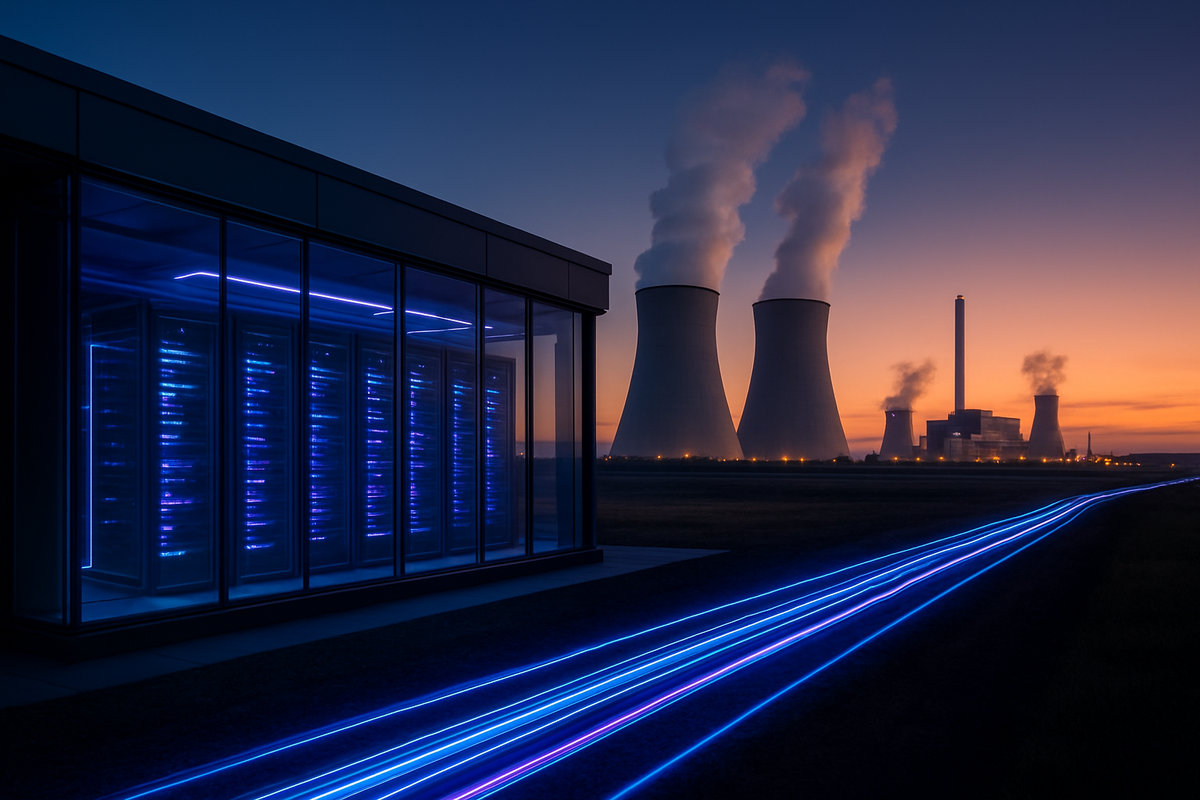
This acquisition is the definitive marker of the "AI Power Supercycle," a trend that has fundamentally shifted the U.S. energy landscape over the last two years. As data centers are projected to consume up to 12% of total U.S. electricity by 2028, the industry has experienced a "Nuclear Renaissance." Constellation’s recent efforts to restart the Crane Clean Energy Center—formerly known as Three Mile Island Unit 1—specifically to power Microsoft (Nasdaq: MSFT) data centers, served as a pilot for this broader consolidation strategy. The Calpine deal takes this a step further, combining nuclear baseload with geothermal "green baseload."
The merger also signals a shift in federal policy and regulatory sentiment. The DOE’s willingness to provide billion-dollar loan guarantees for nuclear restarts and the IRS’s clarification of production tax credits (PTCs) for existing nuclear plants have made these assets the most valuable "real estate" in the energy world. This deal follows the precedent set by other players like Vistra Corp (NYSE: VST) and NextEra Energy (NYSE: NEE), who have also pivoted aggressively toward nuclear and co-location strategies, but none have matched the sheer scale or the "tech-integrated" business model that Constellation has now achieved.
What’s Next: Reactors, Robots, and Regulation
Looking ahead, the next 24 months will be defined by execution. Constellation must successfully integrate the Calpine fleet while managing the high-stakes restart of the Crane Clean Energy Center. Market analysts expect a "domino effect" of further co-location deals, where data center developers build facilities directly adjacent to Constellation’s nuclear plants to bypass grid interconnection delays. This "behind-the-meter" strategy is likely to become the standard for the next generation of AI infrastructure.
Furthermore, the industry is watching closely to see if Constellation will leverage its new balance sheet to invest in Small Modular Reactors (SMRs). With the Calpine acquisition finalized, the company has the cash flow to become a lead developer in next-generation nuclear technology. However, potential challenges remain. Regulatory pushback against "utility-scale monopolies" could intensify if grid reliability for average citizens begins to waver. Investors should also monitor the upcoming 2026 midterm elections, as any shift in energy policy regarding carbon credits or nuclear subsidies could alter the financial math of these long-term contracts.
Conclusion: The New Benchmark for Infrastructure
The $16.4 billion acquisition of Calpine by Constellation Energy is more than just a corporate merger; it is a structural realignment of the American economy. By 2026, the line between "utility" and "tech infrastructure" has blurred. Constellation has successfully transitioned from a commodity power producer to a high-value partner for the companies building the future of artificial intelligence. The deal proves that in the modern era, the most valuable commodity isn't just data—it’s the carbon-free electrons required to process it.
Moving forward, the market will likely see Constellation as the bellwether for the intersection of energy and technology. For investors, the focus shifts to the quarterly earnings reports of 2026, which will reveal the full "accretive" power of the Calpine assets—expected to add over $2 billion in annual free cash flow. As the world watches the rollout of the Crane Clean Energy Center and the integration of the Geysers geothermal assets, one thing is certain: the era of the "Nuclear AI Titan" has officially arrived.
This content is intended for informational purposes only and is not financial advice.