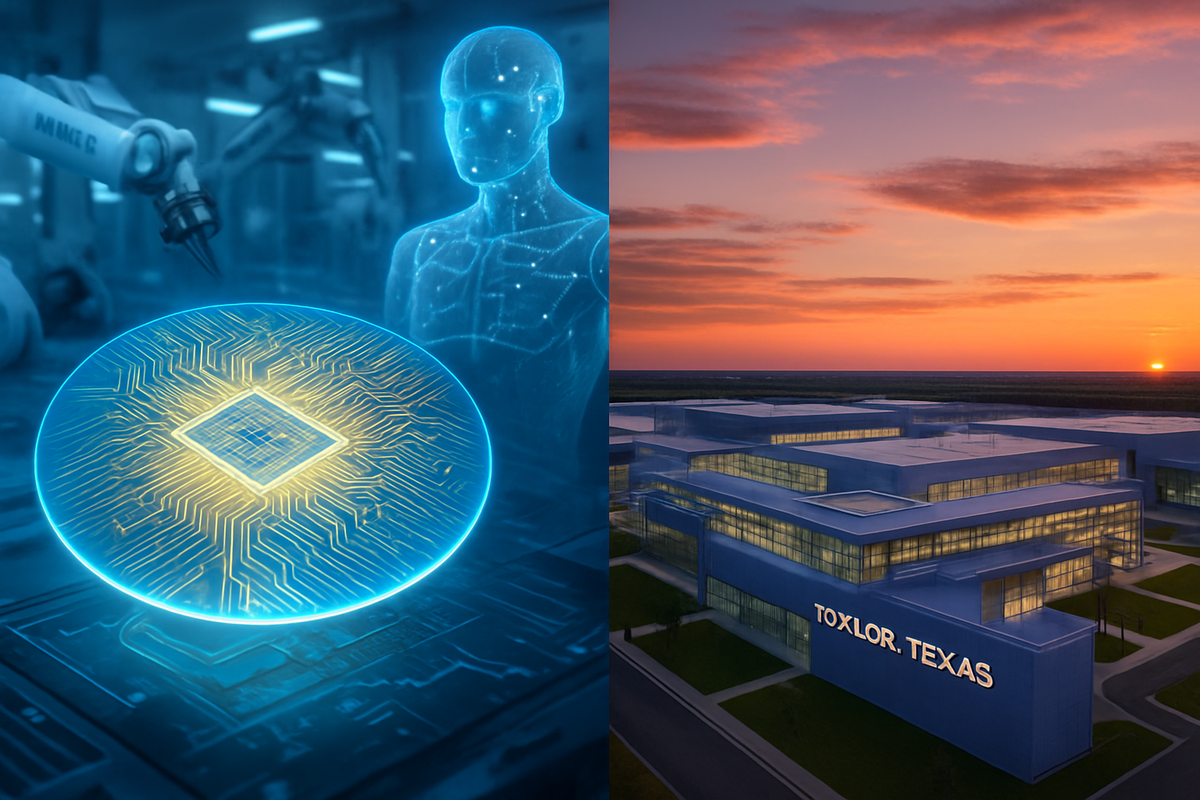
In a move that signals a seismic shift in the global semiconductor landscape, Samsung Electronics (KRX: 005930) has officially confirmed it will begin mass-producing next-generation autonomous driving chips for Tesla (NASDAQ: TSLA) starting in the second half of 2027. This landmark agreement, centered on the highly anticipated 2-nanometer (2nm) process node, represents a pivotal victory for Samsung’s foundry business and a strategic diversification for Tesla as it seeks to insulate its supply chain from geopolitical volatility in East Asia.
The partnership, valued at an estimated $16.5 billion through 2033, will see Samsung’s new flagship fabrication plant in Taylor, Texas, become the primary manufacturing hub for Tesla’s "AI6" chip, also known as Hardware 6 (HW6). By localized production in the United States, Tesla is doubling down on a "No China, No Taiwan" policy for its most critical artificial intelligence components. For the broader market, this development marks the beginning of a fierce competition between Samsung and its primary rival, Taiwan Semiconductor Manufacturing Company (NYSE: TSM), for dominance in the emerging era of software-defined vehicles and humanoid robotics.
The Road to 2nm: A Texas-Sized Ambition
The official confirmation came during a Samsung shareholders' meeting in mid-March 2026, where Samsung Foundry President Jinman Han detailed the roadmap for the AI6 chip. The processor is designed using Samsung’s cutting-edge Gate-All-Around (GAA) 2nm architecture, specifically the SF2P node, which promises a 2x performance jump over current-generation hardware while significantly reducing power consumption. This "brain" will not only power Tesla's Full Self-Driving (FSD) suites in future vehicle models and the "Cybercab" robotaxi but will also serve as the central processing unit for the Optimus humanoid robot and Tesla’s evolving AI data center architecture.
The timeline for this transition has been years in the making. While Tesla utilized Samsung for its Hardware 3.0 chips, it famously pivoted toward TSMC for the 4nm and 5nm nodes used in Hardware 4.0 and 5.0 (AI5). However, the deal signed in July 2025 and finalized this month brings Tesla back into the Samsung fold for its most advanced needs. Recent industry data suggests Tesla has already requested to more than double its initial capacity requirements at the Taylor plant, moving from 16,000 to approximately 40,000 wafers per month. This surge in demand has reportedly prompted Samsung to accelerate plans for a second fabrication facility on its Texas campus to meet the 2027 deadline.
Winners and Losers in the Foundry War
Samsung Electronics stands as the most immediate beneficiary of this deal. After years of trailing TSMC in market share and struggling with yield issues on earlier 3nm nodes, the Tesla contract provides a critical validation of its 2nm GAA technology. Analysts estimate the deal will generate between $1.5 billion and $2.2 billion in annual revenue for Samsung’s foundry division, offering a much-needed path to profitability following a volatile 2025. Furthermore, the partnership allows Samsung to showcase its "turnkey" capabilities, integrating its HBM4 memory chips directly with the Tesla-designed logic.
On the other side of the ledger, TSMC faces a notable, though not catastrophic, loss of market share in the high-margin automotive sector. While TSMC remains the manufacturer of choice for Apple (NASDAQ: AAPL) and NVIDIA (NASDAQ: NVDA), the loss of the AI6 contract to Samsung highlights a growing desire among U.S. tech giants to diversify away from Taiwan-centric production. TSMC has responded by hiking prices for its own 2nm wafers by up to 10% and accelerating the timeline for its Arizona-based facilities, though it currently remains behind Samsung in implementing GAA architecture for its 2nm chips. Meanwhile, ASML (NASDAQ: ASML) emerges as a silent winner, as both Samsung and TSMC race to purchase its ultra-expensive High-NA EUV lithography machines required to etch 2nm circuits.
Broader Industry Trends: Localization and the AI Arms Race
The Samsung-Tesla deal is a microcosm of the broader "Silicon Nationalism" trend currently sweeping the financial markets. Governments in Washington and Seoul have incentivized this partnership through the CHIPS Act and similar subsidies, aiming to secure the supply chains for AI-driven technologies. This move toward regionalized manufacturing reduces the "Taiwan risk" that has long plagued the semiconductor sector, providing Tesla with a secure, domestic pipeline for its most sensitive IP.
Furthermore, the shift toward 2nm production for autonomous driving signals that the automotive industry is no longer a laggard in chip technology. Historically, cars used older, "mature" process nodes for reliability. Now, the demand for real-time AI inference at the "edge"—needed for a car to navigate complex urban environments or for a robot to perform household tasks—requires the same bleeding-edge technology found in the world's most powerful supercomputers. This forces competitors like Mercedes-Benz (OTC: MBGYY) and General Motors (NYSE: GM) to decide whether to design their own silicon or rely on third-party platforms like NVIDIA’s "Drive Thor," which was recently updated to compete directly with Tesla’s AI6 performance metrics.
What’s Next: Validation and Yield Hurdles
While the 2027 mass production target is set, the path forward is fraught with technical challenges. Currently, in March 2026, the AI6 has entered the post-silicon validation stage. Tesla has significantly expanded its engineering presence in South Korea to work alongside Samsung engineers to debug early prototypes and optimize the 2nm yields. The industry will be watching closely to see if Samsung can maintain a yield rate above 50% for its 2nm GAA process—a threshold traditionally considered necessary for commercial viability at scale.
In the long term, investors should keep a close eye on Elon Musk’s ambitious "Terafab Project," a rumored $25 billion plan for Tesla to eventually build its own in-house foundries. While most analysts believe Tesla is at least a decade away from mastering 2nm manufacturing independently, the move toward internal chip design already puts immense pressure on traditional semiconductor firms to innovate or face obsolescence. For now, the transition to Samsung’s Texas plant in 2027 serves as a middle ground: Tesla controls the design, Samsung controls the manufacturing, and both reduce their reliance on the geopolitical status quo.
Market Outlook and Final Thoughts
The H2 2027 mass production of Tesla chips by Samsung marks a definitive moment in the "Foundry War." For investors, the takeaway is clear: the battle for AI supremacy is shifting from software and data to the physical silicon and the geography of the factories that produce it. Samsung has successfully leveraged its U.S. presence to claw back a premiere client, while Tesla has secured a technological edge that could define its performance in the autonomous vehicle market for the next decade.
As we move toward 2027, the market should monitor Samsung’s quarterly reports for updates on the Taylor plant’s construction and any shifts in TSMC’s pricing strategy. The semiconductor supply chain is being redrawn in real-time, and this $16.5 billion gamble in the heart of Texas is likely just the first of many high-stakes moves to come.
This content is intended for informational purposes only and is not financial advice.