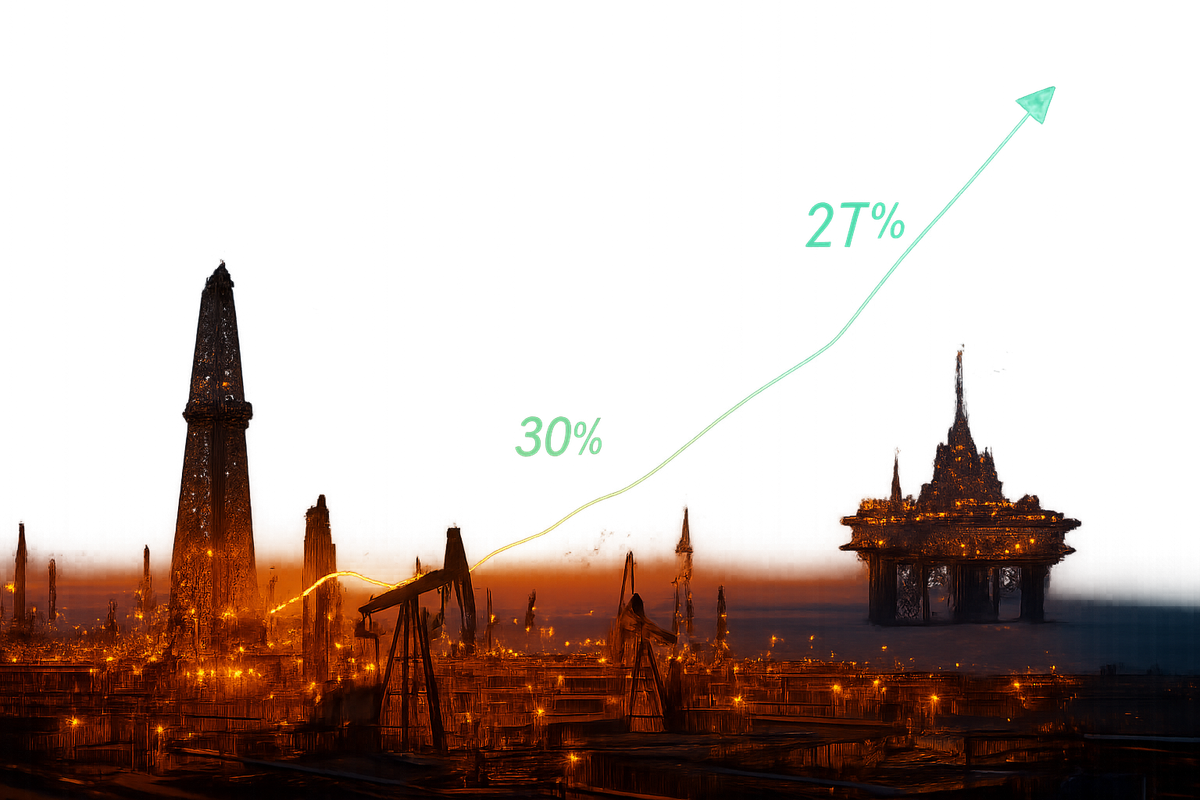
The first quarter of 2026 has been defined by a dramatic and sustained rally in the energy markets, effectively decoupling the sector from a broader equity market struggling with stagflationary pressures. As of March 16, 2026, the Energy Select Sector SPDR (NYSEARCA:XLE) has climbed a staggering 27% year-to-date, fueled by a "perfect storm" of geopolitical volatility and a resurgence in global demand that has pushed crude prices toward the $120 mark.
This resurgence is not merely a short-term spike but a fundamental shift in investor sentiment toward "real assets." While high-growth technology sectors have faltered under the weight of "sticky" inflation and rising interest rates, energy stocks have emerged as the premier safe haven. The immediate implication is clear: the energy sector is no longer just a cyclical play; it has become the primary defensive wall for institutional and retail portfolios alike in an increasingly unstable global economy.
A Perfect Storm: Conflict and Commodity Spikes
The catalysts for this year’s energy dominance are rooted in a series of escalating geopolitical crises that reached a breaking point in late February. Following a series of military strikes between Israel and Iran, the geopolitical risk premium on crude oil skyrocketed. By March 11, the Strait of Hormuz—a vital artery through which 20% of the world’s oil and liquefied natural gas (LNG) flows—was declared effectively impassable for commercial shipping due to heightened security threats. This "Hormuz Factor" sent Brent crude futures soaring to $119.50 per barrel, their highest level in years.
Amidst this turmoil, Exxon Mobil (NYSE: XOM) has emerged as the industry's undisputed heavyweight champion. The company’s stock has surged 30% year-to-date, trading near an all-time high of $157 per share. More impressively, Exxon Mobil recently confirmed it has reached a historic operational milestone: net production of 5 million oil-equivalent barrels per day. This is the highest production level for the company in over four decades, driven largely by record-breaking outputs from the Permian Basin and the rapid development of its high-margin offshore assets in Guyana.
The timeline of this rally was further accelerated by economic data released in early March. The U.S. Producer Price Index (PPI) for February showed a 2.9% increase, far exceeding the 1.6% forecast by economists. This surprise inflation reading signaled that wholesale costs remain stubbornly high, prompting a massive rotation out of growth stocks and into energy companies, which possess the unique ability to pass higher costs directly to consumers while benefiting from the very commodity price increases that drive inflation.
Winners and Losers in the Great Energy Rotation
While Exxon Mobil has captured the headlines, the ripple effects are being felt across the entire sector. Chevron (NYSE: CVX) has posted a robust 20% gain year-to-date, supported by the successful integration of its Hess Corporation acquisition. This move has given Chevron a 30% stake in the lucrative Stabroek block in Guyana, placing it in a powerful position alongside Exxon to dominate the global supply of low-cost, high-quality crude. Furthermore, Chevron's expansion into "lower-carbon" hydrogen and lithium ventures has attracted ESG-conscious investors who are nonetheless seeking exposure to the oil rally.
ConocoPhillips (NYSE: COP) is another significant winner, with its stock up 19% since the start of the year. As a pure-play exploration and production (E&P) company, COP has benefited directly from the surge in wellhead prices. Following its late-2024 acquisition of Marathon Oil, ConocoPhillips has successfully implemented a $1 billion cost-cutting initiative, making it one of the most efficient operators in the shale patch. Despite its strong run, many analysts believe COP remains undervalued compared to its integrated peers, trading at a price-to-earnings ratio of approximately 17x.
Conversely, the "losers" in this environment are primarily found in the consumer discretionary and transportation sectors. Airlines and logistics companies are seeing their margins decimated by jet fuel and diesel costs that have spiked nearly 40% in some regions since January. Additionally, tech companies that rely on cheap capital are finding themselves sidelined as the Federal Reserve is forced to keep interest rates "higher for longer" to combat the energy-driven inflationary surge.
Energy as the Ultimate Inflation and Geopolitical Hedge
The broader significance of the 2026 rally lies in the re-validation of energy stocks as a strategic hedge. Historically, energy has been one of the few sectors to outperform during periods of "stagflation"—characterized by slow economic growth and high inflation. In the current market, energy equities are providing a "double-ended" hedge: they offer protection against the rising cost of living (inflation) and the risk of global supply disruptions (geopolitics).
This trend also highlights a major shift in regulatory and policy dynamics. Just a few years ago, the narrative was dominated by an aggressive "energy transition" away from fossil fuels. However, the realities of 2026 have forced a pragmatic retreat. Energy security has once again taken precedence over decarbonization goals in many Western capitals. This policy shift has emboldened major oil companies to greenlight massive long-term projects, such as ConocoPhillips’ Willow Project in Alaska, which are now seen as essential for national security.
The current environment also bears striking similarities to the oil shocks of the 1970s, though with a modern twist. Today’s oil majors are far more disciplined than their predecessors, prioritizing shareholder returns (buybacks and dividends) over reckless production growth. Exxon Mobil’s $20 billion share buyback program, maintained even as it hits 5 million barrels per day, is a testament to this new era of "capital discipline" that is keeping the sector’s valuations attractive to institutional investors.
The Road to $150: What Comes Next?
Looking ahead, the short-term trajectory for the energy sector will depend heavily on the situation in the Middle East. If the Strait of Hormuz remains contested or closed, some analysts are forecasting that crude could test the $150 per barrel mark by the summer of 2026. Such a scenario would likely push the XLE even higher, potentially reaching a 40% gain for the year. However, this also carries the risk of "demand destruction," where prices become so high that global consumption begins to contract, potentially triggering a global recession.
For companies like Exxon Mobil and Chevron, the challenge will be managing their massive free cash flows. While buybacks are popular, there is increasing pressure for these giants to reinvest more into the energy transition to avoid future regulatory crackdowns or "windfall taxes." Strategic pivots into carbon capture and storage (CCS) and sustainable aviation fuel (SAF) are likely to accelerate as these companies look to secure their social license to operate in a high-price environment.
Potential scenarios also include a diplomatic resolution to the Hormuz blockade, which would cause a sharp, temporary correction in oil prices. However, many experts believe the floor for oil has permanently shifted higher due to years of underinvestment in new supply and the increasing "weaponization" of energy resources by global powers.
Conclusion: A New Paradigm for Investors
The dominance of the energy sector in 2026 marks a return to fundamentals. With the Energy Select Sector SPDR up 27% and Exxon Mobil hitting 5 million barrels per day, the market is sending a clear signal: energy security and inflation protection are the top priorities for the foreseeable year. The sector has proven its resilience, successfully navigating a landscape of geopolitical conflict and economic uncertainty.
Moving forward, the market will likely remain volatile but biased toward the upside as long as geopolitical tensions persist and inflation remains above target. Investors should closely monitor production reports from the Permian Basin and any shifts in the military situation in the Middle East. While the rapid gains of early 2026 may be difficult to sustain at this velocity, the underlying structural drivers—scarcity, demand, and geopolitical risk—suggest that the energy sector will remain the cornerstone of a diversified portfolio for the remainder of the decade.
This content is intended for informational purposes only and is not financial advice.