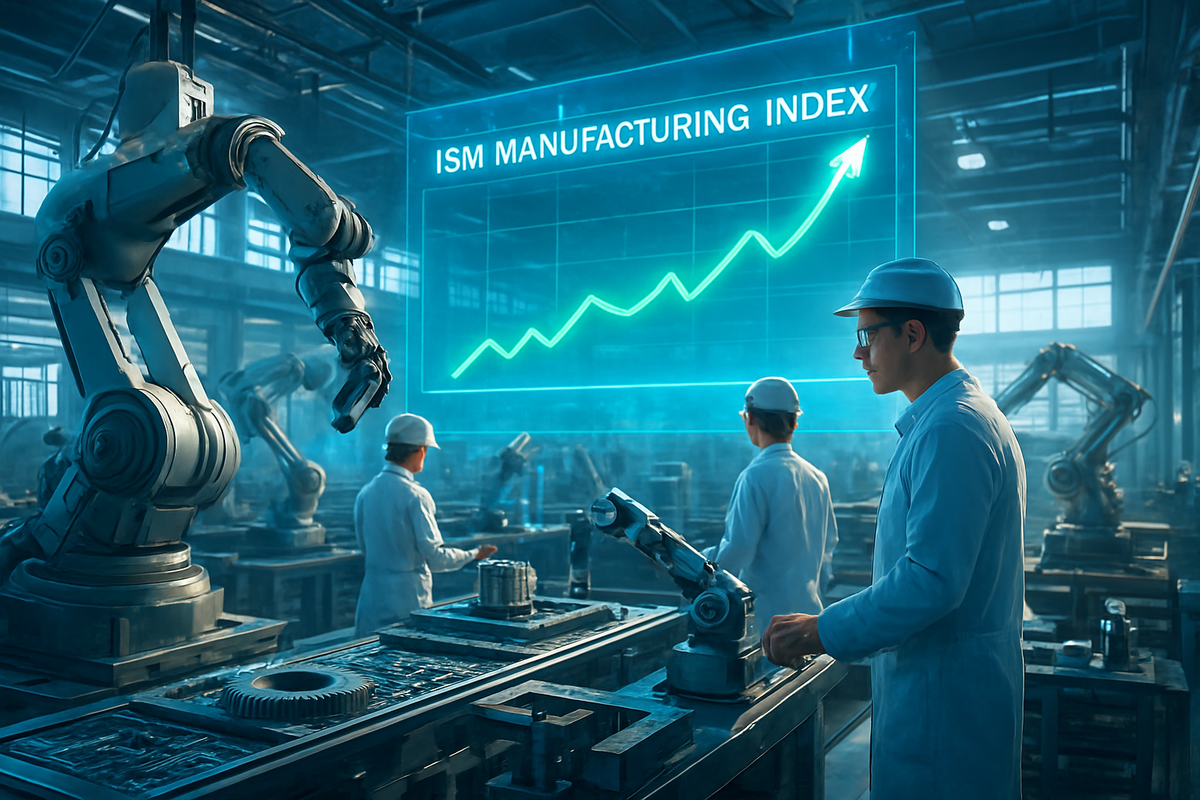
The U.S. industrial sector has finally signaled a definitive end to its prolonged period of stagnation, with the Institute for Supply Management (ISM) reporting that the Manufacturing PMI surged to 52.6% in January 2026. This reading marks the first significant expansion for the sector in over a year, comfortably crossing the 50.0 threshold that separates industry growth from contraction. The 4.7-point jump from December’s 47.9% reading represents the sharpest monthly increase since 2022, suggesting that the "manufacturing recession" that gripped the domestic economy throughout much of 2024 and 2025 may finally be in the rearview mirror.
The rebound is being hailed by economists as a vital inflection point for the broader U.S. economy. As the manufacturing sector begins to hum again, it signals a shift in corporate sentiment from defensive cost-cutting to aggressive capital investment. With demand for new orders accelerating and production schedules ramping up to meet a growing backlog, the industrial recovery is no longer a hopeful forecast—it is actively reshaping the market landscape as we move into the first quarter of 2026.
A Surge in Demand and the End of the "Wait-and-See" Era
The January 2026 ISM report, released last week, provided a comprehensive look at an industry undergoing a rapid transformation. The most striking data point was the New Orders Index, which skyrocketed to 57.1%, up nearly 10 points from the previous month. This surge is largely attributed to the release of "wait-and-see" demand that had been bottled up during the high-interest-rate environment of 2025. Managers are reporting that the restoration of 100% bonus depreciation under the "One Big Beautiful Bill Act" (OBBBA), signed into law in mid-2025 and taking full effect on January 1st, has incentivized a massive wave of machinery and equipment upgrades.
The timeline leading to this moment was fraught with challenges. Throughout 2024 and most of 2025, the manufacturing sector struggled under the weight of high borrowing costs and a post-pandemic shift where consumers favored services over physical goods. While a brief flicker of growth appeared in early 2025, it was quickly extinguished by trade uncertainties. However, the current momentum feels different. The Production Index followed the order growth, rising to 55.9%, marking its third consecutive month of expansion. Even more telling was the Backlog of Orders Index, which moved into expansion territory at 51.6%, indicating that factories are now struggling to keep pace with the influx of new business.
Key stakeholders, from factory floor managers to C-suite executives, are navigating a complex environment where growth is returning but labor remains tight. The Employment Index, while improving to 48.1%, still sits in contraction territory. Surveyed companies noted that they are primarily managing headcount through attrition rather than new hiring, as many firms look to automation to solve long-term labor shortages. Despite the cautious approach to hiring, the overall sentiment across the 18 industries tracked by the ISM is overwhelmingly positive, with 15 of those sectors reporting growth in January, led by Apparel, Chemicals, and Transportation Equipment.
Industrial Titans and Material Winners
The resurgence in manufacturing activity is creating a clear divide between companies positioned to capitalize on new demand and those squeezed by rising input costs. United States Steel Corp (NYSE: X) has emerged as a primary beneficiary, as the Primary Metals sector was among the top-performing industries in the latest report. With domestic protectionism and renewed infrastructure spending driving demand, steel prices have begun to climb, bolstering the outlook for domestic producers who have weathered the previous two years of volatility.
Similarly, Honeywell International Inc. (NASDAQ: HON) is seeing a surge in interest for its automation and aerospace technologies. As the ISM report highlighted a shift toward modernizing facilities to offset labor gaps, Honeywell’s industrial software and warehouse automation divisions are expected to see significant order growth through 2026. The company is well-positioned to benefit from the tax incentives that favor high-tech capital investment. Meanwhile, Caterpillar Inc. (NYSE: CAT) is riding a "power-gen boom" fueled by the construction of massive data centers required for the ongoing AI revolution. While Caterpillar recently flagged a multibillion-dollar hit from ongoing tariffs on imported components, the sheer volume of its order book is currently offsetting those margin pressures.
On the other side of the ledger, companies like Deere & Co. (NYSE: DE) face a more complicated path. While the 100% bonus depreciation makes their high-cost agricultural machinery more attractive to buyers, the "perfect storm" of high input costs from steel and aluminum tariffs, combined with still-recovering farm incomes, has kept their recovery more muted than their construction-focused peers. Likewise, 3M Co. (NYSE: MMM) remains under the microscope as it balances the recovery in industrial demand with lingering legal settlements and the inflationary pressure reflected in the ISM Prices Index, which climbed to 59.0% in January.
Broader Significance and Historical Precedents
This expansionary turn in the ISM index is more than just a data point; it represents a significant structural shift in the U.S. economy. Historically, when the ISM Manufacturing Index crosses the 50-mark after a long period of contraction—such as the 2001-2002 or 2015-2016 cycles—it often heralds a multi-year period of GDP growth. This "re-industrialization" trend is being further bolstered by "re-shoring" initiatives, where companies are bringing production back to North America to avoid the logistical and geopolitical risks that defined the early 2020s.
The current event also underscores the power of fiscal policy in driving industrial cycles. The OBBBA’s tax provisions have acted as a powerful "pull-forward" mechanism for capital expenditures. However, the report also highlights a growing tension: the "Prices Index" at 59.0% suggests that inflation in the goods sector is not yet dead. This creates a potential ripple effect for the Federal Reserve; if manufacturing growth continues to fuel price increases for raw materials, the "last mile" of inflation control could become significantly more difficult, potentially delaying further interest rate cuts in 2026.
Comparisons to the 2022-2024 slump are inevitable. During that period, the sector was hampered by a "bullwhip effect" of excess inventory. The January 2026 data shows that inventories are now lean (the Inventories Index sat at 49.1%), meaning that any new demand must be met by new production rather than drawing down existing stock. This lean inventory environment is a catalyst for faster industrial growth, as it forces the entire supply chain to ramp up simultaneously.
The Road Ahead: Growth vs. Inflation
In the short term, investors should expect continued volatility as the market digests the trade-off between higher growth and higher input costs. The primary challenge for the manufacturing sector in the coming months will be margin preservation. With the Prices Index showing that 16 consecutive months of cost increases have culminated in a 59.0% reading, companies will likely attempt to pass these costs on to consumers, which could test the resilience of demand in the second half of 2026.
Strategic pivots are already underway. Many firms are moving away from "just-in-time" inventory models toward "just-in-case" strategies, prioritizing supply chain resilience over pure efficiency. This will likely create long-term opportunities for logistics and transportation companies, as well as providers of industrial real estate. Additionally, the push toward automation is expected to accelerate, as the gap between the Production Index and the Employment Index suggests that factories are finding ways to do more with fewer workers.
Looking further ahead, the sustainability of this recovery will depend on whether the New Orders surge is a temporary reaction to tax changes or a permanent shift in demand. If the backlog of orders continues to grow into the summer of 2026, it would confirm a full-scale industrial bull market. However, if the tariff-driven price increases begin to choke off demand, the recovery could stall before it truly takes flight.
Summary and Investor Outlook
The return of the ISM Manufacturing Index to expansionary territory at 52.6% is a landmark moment for the U.S. economy in 2026. Driven by a surge in new orders and supported by favorable tax legislation, the industrial sector is reclaiming its role as an engine of growth. While labor remains a constraint and price pressures are mounting, the underlying momentum in production and demand suggests that the sector is entering a new phase of activity.
Moving forward, the market is likely to reward "quality industrials"—those with the pricing power to navigate rising material costs and those providing the automation tools necessary for modern manufacturing. Investors should keep a close eye on the New Orders sub-index in the coming months; as long as it remains above 55%, the industrial rally has room to run. However, a continued rise in the Prices Index could invite unwanted attention from monetary policymakers. For now, the "Made in America" story has found its second wind, and the 50-point threshold is a clear sign that the engines are once again firing on all cylinders.
This content is intended for informational purposes only and is not financial advice.