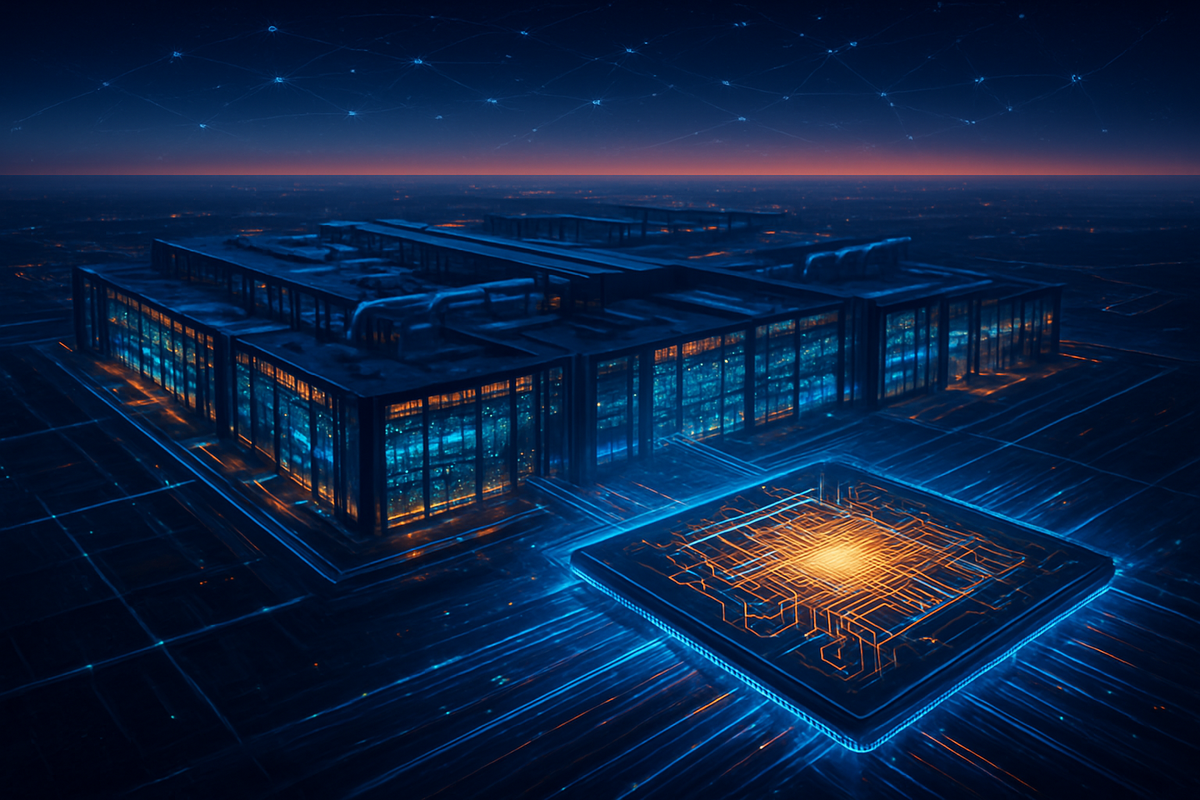
In a move that has recalibrated the scale of the global technology arms race, Amazon.com, Inc. (NASDAQ: AMZN) stunned Wall Street this week by announcing a massive $200 billion capital expenditure guidance for 2026. This unprecedented figure, aimed squarely at securing dominance in generative AI and satellite infrastructure, represents the largest single-year investment program ever undertaken by a private corporation. While the company reported record-breaking revenue for the final quarter of 2025, the sheer magnitude of the projected spending has sent a chill through the market, raising urgent questions about near-term profit margins and the sustainability of the AI investment cycle.
The immediate market reaction was one of "sticker shock," as Amazon’s stock tumbled nearly 11% to roughly $227 in the wake of the announcement. Investors, who had spent much of 2023 and 2024 cheering Chief Executive Andy Jassy’s “Year of Efficiency,” were caught off-guard by the pivot back to hyper-aggressive spending. Despite an AWS growth rate that reaccelerated to 24%—its fastest pace in over three years—the narrative has shifted from quarterly earnings to the long-term cost of staying relevant in an era where data center capacity and custom silicon are the new global currencies.
The Trillion-Dollar Pivot: Inside the $200 Billion Bet
The revelation came during a high-stakes earnings call where CEO Andy Jassy characterized the current technological shift as a "seminal opportunity" that justifies spending levels previously unthinkable. Amazon reported Q4 2025 revenue of $213.4 billion, beating analyst estimates, but its operating income of $25.0 billion was marred by $2.4 billion in one-time charges, including tax disputes and severance costs. However, these figures were largely relegated to the background as Jassy detailed the $200 billion 2026 roadmap. The plan represents a 54% increase over 2025’s already massive $132 billion spend, far outstripping the guidance provided by rivals like Alphabet Inc. (NASDAQ: GOOGL) and Microsoft Corporation (NASDAQ: MSFT).
The spending is primarily earmarked for the expansion of Amazon Web Services (AWS) infrastructure. Jassy noted that demand for AI workloads is currently outstripping the company's ability to supply compute power, leading to a massive AWS backlog that has ballooned to $244 billion. To meet this demand, Amazon is not only building traditional data centers but is also doubling down on its own custom chips, such as Trainium and Graviton. According to the company, its custom silicon business has already reached a $10 billion annual run rate, growing at triple-digit percentages as customers seek more cost-effective alternatives to general-purpose GPUs.
Beyond the cloud, a significant portion of the capital is flowing into Project Kuiper, Amazon’s low-Earth orbit satellite network. With a commercial rollout expected in late 2026, the company is racing to complete its constellation to compete with SpaceX’s Starlink. This "dual-front" investment—AI from above and AI from the ground—is the core of Jassy’s vision. "As fast as we install this AI capacity, we are monetizing it," Jassy told analysts. "It is a very unusual opportunity to have this much visibility into future demand."
Winners and Losers: The New AI Ecosystem
The "shock and awe" of Amazon’s spending has created a clear divide between industry winners and those left in the wake of the hyperscale build-out. Among the primary beneficiaries are the "picks and shovels" providers of the AI era. Marvell Technology, Inc. (NASDAQ: MRVL) and Broadcom Inc. (NASDAQ: AVGO) have seen their outlooks brighten as Amazon’s shift toward custom silicon accelerates. As the primary partners for Amazon’s Trainium and Inferentia chips, these firms are essential to Amazon’s strategy of reducing its long-term dependence on NVIDIA Corporation (NASDAQ: NVDA). Nevertheless, Nvidia remains a winner in the short term, as the sheer scale of the $200 billion spend necessitates massive ongoing orders for its Blackwell and Rubin architectures.
The energy sector has also emerged as a critical partner. Amazon’s need for massive, reliable power has led to landmark deals with companies like Talen Energy Corp (NASDAQ: TLNE) for nuclear-powered data centers. The company’s $500 million investment in Small Modular Reactors (SMRs) with developers like X-energy is a sign that power, not just chips, is the new gating factor for growth. Additionally, infrastructure specialists like Vertiv Holdings Co (NYSE: VRT), which provides liquid cooling systems, and Arista Networks, Inc. (NYSE: ANET), the dominant provider of high-speed networking switches, are poised to capture a significant share of this $200 billion windfall.
Conversely, the massive spend is creating pressure elsewhere. Traditional enterprise software giants like Salesforce, Inc. (NYSE: CRM) and ServiceNow, Inc. (NYSE: NOW) have seen their stock prices soften as investors worry that corporate IT budgets are being cannibalized to pay for AWS’s raw compute costs. Furthermore, data center REITs like Equinix, Inc. (NASDAQ: EQIX) and Digital Realty Trust, Inc. (NYSE: DLR) face a "build vs. buy" threat; as Amazon increasingly builds its own massive, purpose-built campuses, the reliance on third-party colocation facilities may diminish. Even Intel Corporation (NASDAQ: INTC) continues to lose ground as Amazon’s internal Graviton CPUs become the default choice for AWS customers.
A New Industrial Revolution: The Infrastructure Standard
Amazon’s move fits into a broader industry trend where infrastructure is becoming the primary competitive moat. In the 2010s, software was the differentiator; in the 2020s, it is the physical ability to process billions of parameters in real-time. By spending $200 billion, Amazon is effectively betting that AI is not just a feature, but the "utility of the 21st century." This strategy mirrors historical precedents, such as the massive build-out of the American railroad system or the early fiber-optic networks of the late 1990s. While those cycles often led to short-term bubbles, they also laid the groundwork for decades of economic growth.
The regulatory and policy implications of this spending are also significant. Amazon’s aggressive move into nuclear energy and satellite communications puts it in a complex dance with government regulators. The company is increasingly becoming more than a retailer or a cloud provider; it is an essential part of national infrastructure. This transition could invite heightened antitrust scrutiny or new regulations regarding "sovereign AI" and space debris. However, by aligning its spending with national priorities like energy independence and next-generation connectivity, Amazon is attempting to frame its dominance as a strategic asset for the United States.
What’s Next: The Path to 2027
In the short term, Amazon must navigate a period of compressed free cash flow and rising depreciation costs. The company’s free cash flow plummeted to $11.2 billion in Q4 2025, down from over $38 billion the previous year. This "cash crunch" will likely persist through 2026 as the heavy lifting of construction and hardware procurement continues. Analysts expect operating margins to remain under pressure in the coming quarters, with Project Kuiper alone expected to add $1 billion in incremental costs by the first quarter of 2026.
However, the long-term scenario remains potent. If Amazon can successfully transition from building infrastructure to deploying "Agentic AI"—automated systems that can handle complex business processes from customer service to supply chain management—the monetization potential is staggering. The "bull case" suggests that by 2027, as the initial 2026 build-out scales, Amazon will see a massive rebound in margins and cash flow. The key for investors will be monitoring the speed at which the $244 billion AWS backlog is converted into recognized revenue.
Conclusion: The Ultimate High-Stakes Gamble
Amazon’s $200 billion guidance for 2026 is a definitive statement of intent. It signals that the company is willing to sacrifice short-term financial metrics to secure a dominant position in the next era of computing. For investors, the takeaway is clear: Amazon is no longer a "retail first" company; it is an infrastructure and intelligence behemoth. While the market’s initial reaction was negative, the long-term success of this gamble will depend on the company's ability to maintain its AWS growth trajectory and successfully launch its satellite and agentic AI platforms.
Moving forward, the market will be hyper-focused on Amazon’s capital efficiency. Any sign that the AI demand is cooling or that Project Kuiper is facing technical delays could lead to further volatility. However, for those who believe in the transformative power of generative AI, Amazon’s "shock and awe" campaign may eventually be viewed as a masterstroke that locked out competitors during a pivotal moment in tech history.
This content is intended for informational purposes only and is not financial advice.