In a landmark financial report released today, February 18, 2026, DoorDash (NASDAQ: DASH) announced record-breaking quarterly growth that solidified its transition from a simple food delivery app into a comprehensive local commerce powerhouse. The company reported a 38% year-over-year surge in revenue for the fourth quarter of 2025, reaching approximately $4 billion, fueled by a massive expansion into international markets and non-restaurant retail sectors.
However, the celebratory mood on Wall Street was quickly tempered by management's cautious outlook for the coming year. Despite achieving consistent GAAP profitability throughout 2025, DoorDash executives warned investors of "several hundred million dollars" in incremental investment costs scheduled for 2026. This aggressive spending plan, aimed at scaling autonomous delivery technology and an AI-native infrastructure, led to a muted stock reaction as the market weighed immediate top-line success against the potential for squeezed margins in the near term.
Record Volumes and the Deliveroo Integration
The fourth quarter of 2025 represented a "watershed moment" for the San Francisco-based giant. Marketplace Gross Order Value (GOV) hit a record $29.7 billion, a 39% increase compared to the same period last year. This growth was largely driven by the successful integration of Deliveroo (LSE: ROO), which DoorDash acquired in late 2024 to anchor its European operations. The merger contributed significantly to the 903 million total orders processed during the quarter, reflecting a 32% jump in volume.
The company’s shift toward a broader retail strategy appears to be paying off. Management noted that over 99% of U.S. consumers now have access to at least one non-restaurant retailer—such as grocery stores, pharmacies, or alcohol providers—via the DoorDash platform. DashPass, the company’s subscription service, reached an estimated 26 million members by early 2026. These high-frequency users are spending more per order and across more diverse categories, which has significantly boosted the company's net revenue margins to 13.1%.
Initial market reactions were mixed. While the earnings beat was substantial—with GAAP net income rising 51% to $213 million for the quarter—the stock saw only modest gains in early trading. Analysts pointed to the Q1 2026 guidance, which projected Adjusted EBITDA in the range of $675 million to $775 million, a figure that suggests a slight sequential dip as the company prepares for its next phase of capital expenditure.
The Battle for the "Last Mile" and Retail Dominance
The news of DoorDash’s continued dominance sent ripples through the competitive landscape of the gig economy. Uber Technologies Inc. (NYSE: UBER) and Maplebear Inc. dba Instacart (NASDAQ: CART) are both feeling the pressure as DoorDash aggressively moves into their respective strongholds. Uber, which has long relied on its diversified mobility and delivery segments, now faces a competitor with a larger domestic delivery footprint and a rapidly growing advertising business.
Instacart, meanwhile, is finding its grocery delivery niche increasingly crowded. DoorDash’s plan to scale its "DashMart" fulfillment centers in 2026 is a direct challenge to Instacart’s partner-heavy model. By operating its own micro-fulfillment centers, DoorDash aims to solve chronic inventory accuracy issues that have plagued third-party grocery delivery. If DoorDash can successfully turn its retail and grocery verticals profitable in the second half of 2026, as projected, it could signal a major shift in market share away from specialized grocery apps.
On the other hand, the "losers" in this scenario may be the consumers in highly regulated markets. To combat rising labor costs and minimum wage mandates in cities like Seattle and New York City, DoorDash has begun implementing "regulatory response fees." In Seattle, where aggressive wage ordinances led to a sluggish 5% order growth compared to the 20-40% growth seen in other major cities, the high cost of service is already beginning to dampen consumer demand.
AI Robots and the Regulatory Seesaw
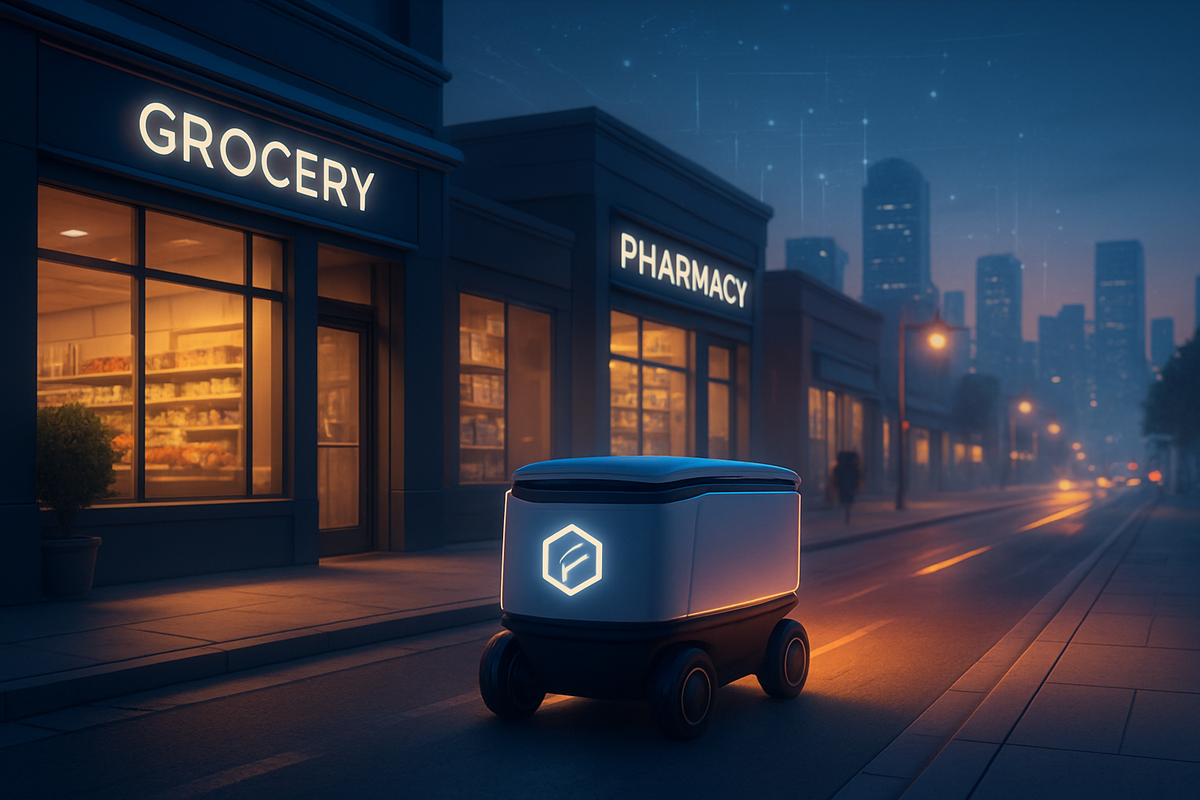
DoorDash’s 2026 strategy is deeply rooted in technology and regulatory adaptation. The company is currently rebuilding its entire technical stack to be "AI-native," a move intended to streamline operations across the 40+ countries where it now operates. More notably, 2026 is slated as the year of commercialization for "DoorDash Dot," the company’s custom-built autonomous delivery robot. By shifting smaller, short-distance orders to robots, DoorDash hopes to permanently lower its "last-mile" delivery costs, which remain the single largest expense in the delivery ecosystem.
This technological push comes amid a shifting regulatory environment. In early 2025, the U.S. Department of Labor moved toward a more flexible "economic realities" test for worker classification, providing some federal breathing room for the independent contractor model. Furthermore, the 2025 California Supreme Court ruling upholding Proposition 22 secured the company's operational model in its largest domestic market.
However, local challenges persist. New York City’s new tipping laws, which took effect in January 2026, require platforms to prompt for a 10% tip at checkout. These granular local laws create a patchwork of operating environments that require constant—and expensive—legal and technical adjustments. DoorDash’s willingness to spend hundreds of millions on these pivots suggests they view these costs as a "moat" that smaller competitors simply cannot afford to build.
Navigating the 2026 Investment Cycle
The immediate future for DoorDash will be defined by how efficiently it can deploy its massive cash reserves. With over $5 billion in cash and no net debt, the company is in a position of strength, yet its $5 billion share buyback program remains largely untouched. Management appears to be prioritizing growth and R&D over immediate capital returns to shareholders, a strategy that requires patience from the investment community.
In the short term, investors should expect volatility as the "heavy investment" phase begins to show up on the balance sheet. The commercialization of the "Dot" robots will be a key metric to watch; if successful, it could fundamentally change the unit economics of the delivery industry. If the rollout is marred by technical glitches or local opposition, the "several hundred million" in investment could quickly become a weight on the company’s valuation.
Long-term, the pivot to a global, AI-driven retail platform could make DoorDash more of a logistics and advertising firm than a food delivery company. By diversifying its revenue streams through high-margin advertising and fulfillment services, DoorDash is attempting to insulate itself from the low-margin volatility of the restaurant industry.
The Road Ahead for Investors
As of February 18, 2026, DoorDash has proven it can grow at scale and generate GAAP profits. The 38% revenue growth and the successful integration of Deliveroo demonstrate a management team capable of executing complex global expansions. However, the warning of significant upcoming costs serves as a reminder that the "last-mile" delivery race is far from over and remains an expensive battleground.
For the market, the narrative has shifted from "Can DoorDash make money?" to "How much of that money will they reinvest to stay ahead?" Moving forward, investors should keep a close eye on grocery vertical profitability in the second half of the year and the progress of autonomous delivery trials.
While the stock may face temporary headwinds as the company absorbs these 2026 investment costs, the underlying strength of the Marketplace GOV and the growth of DashPass suggest a company that is successfully entrenching itself in the daily lives of millions. The primary challenge will be navigating a complex regulatory landscape while ensuring that its massive tech investments translate into tangible margin expansion by 2027.
This content is intended for informational purposes only and is not financial advice.