As of February 12, 2026, the technology sector is witnessing the materialization of what many analysts are calling the largest infrastructure commitment in the history of computing. Oracle (NYSE: ORCL) has fully activated its landmark $300 billion, five-year cloud computing contract with OpenAI, a deal that officially positions the legacy software giant as a cornerstone of the global artificial intelligence economy. By securing a staggering 4.5 gigawatts (GW) of power capacity—roughly equivalent to the energy consumption of four million homes—Oracle has effectively transitioned from a database specialist into the premier "landlord" of the AI revolution.
The immediate implications of this deal are transformative for Oracle’s balance sheet and the broader market. While the project has sent Oracle’s Remaining Performance Obligations (RPOs) skyrocketing to over $455 billion, it has also introduced significant financial pressure, with the company’s corporate debt ballooning past $100 billion to finance the unprecedented hardware and energy requirements. This "all-in" bet on OpenAI is not just a corporate contract; it is the backbone of a national strategic initiative to secure American dominance in the race toward Artificial General Intelligence (AGI).
The Path to 'Stargate': A Timeline of Expansion
The journey to this $300 billion milestone began in earnest in September 2025, when Oracle Chairman Larry Ellison and OpenAI CEO Sam Altman finalized the terms of a deal that would dwarf all previous cloud agreements. Central to this partnership is "Project Stargate," a $500 billion multi-partner initiative designed to build the world’s most powerful AI supercomputers. Under the terms of the five-year contract, Oracle is tasked with providing the physical infrastructure—specifically the land, power, and cooling—for a fleet of data centers housing over 2 million NVIDIA (NASDAQ: NVDA) Blackwell-series GPUs.
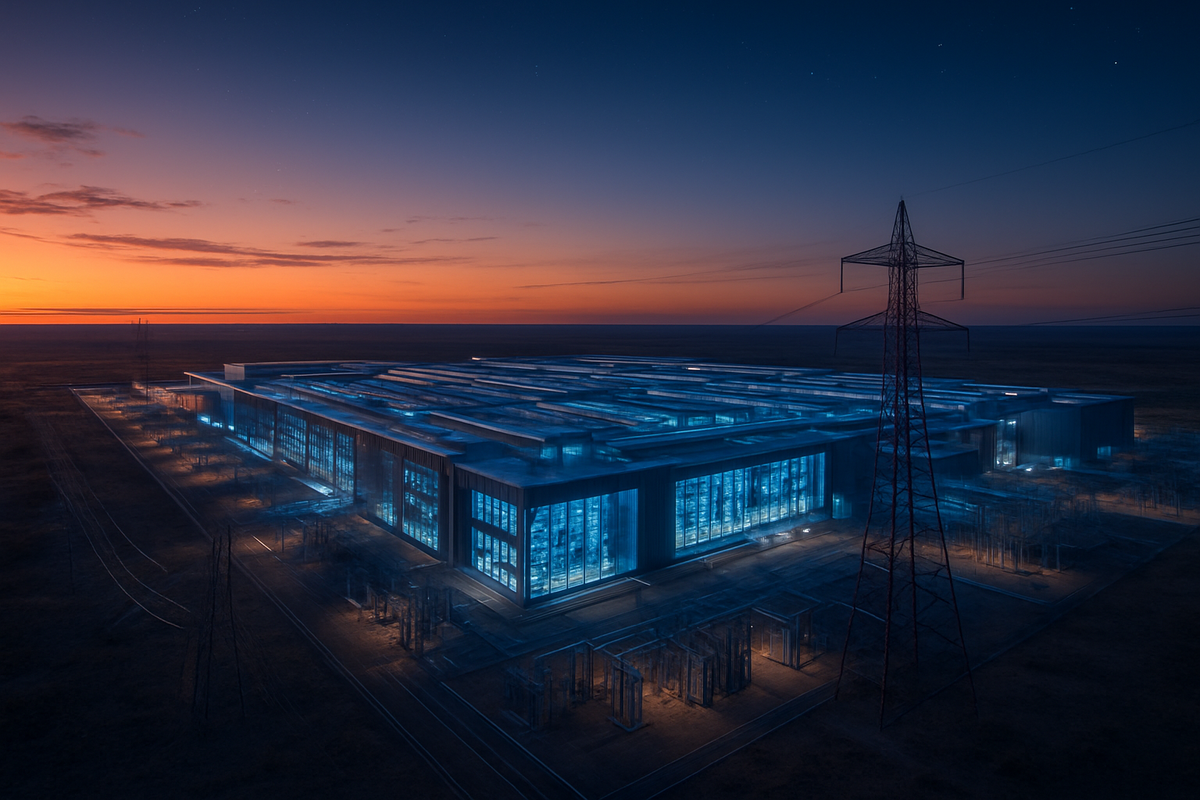
Construction has moved at a breakneck pace since late 2025. The flagship site in Abilene, Texas, known as "Stargate I," is already operational, utilizing innovative "H-shaped" hall designs specifically engineered for liquid-cooled GB200 racks. As of early 2026, Oracle is breaking ground on additional expansion sites across Michigan, Wisconsin, Wyoming, and Pennsylvania. This rapid build-out was accelerated by the U.S. government’s "AI Action Plan," which designated these facilities as critical national infrastructure, streamlining the often-cumbersome regulatory hurdles associated with massive power grid connections.
The market reaction to this scale has been a mixture of awe and trepidation. Throughout late 2025 and into the first weeks of 2026, Oracle's stock experienced high volatility as investors weighed the guaranteed revenue against the massive capital expenditure. However, recent management presentations have emphasized that the $300 billion contract is non-cancellable, providing a floor for Oracle’s long-term valuation even as the company navigates a temporary period of high leverage.
Winners and Losers in the 4.5 Gigawatt Era
Oracle (NYSE: ORCL) is the most obvious beneficiary of this deal, emerging as a "Big Four" cloud provider alongside Amazon (NASDAQ: AMZN), Microsoft (NASDAQ: MSFT), and Alphabet (NASDAQ: GOOGL). By specializing in the massive-scale physical clusters required for "frontier" AI models like GPT-6, Oracle has carved out a high-moat niche that its competitors are now scrambling to replicate. Similarly, NVIDIA (NASDAQ: NVDA) remains a primary winner, as its silicon is the mandatory currency of the Stargate project, further solidifying its dominance in the data center market.
SoftBank Group (OTC: SFTBY) has also emerged as a strategic winner, acting as a lead financial partner in the broader Stargate vision and providing the capital bridge necessary to fund the $500 billion ecosystem. Conversely, legacy cloud providers like Amazon’s AWS and Google Cloud find themselves in a defensive position. While they remain leaders in general-purpose cloud services, Oracle’s hyper-focus on AI-specific clusters and its aggressive power-acquisition strategy have allowed it to snatch away the most prestigious and lucrative AI workload in the world. Utility companies and grid operators in the Midwestern U.S. are also seeing an unexpected windfall, though they face the daunting task of upgrading infrastructure to meet the 4.5 GW demand.
Broader Significance: AI as National Infrastructure
The Oracle-OpenAI deal marks a fundamental shift in how the industry views data centers. No longer just warehouses for servers, these 4.5 GW facilities are now seen as "the physical soul of AI." This event fits into a broader trend of "reindustrialization," where the tech industry’s growth is increasingly limited by physical constraints—specifically energy and copper—rather than just software or code. The scale of this contract is more comparable to the build-out of the U.S. Interstate Highway System or the Manhattan Project than it is to any previous software licensing deal.
Furthermore, the involvement of the White House in the unveiling of the "AI Action Plan" underscores the regulatory and policy implications of the deal. In an era of geopolitical tension, the U.S. government views the Stargate clusters as a national asset. This has created a precedent where the government may provide subsidies or fast-track permits for AI infrastructure, potentially leading to a "two-tier" energy market where AI providers receive priority access to the grid. This sets a historical precedent that mirrors the federal support given to the telecommunications and aerospace industries in the 20th century.
The Horizon: Managing the Weight of $300 Billion
Looking ahead to the remainder of 2026 and 2027, the primary challenge for Oracle will be operational execution. In the short term, the company must manage its massive debt load and ensure that the construction of the remaining gigawatts stays on schedule. Any delays in power delivery or hardware installation could result in significant penalties or missed revenue targets. For OpenAI, the challenge is equally steep; the company must successfully monetize its next-generation models to justify the $60 billion annual payments it has committed to Oracle.
In the long term, this deal could lead to a strategic pivot for Oracle, where the company increasingly moves toward an "Infrastructure-as-a-Service" (IaaS) model, potentially spinning off its legacy software divisions to focus entirely on the AI cloud. We may also see the emergence of "AI Sovereignty" deals, where Oracle replicates the Stargate model for foreign governments looking to build their own national AI clusters. The market should watch for potential scenarios where OpenAI begins to integrate its hardware needs even more deeply with Oracle’s supply chain, potentially leading to a merger or an even deeper equity-swap arrangement.
Conclusion: A New Paradigm for the Market
The $300 billion partnership between Oracle and OpenAI is a watershed moment that has permanently altered the landscape of the technology sector. By committing to 4.5 gigawatts of power, Oracle has bet its future on the belief that AI demand will not only persist but will require a physical footprint of unprecedented scale. The surge in Oracle’s RPOs provides a clear signal of the long-term value inherent in this transition, even if the short-term path is paved with high debt and market skepticism.
Moving forward, investors should keep a close eye on Oracle’s quarterly debt-to-equity ratios and the progress of the Michigan and Pennsylvania site builds. The success of this venture will be measured not just in stock price, but in the successful training and deployment of the next generation of AI models that these gigawatts are destined to power. As we move further into 2026, the Stargate deal stands as a testament to the fact that in the world of artificial intelligence, the biggest winners are those willing to build the biggest foundations.
This content is intended for informational purposes only and is not financial advice.