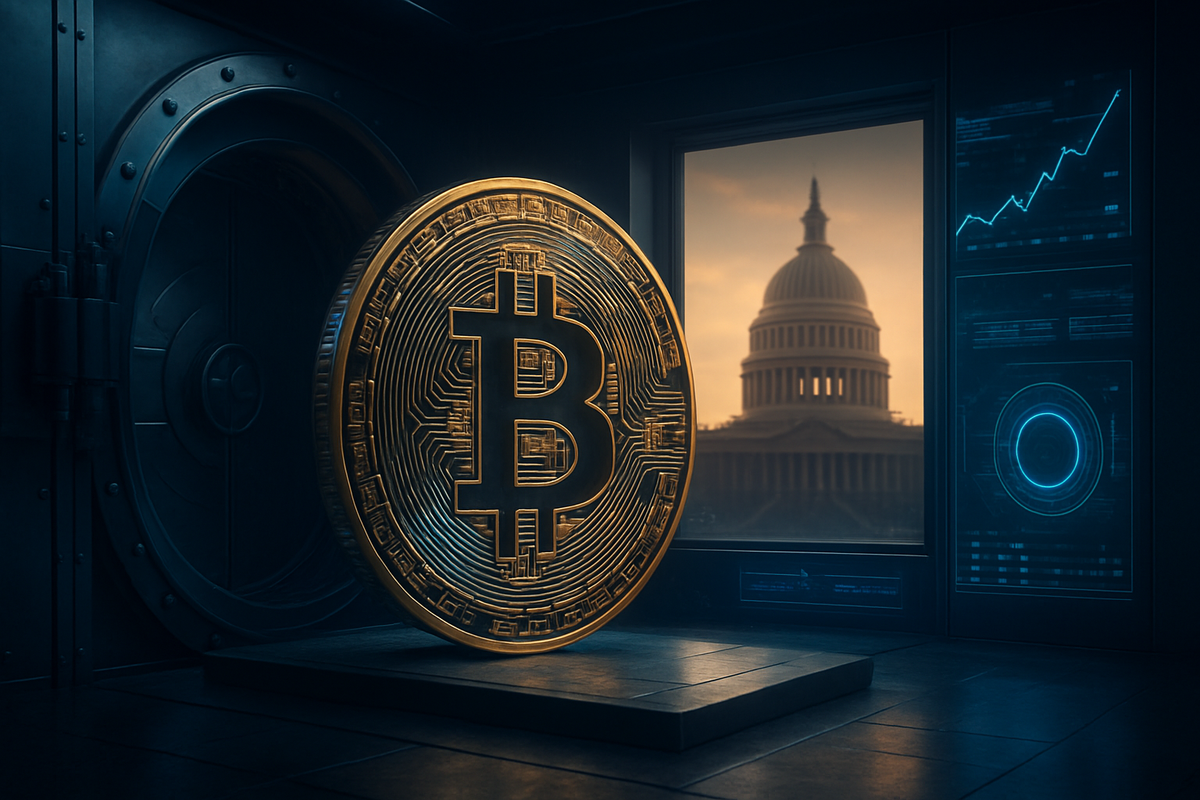
The digital asset market has entered a new epoch this week as Bitcoin (BTC) shattered previous records, briefly touching the $150,000 milestone. This historic surge comes on the heels of a definitive pivot in Washington D.C., where the new administration has begun the formal process of integrating Bitcoin into the nation’s financial bedrock. Investors are reacting with euphoria to the dual catalysts of a more favorable regulatory climate and the official establishment of a U.S. Strategic Bitcoin Reserve, a move that effectively transforms the world's largest cryptocurrency from a speculative asset into a sovereign treasury staple.
The momentum is largely attributed to a "regulatory thaw" that has swept through federal agencies over the past several months. With a new leadership team now firmly in place at the Securities and Exchange Commission (SEC), the era of "regulation by enforcement" appears to have concluded. This shift has unlocked a wave of institutional capital that had previously remained on the sidelines, waiting for the legal clarity that is now being provided by both executive actions and landmark legislative progress in the Senate.
A New Era of Regulatory Clarity and Sovereign Adoption
The current rally is the culmination of a series of rapid-fire policy shifts that began shortly after the presidential inauguration in January 2025. Following a period of intense volatility in late 2025, the market found its footing as the administration’s "pro-innovation" agenda took physical form. The defining moment arrived with the formal implementation of the BITCOIN Act of 2024, championed by Senator Cynthia Lummis, which mandates the Department of the Treasury to acquire up to 1 million Bitcoin over a five-year period. This "Strategic Bitcoin Reserve" is designed to serve as a high-tech hedge against national debt, with a statutory requirement to hold the assets for a minimum of 20 years.
The transition of leadership at the SEC has played a pivotal role in this market transformation. The departure of Gary Gensler and the subsequent appointment of Paul Atkins as SEC Chair in April 2025 signaled an end to the protracted legal battles that had defined the previous four years. Alongside Commissioner Hester Peirce, Atkins has focused on creating a "safe harbor" for digital asset firms and rescinding controversial accounting rules like SAB 121. This has allowed traditional financial institutions to offer crypto custody services without the punitive capital requirements that previously hindered the sector.
Market participants have watched this timeline with bated breath. In early 2025, the passage of the GENIUS Act provided the first federal framework for stablecoins, placing them under the oversight of the Office of the Comptroller of the Currency (OCC). This was followed by the CLARITY Act, which clearly demarcated the jurisdictions of the SEC and the Commodity Futures Trading Commission (CFTC). These legislative wins provided the structural integrity needed for the current price discovery phase, as the "U.S. Digital Asset Stockpile" began its first authorized purchases through a series of non-liquidatable trusts.
The initial market reaction has been nothing short of explosive. Beyond the price action of Bitcoin itself, the broader ecosystem is seeing a "decoupling" effect. While Bitcoin is increasingly viewed as a macro-economic hedge—frequently referred to in research circles as "Digital Gold"—the regulatory certainty provided to the stablecoin and DeFi sectors has led to a surge in domestic development. The U.S. has effectively signaled to the world that it intends to be the global capital for digital finance, triggering a "state-level arms race" where individual states like Arizona and New Hampshire are now passing their own reserve bills to mirror the federal framework.
Winners and Losers in the New Crypto Order
The primary beneficiaries of this shift have been the publicly traded firms that pioneered the institutional adoption of Bitcoin. MicroStrategy Incorporated (Nasdaq: MSTR), which has long held Bitcoin as its primary treasury reserve asset, has seen its valuation soar as its "HODL" strategy is vindicated by federal policy. Similarly, Coinbase Global, Inc. (Nasdaq: COIN) has emerged as a dominant winner, transitioning from a company under constant regulatory threat to a primary infrastructure partner for both the federal government and newly empowered traditional banks.
Institutional heavyweights like BlackRock, Inc. (NYSE: BLK) and Fidelity have also cemented their lead. As the operators of the most successful Bitcoin ETFs, these firms are now seeing record inflows as the Strategic Reserve news legitimizes the asset class for pension funds and sovereign wealth funds. Furthermore, the removal of SAB 121 has opened the door for mega-banks like BNY Mellon and JPMorgan Chase to compete directly in the custody space, bringing a level of liquidity and security to the market that was previously unimaginable.
On the mining front, companies like Marathon Digital Holdings, Inc. (Nasdaq: MARA) and Riot Platforms, Inc. (Nasdaq: RIOT) are being re-evaluated as strategic national interests. With the U.S. government now an active holder of Bitcoin, the security and domestic hash rate of the network have become matters of economic security. This has led to renewed interest in domestic energy production and grid-balancing technologies that these mining firms provide.
Conversely, the "losers" in this new environment are largely offshore exchanges and firms that flourished in the regulatory gray areas of the early 2020s. As the U.S. clarifies its rules, the "regulatory arbitrage" that once allowed non-compliant firms to thrive is evaporating. These entities now face the difficult choice of undergoing expensive compliance overhauls or being completely locked out of the lucrative U.S. capital markets. Additionally, speculative "memecoins" and projects without clear utility are struggling to keep pace as investor focus shifts toward assets with sovereign and institutional backing.
The Global Macro Significance of a Bitcoin Reserve
The decision to treat Bitcoin as a strategic reserve asset is a paradigm shift that echoes historical moments like the Bretton Woods Agreement or the formalization of the Gold Standard. By incorporating a decentralized, finite digital asset into its treasury, the U.S. is effectively hedging against the long-term debasement of the dollar while asserting dominance in the next generation of financial technology. This move forces other nations to consider their own "Bitcoin Game Theory"—if the world’s reserve currency issuer is stockpiling Bitcoin, other central banks may feel compelled to do the same to avoid being left behind.
This event fits into a broader trend of "financial sovereignty" and the digitalization of assets. The ripple effects are already being felt among U.S. allies and competitors alike. Reports suggest that several G20 nations are now accelerating their own digital asset frameworks to ensure they remain competitive in a world where "Digital Gold" is a recognized sovereign asset. This could lead to a global competition for hash rate and Bitcoin holdings, potentially creating a "floor" for Bitcoin’s price that is dictated by nation-state demand rather than retail speculation.
Regulatory-wise, the shift from "enforcement" to "statutory clarity" marks the end of the "Wild West" era of crypto. The CLARITY Act and the GENIUS Act provide a blueprint that other jurisdictions are likely to follow. This harmonization of global standards would reduce friction for cross-border transactions and allow for the seamless integration of blockchain technology into the plumbing of the global financial system. The historical precedent here is the development of the internet in the 1990s; once the regulatory rules were established, the real innovation and value creation began.
Looking Ahead: The Road to 1 Million BTC
The short-term outlook remains focused on the Treasury's execution of the 1 Million BTC purchase plan. How the government acquires these assets without causing undue market volatility will be a masterclass in institutional execution. In the long term, we may see a strategic pivot in how the U.S. manages its federal debt. If Bitcoin continues its historical trajectory of appreciation, the reserve could eventually become a significant tool for debt retirement, a scenario that was considered fringe only a few years ago.
However, challenges remain. The market must still navigate the "higher-for-longer" interest rate environment and the potential for a "tariff tantrum" to impact global liquidity. Investors should be prepared for continued volatility as the market adjusts to the massive scale of sovereign participation. The strategic adaptation required for firms will be immense; companies will need to move beyond simple "crypto-readiness" and begin integrating these assets into their core balance sheets and operational workflows.
Potential scenarios for the remainder of 2026 include a period of "consolidation at the highs" as the market absorbs the new supply-demand dynamics. There is also the possibility of a "supply squeeze" if institutional and sovereign buying outpaces the available liquid supply on exchanges. Market participants should watch for the first official Treasury purchase announcements and any further state-level adoption, as these will serve as the next major catalysts for the sector.
Conclusion: A Permanent Fixture in the Financial Landscape
The events of early 2026 represent the final coming-of-age for Bitcoin and the broader crypto market. The transition from a misunderstood digital experiment to a pillar of national economic strategy is now complete. With a pro-innovation SEC, a clear legislative framework, and the establishment of a Strategic Bitcoin Reserve, the "crypto winter" of the past is a distant memory, replaced by a "permanent spring" of institutional and sovereign growth.
Moving forward, the market is likely to be characterized by greater stability and deeper liquidity, though the inherent volatility of a nascent asset class will persist. The key takeaway for investors is that the "tail risk" of a total U.S. ban has been effectively eliminated, replaced by a government-backed mandate for growth. The significance of this moment cannot be overstated; it is the moment the U.S. chose to lead the digital financial revolution rather than resist it.
In the coming months, investors should closely monitor the implementation of the BITCOIN Act and the progress of the CLARITY Act through the Senate. These legislative milestones will provide the granular details necessary for the next decade of digital asset development. As the world watches the U.S. Treasury become a "HODLer," the question is no longer whether Bitcoin has a future, but how that future will reshape the global economy.
This content is intended for informational purposes only and is not financial advice