Caterpillar Inc. (NYSE: CAT) stunned Wall Street today, January 29, 2026, by reporting a record-breaking $19.1 billion in quarterly revenue, an 18% jump that blew past analyst expectations. The surge in sales was powered by an unprecedented wave of demand for heavy machinery and industrial power solutions, particularly those supporting the global expansion of artificial intelligence (AI) data centers and North American infrastructure. Despite looming trade tensions and rising tariff costs, the industrial bellwether proved that its centennial year is shaping up to be one of its most lucrative yet.
The immediate implications of this performance are reverberating across the industrial sector, as Caterpillar's results signal a fundamental shift in the machinery market. While traditional segments like mining saw some cooling, the "Power Systems" division has emerged as a high-growth "AI infrastructure play." Investors responded with a 5.4% rally in Caterpillar’s stock, pushing shares to an all-time high of $653.52 and signaling broad confidence in the company's ability to navigate a complex macroeconomic environment.
The quarterly earnings report, released this morning, revealed that Caterpillar’s revenue of $19.1 billion significantly exceeded the consensus forecast of $17.9 billion. Adjusted earnings per share (EPS) hit $5.16, a 9.5% beat over expectations. This stellar performance was driven primarily by two engines: Energy & Transportation, which surged 23% to $9.4 billion, and Construction Industries, which grew 11% to $6.9 billion. The Energy segment, in particular, benefited from a massive 44% increase in demand for data center backup power generation, a critical component for the energy-hungry AI revolution.
However, the road to these record numbers was not without its bumps. The timeline leading up to this report was marked by intense margin pressure. Throughout 2025, Caterpillar grappled with $1.7 billion in net incremental tariff costs. These costs contributed to a compression in operating profit margins, which fell to 13.9% from 18.0% a year prior. CEO Joe Creed addressed these concerns during the earnings call, emphasizing that the company’s focus has shifted toward "backlog conversion" to manage the staggering $51 billion in unfilled orders currently on the books—a 71% increase year-over-year.
Initial market reactions have been overwhelmingly positive, but seasoned analysts are digging into the uneven nature of the growth. While North American construction demand remains robust, the Resource Industries segment—which includes mining equipment—contracted by 7%, dragged down by softening global coal prices. This divergence highlights a bifurcated industrial economy where technology-driven infrastructure is outpacing traditional commodities.
The primary winner in this environment is undoubtedly Caterpillar (NYSE: CAT), which has successfully rebranded itself from a cyclical equipment maker to an essential partner in the digital economy. Other clear winners include power management specialists like Cummins Inc. (NYSE: CMI) and Eaton Corporation (NYSE: ETN). Cummins is currently seeing a "once-in-a-generation" demand cycle for Tier 1 generators, while Eaton’s "Everything as a Grid" strategy has allowed it to capitalize on the same data center tailwinds lifting Caterpillar. Both companies are expected to see continued EPS growth as they work through record backlogs for mission-critical power infrastructure.
On the losing side, companies heavily reliant on the mining sector or those caught in the crosshairs of intensifying trade disputes are facing a tougher outlook. Volvo Construction Equipment (OTC:VLVLY) and other European-based manufacturers are bracing for the "Greenland Dispute" shock—a fresh 10% tariff set to take effect on February 1, 2026, following a geopolitical standoff over the territory of Greenland. These new trade barriers are expected to hit European machinery imports hard, potentially forcing a shift in market share toward domestic US producers or Japanese competitors like Komatsu Ltd. (OTC:KMTUY), which recently benefited from a trade deal lowering its tariff burden.
Furthermore, traditional mining-focused firms are seeing their margins eroded as the transition to green energy and AI infrastructure diverts capital away from coal and iron ore. These companies must now pivot quickly to battery-powered machinery and automation or risk being left behind in a market that increasingly values "uptime assurance" and service-led revenue over simple hardware sales.
Caterpillar’s surge fits into a broader industry trend where heavy machinery is becoming the backbone of the tech sector. This "industrialization of AI" means that companies once valued for their ability to move dirt are now valued for their ability to power the cloud. This shift has massive ripple effects; for instance, Caterpillar’s $51 billion backlog is creating a supply vacuum that is driving up the prices of used equipment and benefiting rental giants like United Rentals (NYSE: URI), as contractors look for immediate alternatives to waiting 12 months for a new machine.
Historically, Caterpillar’s performance has been viewed as a proxy for global economic health. However, the current divergence from traditional mining cycles suggests that the old precedents may no longer apply. The looming regulatory and policy implications are also significant. The industry is currently awaiting an "imminent" U.S. Supreme Court ruling on the constitutionality of the International Emergency Economic Powers Act (IEEPA), which has been used to levy the very tariffs currently squeezing Caterpillar’s margins. If the court limits the executive branch's power to impose such taxes, it could lead to a massive margin expansion for the entire industrial sector.
Additionally, the "Greenland Dispute" tariffs represent a return to aggressive trade protectionism that could redefine global supply chains. As machinery list prices rise by as much as 45% for steel-intensive equipment, domestic policy will likely focus on "onshoring" manufacturing even further, though this comes at the cost of higher inflationary pressures for the construction and energy sectors.
Looking ahead, the short-term focus for Caterpillar and its peers will be the efficient execution of their massive backlogs. With 62% of Caterpillar’s $51 billion backlog expected to be delivered within the next 12 months, the company is effectively "locked in" for a high-revenue 2026. However, the long-term challenge will be managing the $2.6 billion in incremental tariff hits projected for the coming year. Strategic pivots toward "service intelligence"—using telematics and AI to predict machine failure—will be required to protect profit margins as manufacturing costs continue to climb.
Market opportunities are likely to emerge in the "off-grid" power space. As data center operators face grid capacity constraints, the demand for "Prime Power" solutions—where companies like Caterpillar and Cummins provide the primary, rather than just backup, electricity—could provide a multi-year growth runway. Conversely, the industry must prepare for potential scenarios where a resolution to the Greenland dispute or a favorable Supreme Court ruling could suddenly lower costs, leading to a scramble for market share and potential price wars.
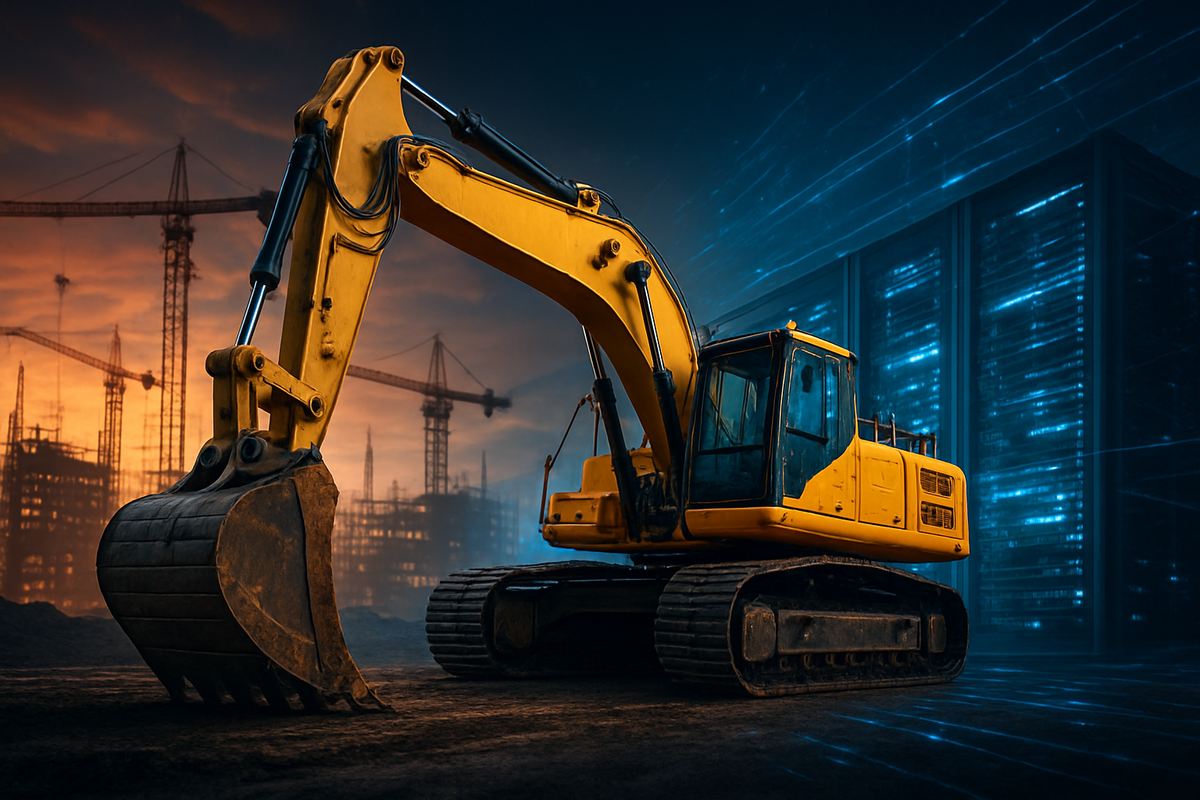
The key takeaway from Caterpillar’s Q4 2025 performance is that the "Big Yellow" machines are no longer just tools for building roads; they are the literal engines of the AI era. The company’s ability to generate record revenue in the face of nearly $2 billion in tariff headwinds is a testament to the essential nature of its products in the current global economy. Moving forward, the market will transition from worrying about "demand" to obsessing over "delivery" and "margin protection."
Investors should keep a close eye on the February 1st tariff deadline and the upcoming Supreme Court decision on trade authority. These legal and geopolitical factors will likely dictate whether Caterpillar can translate its record sales into record profits in 2026. In the final assessment, Caterpillar has proven that it is more than just a survivor of the industrial age; it is a primary beneficiary of the digital one.
This content is intended for informational purposes only and is not financial advice