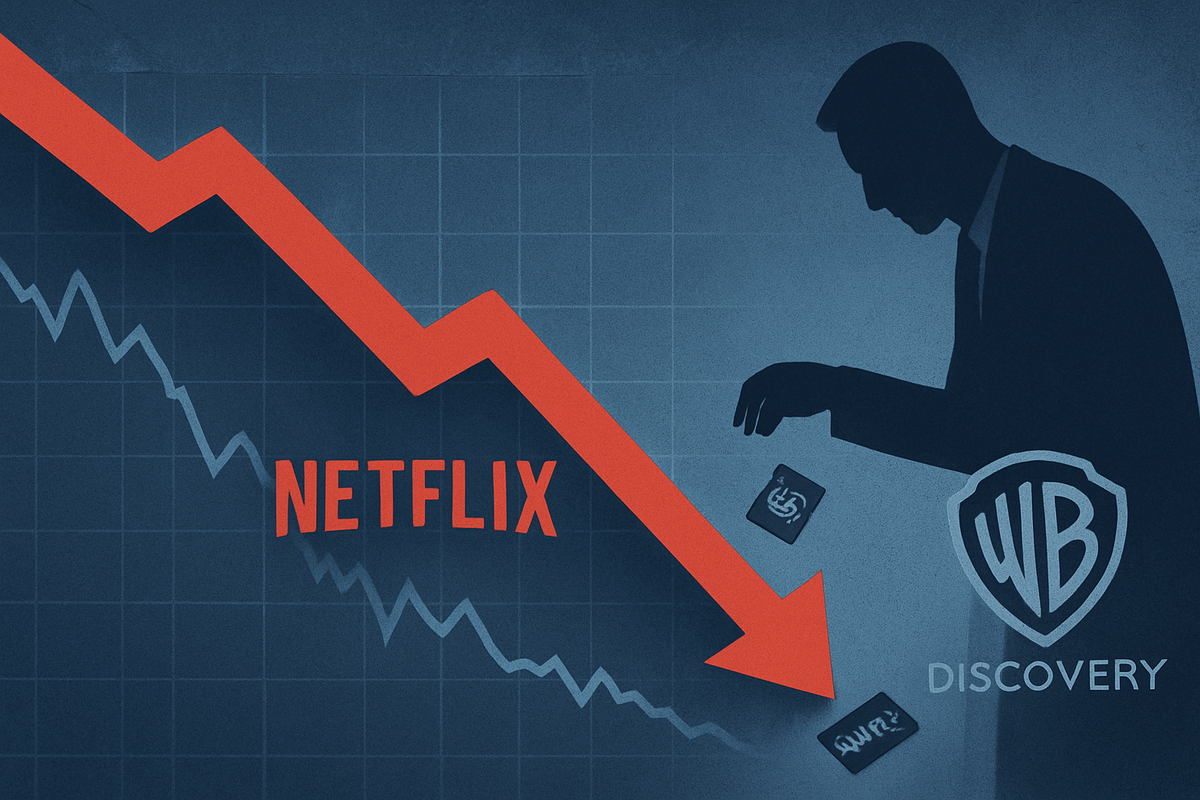
New York, NY – December 3, 2025 – Netflix (NASDAQ: NFLX) experienced a significant downturn in its stock performance today, with shares sliding over 6% during regular trading hours. The decline comes amidst a confluence of factors, including a substantial insider stock sale by a key director and mounting speculation regarding a potential blockbuster acquisition of Warner Bros. Discovery (NASDAQ: WBD) assets, which has sparked both excitement and investor anxiety. This market reaction highlights the delicate balance between strategic growth initiatives and shareholder confidence in the volatile streaming landscape.
The immediate implications of today's slide are palpable, raising questions about Netflix's near-term valuation and strategic direction. While the broader market showed mixed movements, with some major U.S. equities gaining on hopes of a Federal Reserve rate cut, tech and growth stocks like Netflix appeared to be under specific pressure. Investors are seemingly grappling with the potential financial and regulatory hurdles associated with a major acquisition, even as the company continues to demonstrate robust underlying business performance.
A Day of Decline: Unpacking Netflix's Market Slide
Netflix's stock closed down 6.3% on December 3, 2025, a stark contrast to its prior closing price of $109.35. Shares traded as low as $102.64, with the day's volume at approximately 12.0 million shares, significantly below its average daily volume. This notable drop occurred despite the company's strong third-quarter earnings report on October 21st, which had surpassed earnings per share estimates and led to an upward revision of full-year guidance, showcasing robust subscriber growth and efficient content spending.
The timeline of events leading to this downturn reveals several critical developments. On Monday, December 1st, Netflix Director Reed Hastings executed a massive sale of 375,470 shares at an average price of $108.43, totaling roughly $40.7 million. This transaction dramatically reduced his stake by nearly 99% and sent a wave of concern through the investor community, often interpreted as a lack of confidence from a high-level insider. Compounding this anxiety were persistent reports that Netflix had submitted a largely cash offer to acquire Warner Bros. Discovery's streaming and studio assets. While such a move could potentially streamline operations and reduce content costs by integrating HBO Max, investors voiced concerns that it might not translate into significant new subscriber additions, given the substantial overlap between existing Netflix and HBO Max customer bases.
Key players involved in this unfolding narrative include Netflix's executive leadership, particularly in their strategic pursuit of Warner Bros. Discovery's assets. Warner Bros. Discovery itself is a pivotal stakeholder, weighing bids from multiple parties including Paramount Skydance and Comcast (NASDAQ: CMCSA). U.S. antitrust officials are also critical players, having already expressed fears that a Netflix-WBD deal could grant the streaming giant excessive power over Hollywood, potentially triggering rigorous antitrust investigations. Initial market reactions were largely negative, with the insider selling fueling investor anxiety and the acquisition rumors prompting caution due to potential integration complexities and regulatory roadblocks.
Market Ripple Effects: Who Wins and Who Loses?
The immediate loser in this scenario is undoubtedly Netflix (NASDAQ: NFLX) itself, at least in the short term, as evidenced by today's stock price decline. The perceived risk associated with a large, cash-heavy acquisition, coupled with the unsettling optics of significant insider selling, has eroded investor confidence. Should the Warner Bros. Discovery (NASDAQ: WBD) deal proceed and face substantial regulatory hurdles or fail to deliver anticipated subscriber growth, Netflix could see its financial resources strained and its market valuation further pressured. Furthermore, the increased scrutiny from antitrust regulators could lead to costly legal battles and potential restrictions on future growth strategies.
Conversely, other major streaming services and media conglomerates could potentially benefit from Netflix's current predicament. Competitors like Walt Disney (NYSE: DIS) with Disney+, Amazon (NASDAQ: AMZN) with Prime Video, and Apple (NASDAQ: AAPL) with Apple TV+ might find opportunities to attract subscribers wary of potential changes at Netflix or to capitalize on any perceived strategic missteps. If Netflix's acquisition of WBD assets is blocked or faces significant delays, it could create an opening for other bidders like Comcast (NASDAQ: CMCSA) or Paramount Global (NASDAQ: PARA) to secure those valuable assets, thereby strengthening their own streaming offerings and content libraries. Traditional media companies that might have felt threatened by Netflix's dominance could also see this as a moment to re-evaluate their competitive strategies.
Moreover, the regulatory bodies, specifically the U.S. Department of Justice or the Federal Trade Commission, stand to gain increased influence and a reinforced mandate if they pursue an antitrust investigation. Their actions could set new precedents for consolidation within the rapidly evolving media and entertainment industry, impacting how future mergers and acquisitions are structured and reviewed. For consumers, the outcome of such a deal could lead to either more consolidated and potentially more expensive streaming bundles or, conversely, a more fragmented but competitive landscape depending on regulatory intervention.
Wider Significance: Consolidation, Regulation, and Industry Evolution
Today's developments at Netflix (NASDAQ: NFLX) are not isolated incidents but rather fit into broader industry trends of consolidation and heightened regulatory scrutiny within the streaming and tech sectors. The pursuit of Warner Bros. Discovery (NASDAQ: WBD) assets by Netflix underscores the intense pressure on streaming giants to expand their content libraries, reduce licensing costs, and achieve greater economies of scale in an increasingly saturated market. This drive for consolidation is a direct response to rising content expenditures and the fierce battle for subscriber retention, where a diverse and compelling content catalog is paramount.
The potential ripple effects on competitors and partners are substantial. A successful, albeit challenging, acquisition of WBD by Netflix would reshape the competitive landscape, potentially creating a dominant entity with an unparalleled content offering. This could force other streaming services to accelerate their own consolidation efforts or focus more intensely on niche content strategies. Conversely, a failed or heavily scrutinized deal could deter future large-scale mergers in the media sector, leading companies to explore partnerships or organic growth instead. Content creators and production studios, who currently benefit from multiple buyers for their projects, might face a more concentrated market if consolidation continues unchecked.
Regulatory and policy implications are perhaps the most significant long-term aspect of this situation. The expressed concerns from U.S. officials regarding Netflix's potential market power highlight a growing global trend of governments scrutinizing large tech and media mergers for antitrust violations. This event could serve as a bellwether for future regulatory actions, setting a precedent for how competition is defined and enforced in the digital age. It suggests that even in rapidly evolving markets, the specter of monopoly power remains a key concern for policymakers, potentially leading to stricter guidelines for future acquisitions across various industries. Historically, similar large-scale media mergers, such as the AT&T-Time Warner deal, have faced extensive regulatory review, indicating the complex path ahead for any Netflix-WBD integration.
What Comes Next: Navigating an Uncertain Future
The short-term outlook for Netflix (NASDAQ: NFLX) will be dominated by the ongoing saga surrounding the Warner Bros. Discovery (NASDAQ: WBD) acquisition and the lingering effects of the insider stock sale. Investors will be keenly watching for any official announcements regarding the WBD bid, details on financing, and, crucially, any signals from antitrust regulators. A clear path forward on the acquisition, even if it involves concessions, could help stabilize the stock. However, prolonged uncertainty or a definitive regulatory block could exert further downward pressure. In the immediate future, Netflix may need to engage in strategic communication to rebuild investor confidence following the director's significant share divestment.
In the long term, Netflix faces potential strategic pivots and adaptations regardless of the WBD outcome. If the acquisition is successful, the company will need to deftly integrate HBO Max and other WBD assets, a complex undertaking that will require careful management of content strategies, technological platforms, and corporate cultures. This could lead to a stronger, more diversified Netflix, but also carries execution risks. If the deal falls through, Netflix may need to explore alternative avenues for growth, such as increased organic content production, strategic partnerships, or smaller, more targeted acquisitions to bolster its offerings. The market opportunities that may emerge include a renewed focus on international expansion and localized content, areas where Netflix has historically excelled.
Potential scenarios and outcomes are varied. One scenario sees Netflix successfully acquiring WBD, navigating regulatory hurdles, and consolidating its position as the undisputed global streaming leader, eventually seeing its stock recover and grow. Another scenario involves regulatory intervention blocking the WBD deal, forcing Netflix to rethink its M&A strategy and potentially leading to a more competitive, fragmented streaming market. A third possibility is that the integration proves more challenging than anticipated, leading to subscriber churn or financial underperformance despite the expanded content library. Each scenario presents unique challenges and opportunities for Netflix and the broader entertainment industry.
Wrap-Up: A Pivotal Moment for the Streaming Giant
Today's significant slide in Netflix (NASDAQ: NFLX) shares marks a pivotal moment for the streaming giant and the wider media landscape. The key takeaways from this event are the profound impact of insider trading on investor sentiment and the complex, often contradictory, reactions to ambitious strategic acquisitions. While Netflix continues to demonstrate strong operational performance, the market's response underscores the critical importance of transparent corporate governance and the daunting challenges of navigating regulatory scrutiny in an era of industry consolidation.
Moving forward, the market will be assessing Netflix through a lens of strategic execution and regulatory compliance. The outcome of the Warner Bros. Discovery (NASDAQ: WBD) acquisition bid will undoubtedly be a defining factor for Netflix's trajectory in the coming years, shaping its content strategy, financial health, and competitive standing. Investors should watch closely for further developments on the WBD deal, including any statements from Netflix management or regulatory bodies.
Beyond the immediate M&A drama, the lasting impact of this event will likely be a re-evaluation of valuation metrics for streaming companies, with greater emphasis placed on profitability, sustainable subscriber growth, and efficient capital allocation in addition to sheer scale. What investors should watch for in the coming months includes Netflix's quarterly earnings reports for insights into subscriber trends and content spending, updates on any potential WBD acquisition or alternative growth strategies, and, crucially, any shifts in the broader regulatory environment concerning large technology and media mergers. The path ahead for Netflix, while potentially transformative, is fraught with both immense opportunity and considerable risk.
This content is intended for informational purposes only and is not financial advice