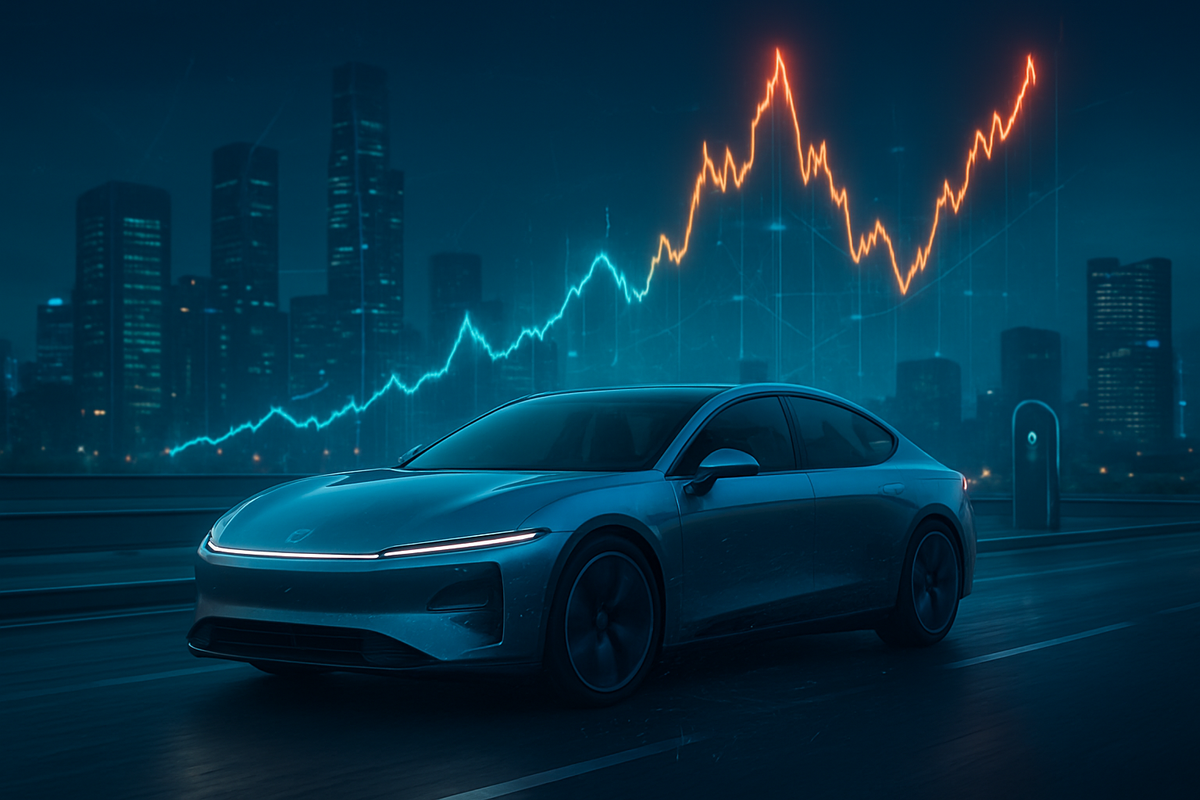
The final full trading week of 2025 draws to a close, and shares of XPeng (NYSE: XPEV) have once again become the focal point of market volatility. On Friday, December 26, 2025, the stock experienced significant intraday swings, fluctuating as much as 7% before settling into a narrow range. This turbulence comes as investors grapple with a complex mixture of record-breaking delivery data and the looming expiration of Chinese government tax incentives, a "subsidy cliff" that has the entire electric vehicle (EV) sector on edge.
The volatility observed this Friday reflects a broader tension in the market: while XPeng has successfully reinvented itself as an "AI-first" automaker over the last 18 months, the brutal price wars in the Chinese domestic market continue to compress margins. As traders look toward 2026, the question remains whether XPeng’s technological lead and its recent pivot into extended-range electric vehicles (EREVs) will be enough to sustain its momentum in an increasingly crowded global field.
A Year of Strategic Reinvention and Market Whiplash
The volatility seen this Friday is the latest chapter in what has been a high-stakes year for XPeng. Following a massive rally in late 2024—driven by the breakout success of the mass-market MONA M03 sedan—the stock reached a multi-year peak in March 2025. However, the mid-year period was marked by a sharp correction as domestic competitors, led by BYD (OTCMKTS: BYDDY), initiated a series of aggressive price cuts that saw some EV models discounted by as much as 30%.
The timeline leading to today’s market action was punctuated by the November release of the P7+, which XPeng marketed as the world’s first "AI-defined vehicle." By removing costly LiDAR sensors in favor of a vision-based AI system—a move that mirrored the strategy of Tesla (NASDAQ: TSLA)—XPeng managed to lower production costs while maintaining high-level autonomous driving capabilities. Despite these innovations, the market’s reaction has been erratic; a record delivery report in November 2025 actually saw the stock dip as investors focused on a cautious revenue forecast for the first quarter of 2026.
Stakeholders, including major institutional backers like Volkswagen (OTC: VWAGY), which maintains a strategic partnership with XPeng, are closely watching the company’s "Kunpeng Super Electric System." This EREV technology, announced earlier this year, represents a significant pivot for a company that was previously a pure-play battery electric vehicle (BEV) manufacturer. The market's current indecision reflects a wait-and-see approach to how these hybrid models will perform in international markets where charging infrastructure remains a hurdle.
Winners and Losers in the 2025 EV Landscape
In the current environment, the "winners" are increasingly defined by their ability to offer flexibility. BYD (OTCMKTS: BYDDY) continues to dominate the leaderboard by leveraging its vertical integration and a vast portfolio of both BEVs and hybrids. Similarly, Li Auto (NASDAQ: LI) has remained a favorite among conservative investors, as its early commitment to EREVs allowed it to capture the "range anxiety" segment of the market long before its competitors. XPeng's entry into this space with the Kunpeng system suggests they are poised to join this winning circle, provided they can scale production without further diluting margins.
Conversely, pure BEV players that have lacked a low-cost or hybrid strategy have struggled. NIO (NYSE: NIO), while successful in the premium segment with its battery-swapping technology, has faced intense pressure to maintain its high-end brand image while being dragged into price wars. On the global stage, legacy manufacturers in Europe and the United States have found themselves as the primary "losers" in terms of market share, as Chinese exports like the XPeng G6 and G9 began flooding markets in the Middle East and Southeast Asia throughout 2025.
Tesla (NASDAQ: TSLA) remains in a unique position. While it has lost significant market share in China to XPeng’s MONA brand and BYD’s luxury line, its validation of vision-only AI has indirectly benefited XPeng by proving the viability of the P7+’s tech stack. However, the price parity achieved by Chinese manufacturers means Tesla can no longer rely on brand prestige alone to command a premium in the world’s largest auto market.
The Shift from Battery Power to Artificial Intelligence
The wider significance of XPeng’s recent volatility lies in the fundamental shift of the EV industry’s "moat." In 2023 and 2024, the primary competition was centered on battery range and charging speed. By December 2025, the industry has shifted its focus to "intelligence." XPeng’s decision to brand itself as an AI company that happens to make cars is a direct response to the commoditization of electric drivetrains. This trend is forcing every player in the sector to invest billions into proprietary AI chips and neural networks, creating a high barrier to entry that may eventually lead to a consolidation of smaller, tech-lagging manufacturers.
This event also highlights the growing importance of "bridge technologies." The surge in EREV demand in late 2025 suggests that the transition to full electrification is taking longer than many analysts predicted in 2020. Regulatory environments are also shifting; while China is tapering off direct consumer subsidies, it is increasing support for "smart" infrastructure and AI development. This policy pivot favors companies like XPeng that are deeply integrated into the "Smart City" initiatives and autonomous taxi trials currently expanding across Tier-1 Chinese cities.
Historically, this period resembles the early 20th-century consolidation of the American auto industry, where hundreds of manufacturers were eventually whittled down to a "Big Three." The current volatility is a symptom of the market trying to pick which of the Chinese "New Forces" will survive the inevitable shakeout.
Looking Ahead: The 2026 "Subsidy Cliff" and Global Ambitions
As we move into 2026, the short-term outlook will be dominated by the "subsidy cliff." The rush of demand seen this December is expected to lead to a significant cooling of the Chinese market in Q1 2026. XPeng will need to rely on its international expansion to offset this domestic slowdown. With deliveries of the P7+ scheduled for Europe in the first half of 2026 and a major push into the Australian and Middle Eastern markets already underway, the company’s geographic diversification will be its most critical strategic pivot.
The next major catalyst for the stock will likely be the launch of the MONA SUV, expected in early 2026. If XPeng can replicate the success of the M03 sedan in the SUV segment—the most popular vehicle category in China—it could provide the volume necessary to finally achieve consistent GAAP profitability. Investors will also be watching for updates on the "Land Aircraft" flying car project, which, while still speculative, serves as a halo project for the company’s high-tech brand identity.
Final Thoughts: Navigating the New Energy Frontier
The volatility observed this Friday is more than just "market noise"; it is a reflection of an industry in the midst of a violent transition. XPeng (NYSE: XPEV) has successfully navigated the shift from being a niche luxury EV maker to a mass-market AI powerhouse, but the financial toll of the ongoing price war cannot be ignored. The company’s move into EREVs and its aggressive international roadmap are necessary survival strategies in a world where "pure electric" is no longer the only game in town.
For investors, the key takeaways from late 2025 are clear: watch the margins and watch the tech. As the 2026 tax changes take effect, the companies that can maintain consumer interest through software updates and autonomous features—rather than just price cuts—will be the ones that emerge from the volatility. XPeng has positioned itself as a leader in this "Software-Defined Vehicle" era, but the path to long-term stability remains as winding as the price charts of this past Friday.
This content is intended for informational purposes only and is not financial advice.