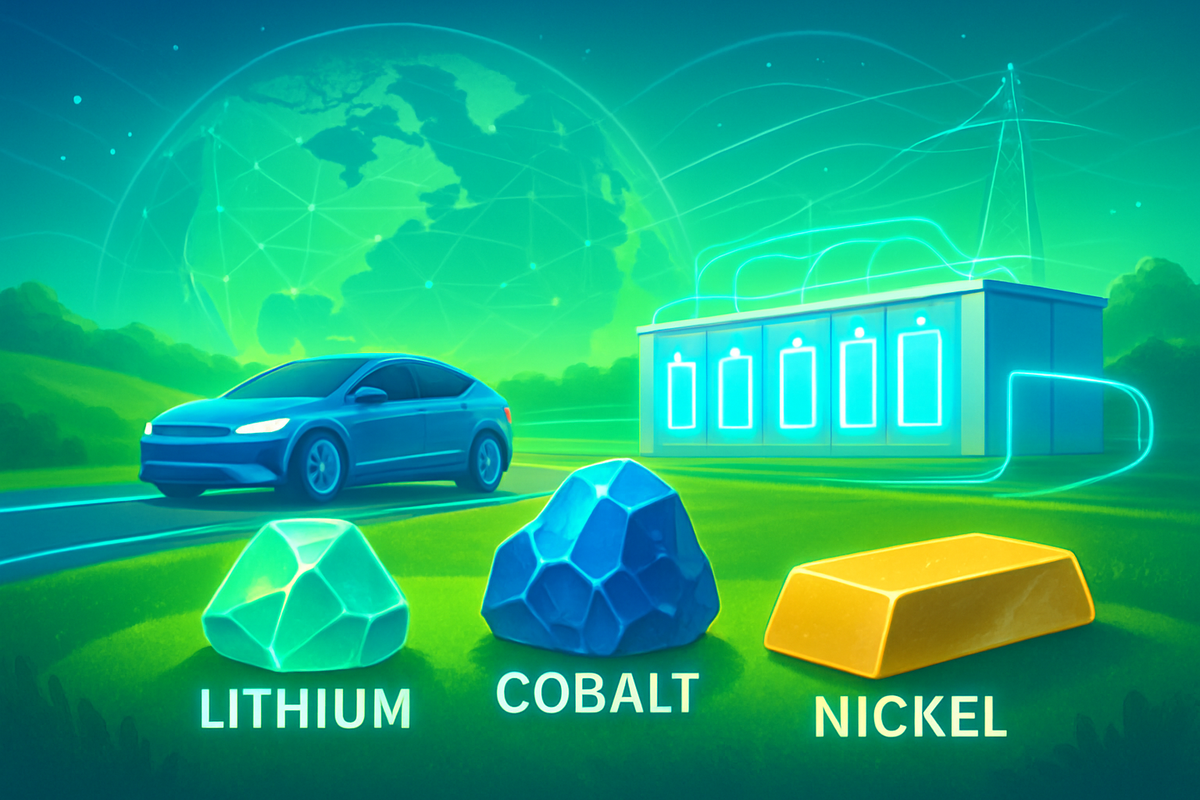
The global financial landscape is witnessing a seismic shift, driven by an insatiable demand for the foundational elements of our electrified future: lithium, cobalt, and nickel. These critical battery metals are at the heart of a burgeoning market, propelled by the relentless expansion of electric vehicles (EVs) and the urgent need for robust renewable energy storage solutions. This boom is not merely a fleeting trend but a fundamental reordering of global supply chains and economic priorities, with profound implications for technology sectors, resource-rich nations, and the everyday consumer.
As of late 2025, the market for these essential minerals is experiencing unprecedented growth, with projections indicating a multi-fold increase in demand over the next decade. While recent years have seen periods of price volatility, particularly for lithium and cobalt due to supply gluts and evolving demand patterns, the overarching trajectory remains firmly upward. The immediate implication is a global scramble for secure and ethical supply, intensifying geopolitical competition, accelerating technological innovation in battery chemistry, and placing immense pressure on mining and processing industries to scale up responsibly and rapidly.
Detailed Coverage: The Engines of Electrification
The surge in demand for battery metals is a direct consequence of the world's accelerating transition away from fossil fuels. Electric vehicles stand as the primary catalyst, with global sales figures consistently exceeding expectations and projected to reach tens of millions of units annually by the end of the decade. This rapid adoption is not confined to passenger cars but extends to commercial fleets, public transport, and even heavy-duty vehicles, each requiring substantial battery packs. For instance, EVs accounted for a staggering 43% of total cobalt consumption in 2024, a figure expected to rise to 57% by 2030, underscoring their pivotal role in shaping demand for this particular metal. Similarly, over 90% of lithium consumed is now directly tied to battery production, predominantly for the EV sector.
Parallel to the EV revolution, the burgeoning market for energy storage systems (ESS) is emerging as a critical secondary driver. Grid-scale batteries are indispensable for integrating intermittent renewable energy sources like solar and wind power, ensuring grid stability and reliability. Industrial and residential energy storage solutions are also expanding rapidly, with demand for battery storage jumping 85% year-over-year in 2024. By 2030, ESS is projected to constitute approximately 20% of the total battery market, further tightening the supply for lithium, cobalt, and nickel. Countries across the globe, including China, the United States, and European nations, are heavily investing in expanding their energy storage capacities, cementing its role as a long-term demand driver.
The timeline leading up to this moment has been characterized by significant investment in EV manufacturing capabilities, ambitious governmental targets for decarbonization, and continuous advancements in battery technology that have improved performance and reduced costs. Major automotive manufacturers began their aggressive pivot to EVs in the early 2020s, committing billions to develop new electric models and battery gigafactories. This strategic shift created a clear signal for the mining and processing industries: prepare for unprecedented demand. Key players in this ecosystem include established mining giants, emerging junior miners, specialized refiners, battery cell manufacturers, and, of course, the EV original equipment manufacturers (OEMs). The initial market reaction has been one of intense speculation, significant capital inflows into mining projects, and a concerted effort by major economies to secure domestic or allied supply chains, often through strategic partnerships and direct investments.
Despite the overall upward trend, the market has not been without its complexities. The lithium market, for instance, experienced a dramatic price downturn in 2023-2024 due to a significant oversupply, largely influenced by increased production from China and a temporary slowdown in EV demand growth. However, as of late 2025, the market is showing clear signs of recovery, with analysts forecasting a tighter supply in 2025 and a potential deficit by 2026. Similarly, cobalt and nickel markets have also navigated periods of oversupply, predominantly from increased Indonesian nickel production and a surplus of cobalt. Yet, the long-term outlook for all three metals remains robust, driven by the structural changes in global energy and transportation.
Companies Navigating the Battery Metal Boom
The booming battery metals market presents a clear delineation of potential winners and losers, with significant implications for a wide array of public companies. Companies with established mining operations, refining capabilities, or strategic partnerships in the battery supply chain are poised for substantial gains. Conversely, those heavily reliant on traditional internal combustion engine technologies or lacking secure access to these critical materials may face headwinds.
Mining companies specializing in lithium, cobalt, and nickel are at the forefront of this opportunity. Albemarle Corporation (NYSE: ALB), a leading global lithium producer, stands to benefit immensely from the sustained demand surge, especially as lithium prices stabilize and potentially rise in the coming years. Their extensive operations and expansion plans position them to capitalize on the growing need for lithium carbonate and hydroxide. Similarly, Ganfeng Lithium Group Co. Ltd. (HKG: 1772), a major Chinese lithium producer, will likely see increased revenue and market share as global demand for battery-grade lithium continues its upward trajectory. For nickel, diversified miners like BHP Group (ASX: BHP) and Vale S.A. (NYSE: VALE), with significant nickel assets, are well-positioned. Their ability to supply high-purity nickel for EV batteries could prove a substantial advantage. Cobalt producers, particularly those with ethically sourced operations, will also thrive. Companies like Glencore PLC (LSE: GLEN), a major cobalt producer primarily from the Democratic Republic of Congo (DRC), face ongoing scrutiny regarding ethical sourcing but are strategically vital to the current supply chain.
Battery manufacturers and electric vehicle (EV) companies, while being the primary consumers of these metals, also stand to gain if they can secure stable, long-term supply agreements at competitive prices. Tesla, Inc. (NASDAQ: TSLA), BYD Co. Ltd. (HKG: 1211), and Volkswagen AG (FWB: VOW3) are just a few of the automotive giants heavily invested in expanding their EV production. Their success is intrinsically linked to the availability and cost of battery metals. Companies like CATL (SHE: 300750), the world's largest EV battery manufacturer, and LG Energy Solution (KRX: 373220) are crucial intermediaries, translating raw materials into the power packs that drive the green revolution. These companies are actively pursuing vertical integration and direct agreements with miners to de-risk their supply chains and secure future growth.
Conversely, companies heavily invested in traditional fossil fuel infrastructure or those slow to adapt to the EV transition may face declining market relevance. While not directly "losing" from the battery metal boom, their market share and profitability could erode as the world shifts towards electrification. Companies that fail to innovate in battery chemistry or secure diversified material sources could also struggle with supply chain disruptions and cost escalations. The shift towards Lithium Iron Phosphate (LFP) batteries, which do not use cobalt or nickel, for certain applications (especially energy storage and standard-range EVs) could also impact the demand dynamics for these specific metals, potentially affecting companies solely focused on high-nickel or cobalt-rich chemistries.
Wider Significance: A Geopolitical and Environmental Crossroads
The booming battery metals market transcends mere economic opportunity; it represents a pivotal moment in broader industry trends, geopolitical dynamics, and environmental stewardship. This surge in demand is inextricably linked to the global imperative of decarbonization and the transition to a sustainable energy future. It highlights the intricate dependencies between technological advancement, resource availability, and international relations.
One of the most significant ripple effects is the intensification of geopolitical competition for critical mineral resources. Many of the world's most vital battery metal reserves and processing capabilities are concentrated in a few regions. The Democratic Republic of Congo (DRC) dominates cobalt production, while China holds a commanding position in lithium refining and battery manufacturing. This concentration creates vulnerabilities in global supply chains, leading major economies like the United States and the European Union to implement strategies aimed at securing diversified and localized supply. These efforts include fostering domestic mining and refining, investing in recycling technologies, and forging strategic alliances with resource-rich nations. The pursuit of "critical mineral security" is becoming a cornerstone of national economic and security policies, akin to historical pursuits of oil and gas reserves.
Regulatory and policy implications are profound. Governments worldwide are introducing incentives for EV adoption, mandating emissions reductions, and investing heavily in renewable energy infrastructure. These policies directly fuel the demand for battery metals. Simultaneously, there is increasing regulatory pressure for ethical sourcing and environmental sustainability in mining operations. The "green" credentials of battery metals are under scrutiny, pushing for stringent environmental, social, and governance (ESG) standards across the supply chain. This includes addressing concerns about deforestation, water usage, and labor practices, particularly in regions known for artisanal mining of cobalt.
Historically, periods of rapid industrialization or technological shifts have often been accompanied by intense competition for raw materials. The current battery metals boom draws parallels to the oil rushes of the 20th century or the scramble for rare earth elements in the early 21st century. However, the scale and speed of this transition, coupled with the ethical and environmental considerations, make this current period distinct. It underscores a fundamental shift from a fossil fuel-dependent economy to one reliant on a new set of critical minerals, reshaping global power dynamics and economic flows. The transition also highlights the need for a circular economy, with increasing focus on battery recycling to recover valuable materials and reduce reliance on virgin mining, creating new industries and investment opportunities in waste management and material re-processing.
What Comes Next: Innovation, Diversification, and Resilience
Looking ahead, the trajectory of the battery metals market will be defined by a dynamic interplay of innovation, diversification, and the relentless pursuit of supply chain resilience. In the short term, the market will likely continue to experience price fluctuations as new mining projects come online, processing capacities expand, and EV demand evolves. However, the underlying structural demand driven by global decarbonization goals suggests a sustained upward trend for consumption volumes.
One of the most critical short-term possibilities is the acceleration of technological advancements in battery chemistry. Research and development efforts are intensely focused on reducing reliance on scarce or geopolitically sensitive materials like cobalt, increasing energy density, and improving battery longevity. Innovations in solid-state batteries, sodium-ion batteries, and other novel chemistries could significantly alter the demand profile for traditional battery metals in the long term, offering new market opportunities for companies at the forefront of these breakthroughs. This could lead to strategic pivots for existing players, requiring them to adapt their material sourcing and manufacturing processes.
In the long term, the market will likely see a significant expansion of mining and refining operations globally, moving beyond traditional hubs. Countries with untapped reserves, particularly in North America, South America, and Australia, are poised to become more significant players in the supply chain. This geographical diversification is a key strategy for enhancing supply chain resilience and reducing reliance on any single region. Furthermore, battery recycling will become an increasingly vital component of the supply ecosystem, transforming from a nascent industry into a major source of secondary battery metals. This circular economy approach will mitigate environmental impacts and provide a more sustainable long-term supply.
Potential scenarios and outcomes include a more balanced market with diversified supply sources and stabilized prices, fostering further EV adoption and grid modernization. Conversely, persistent supply chain bottlenecks, geopolitical tensions, or unforeseen technological shifts could lead to continued price volatility and slow the pace of the green transition. Market opportunities will emerge for companies specializing in advanced exploration techniques, sustainable mining practices, efficient refining technologies, and comprehensive battery recycling solutions. Challenges will include securing the vast capital investment required for new projects, navigating complex regulatory environments, and addressing the social and environmental impacts of increased mining activity.
Wrap-Up: A Foundation for the Future
The booming market for battery metals—lithium, cobalt, and nickel—is undeniably one of the most significant financial and industrial narratives of our time. It is a direct reflection of the global commitment to combating climate change and transitioning to a sustainable energy future. The key takeaway is clear: these metals are not just commodities; they are the strategic bedrock upon which the electric vehicle revolution and grid-scale energy storage systems are being built.
Moving forward, the market will be characterized by sustained high demand, ongoing efforts to diversify supply chains, and continuous innovation in battery technology. While periods of price volatility are inherent to rapidly expanding markets, the fundamental drivers behind this boom are structural and long-lasting. The global push for decarbonization ensures that the demand for these critical materials will only intensify in the coming decades.
Investors should closely watch several key indicators in the coming months. These include progress in new mining project developments and expansions, particularly those outside established regions; advancements in battery recycling technologies and the growth of the circular economy; the stability of geopolitical relations in key resource-producing nations; and the pace of EV adoption and energy storage deployment in major markets. Furthermore, monitoring the development of alternative battery chemistries will be crucial, as these could shift demand dynamics for specific metals. The companies that successfully navigate these complexities, securing ethical and sustainable supply while innovating in technology, are poised to lead the charge in this new era of electrification.
This content is intended for informational purposes only and is not financial advice