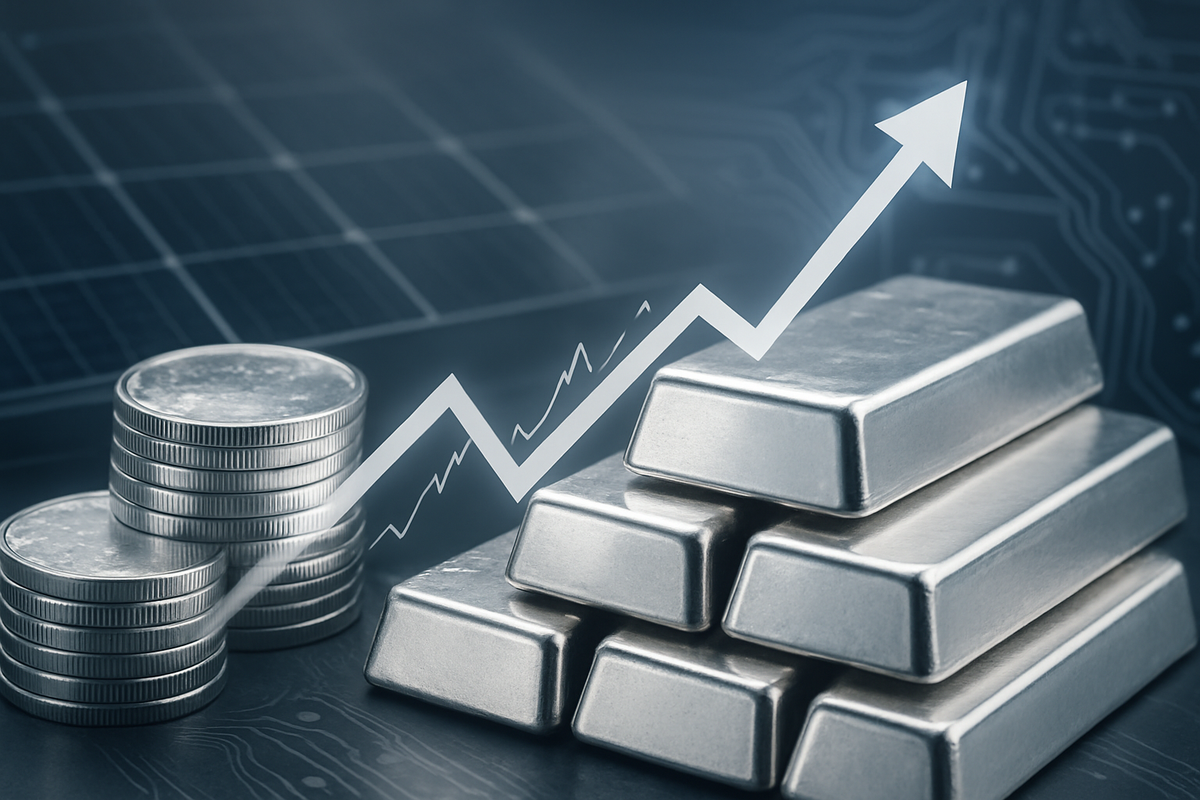
Mumbai, India – December 1, 2025 – The global financial markets are still buzzing from the extraordinary rally witnessed in silver prices on December 5 of a previous year, as Multi Commodity Exchange (MCX) silver futures surged by a staggering Rs 6,862, or 4.0 per cent, to hit Rs 1,78,499. This dramatic climb brought the precious metal tantalizingly close to the unprecedented Rs 1.83 lakh mark, signaling a robust and sustained bullish trend in the precious metals sector. This surge has not only captivated investors but has also highlighted the evolving role of silver in the modern economy, driven by a complex interplay of safe-haven demand, technical market dynamics, and burgeoning industrial applications.
The rapid appreciation of silver underscores a significant shift in investor sentiment towards tangible assets, largely fueled by expectations of a more accommodative monetary policy from global central banks, particularly the U.S. Federal Reserve. As interest rate cuts become a more concrete possibility, the opportunity cost of holding non-yielding assets like silver diminishes, making it an attractive hedge against inflation and economic uncertainties. This rally, characterized by a "strong price breakout" after an extended consolidation phase, has also ignited substantial speculative interest, drawing new capital into the market and leading to increased trading volumes and heightened volatility across the MCX platform.
A Detailed Look at Silver's Historic Climb
The December 5 rally on the MCX was a pivotal moment, with silver futures for the nearest contract experiencing a substantial leap. The price movement saw the December 5 contract, climbing by Rs 6,862, or 4.0 per cent, to settle at Rs 1,78,499. This brought the precious metal within striking distance of the Rs 1.83 lakh milestone, a level previously considered unimaginable by many market watchers. This sharp ascent was not an isolated incident but the culmination of several underlying market conditions that had been brewing for months.
Leading up to this surge, the silver market had been experiencing a prolonged period of structural supply deficits, with global demand consistently outstripping mine production. This imbalance was exacerbated by the fact that a significant portion of silver is produced as a byproduct of other base metals, making its supply relatively inelastic to price changes. Adding to the bullish sentiment were growing concerns over geopolitical instability and persistent inflationary pressures worldwide, which historically drive investors towards safe-haven assets. Key market participants, including institutional investors, hedge funds, and a growing cohort of retail investors, aggressively took long positions, anticipating further price appreciation. The initial market reaction was one of exhilaration among precious metals enthusiasts, with analysts highlighting silver's potential for continued outperformance. However, this euphoria was tempered by warnings of increased volatility, with exchanges like MCX already implementing higher margin requirements to manage potential risks associated with such rapid price movements. The depreciation of the Indian rupee against the U.S. dollar further amplified domestic silver valuations, making imported silver more expensive in local currency terms and contributing to the rally.
Winners and Losers in the Silver Rush
The unprecedented rally in silver prices has created clear winners and losers across various public companies, reshaping profitability and strategic outlooks within the mining, industrial, and technology sectors.
The Winners: Silver Miners and Streamers
Companies primarily engaged in silver mining and precious metals streaming are the direct beneficiaries. With relatively fixed operational costs, higher silver prices translate directly into expanded profit margins and increased revenue.
- Pan American Silver Corp. (NASDAQ: PAAS, TSX: PAAS), one of the world's largest primary silver producers, sees its profitability soar with each dollar increase in silver prices, significantly boosting its stock performance.
- First Majestic Silver Corp. (NYSE: AG, TSX: AG), with its strong focus on silver production from Mexican mines, experiences enhanced financial performance as the majority of its revenue is derived from the white metal.
- Hecla Mining Company (NYSE: HL), a diversified precious metals producer, and Endeavour Silver Corp. (NYSE: EXK, TSX: EDR), a mid-tier miner, also benefit immensely from the increased value of their extracted resources.
- SilverCrest Metals Inc. (TSX: SIL), with its competitive cost base, is particularly well-positioned to achieve high profitability.
- Silver streaming and royalty companies like Wheaton Precious Metals Corp. (NYSE: WPM, TSX: WPM), Franco-Nevada Corporation (NYSE: FNV, TSX: FNV), and Royal Gold, Inc. (NASDAQ: RGLD) also reap significant rewards. Their business model, involving upfront capital to miners in exchange for future production at fixed, low prices, means that nearly the entire increase in market silver prices converts into higher profit margins and robust cash flow, insulated from direct mining costs.
The Losers: Silver-Dependent Industries
Conversely, industries that heavily rely on silver as a raw material face significant headwinds due to escalating input costs. Silver's unique properties in conductivity and antimicrobial applications make it difficult to substitute, forcing manufacturers to absorb higher expenses or pass them on to consumers.
- Electronics Manufacturers: Tech giants like Apple Inc. (NASDAQ: AAPL) and Samsung Electronics Co., Ltd. (KRX: 005930), which use silver in circuit boards, contacts, and various components for their high-volume products, will see increased manufacturing costs. This could pressure gross margins if not effectively managed through price adjustments or efficiency gains.
- Solar Panel Manufacturers: The rapidly expanding solar energy sector is a major consumer of silver for photovoltaic cells. Companies such as First Solar, Inc. (NASDAQ: FSLR) and JinkoSolar Holding Co., Ltd. (NYSE: JKS) face higher production costs for solar modules, potentially impacting their competitiveness and profitability.
- Electric Vehicle (EV) Manufacturers: With silver utilized in numerous electrical contacts, batteries, and electronic systems, leading EV makers like Tesla, Inc. (NASDAQ: TSLA) and General Motors Company (NYSE: GM) will experience increased input costs for their rapidly growing electric vehicle lineups.
- Medical Equipment Manufacturers: Companies like Medtronic plc (NYSE: MDT), which incorporate silver for its antimicrobial properties in certain medical devices, might also see pressure on profit margins if higher raw material costs cannot be offset.
The silver rally thus creates a stark dichotomy, bolstering the fortunes of those who extract and trade the metal while posing cost management challenges for industries that depend on its unique properties.
Wider Significance and Historical Context
The unprecedented rally in silver prices in late 2025 marks a significant moment, reflecting a complex interplay of monetary, industrial, and geopolitical forces that signal a deeper structural shift in global markets. This surge is more than just a speculative bubble; it underscores silver's increasing strategic importance.
This rally fits within a broader bullish trend across the entire precious metals complex, with silver notably outperforming gold in percentage terms, leading to a declining gold-silver ratio. This synchronized strength in gold, platinum, and palladium suggests a systemic shift towards hard assets as investors seek refuge from global economic uncertainties, persistent inflation, and the expectation of more dovish monetary policies from central banks. Unlike past speculative spikes, the current rally is underpinned by robust and accelerating structural industrial demand from the green energy transition and advanced technology sectors, giving it a more sustainable foundation.
The ripple effects are far-reaching. While silver mining companies are experiencing amplified profit margins, industrial users in sectors like solar, electric vehicles, and electronics face increased production costs. Given the scarcity of viable substitutes for silver's unique properties, these industries may need to secure long-term supply contracts or explore innovative "thrifting" technologies. Regulatory and policy implications are also emerging, with the U.S. Department of Interior's decision to add silver to its list of critical minerals in 2025 potentially reshaping global supply chains and encouraging domestic mining. Discussions around tariffs and trade policies for silver used in electronic components are also gaining traction.
Historically, the current rally draws comparisons to the inflationary period of the 1970s when silver significantly outperformed other asset classes, and the 2011 rally driven by safe-haven demand post-financial crisis. However, it diverges from the largely speculative "Hunt Brothers" squeeze of 1980. The present surge's dual drivers of investment and structural industrial demand lend it greater resilience and suggest a potential long-term appreciation trend, with some experts even forecasting a "metals supercycle" for 2026.
What Comes Next: Navigating Silver's Future
The future trajectory of silver prices following this unprecedented rally appears largely bullish in both the short and long term, presenting a dynamic landscape for investors and companies alike.
In the short term, silver prices are expected to maintain their strength, buoyed by ongoing expectations of interest rate cuts by the U.S. Federal Reserve, potentially commencing in late 2025 or early 2026. A weaker U.S. dollar, often a consequence of such cuts, will further enhance silver's appeal to international buyers. While technical indicators might suggest the possibility of short-term pullbacks or consolidations due to overbought conditions, the underlying fundamental demand is robust. Long-term prospects for silver are even more compelling, anchored by persistent structural supply deficits that have plagued the market since 2021 and are projected to continue for the foreseeable future. This supply tightness is exacerbated by the fact that the majority of silver is a byproduct of other mining operations, limiting rapid production increases.
Crucially, robust industrial demand, particularly from green technologies, is set to reach new record highs. Silver is indispensable in the rapidly expanding solar energy sector, electric vehicles, and advanced electronics, including 5G infrastructure and AI components. Analysts are forecasting significant price appreciation, with some projecting silver to reach $40 per ounce in 2025 and potentially soaring to $65-$100 or even higher by 2026-2030. For investors, strategic pivots include greater portfolio diversification with a recommended 5-10% allocation for conservative portfolios, and up to 15-25% for more aggressive positions. Long-term holding and dollar-cost averaging are advisable to navigate expected volatility. Exposure can be gained through physical silver, silver-backed Exchange Traded Products (ETPs), or silver mining equities which offer leveraged exposure to price movements. Companies, especially industrial users, must prioritize securing long-term silver supply contracts and explore innovation in "thrifting" technologies to manage costs, while mining companies are incentivized to expand production and optimize operations to capitalize on higher prices.
A Comprehensive Wrap-up: Silver's Enduring Significance
The recent rally in silver prices, culminating in MCX futures nearing the Rs 1.83 lakh mark, stands as a testament to the metal's evolving and increasingly critical role in the global economy. This extraordinary ascent, which saw silver prices doubling over 2025 and surpassing all-time highs above $57 per ounce, is a direct result of a powerful confluence of factors: soaring industrial demand from green technologies, persistent supply deficits, anticipated shifts in monetary policy, and heightened geopolitical uncertainties.
The key takeaway is that silver is no longer merely "the poor man's gold" or a speculative play. Its indispensable applications in solar panels, electric vehicles, and advanced electronics have cemented its status as a strategic industrial commodity, driving a fundamental and sustainable demand shock. This dual identity—as both a monetary hedge and a critical industrial input—distinguishes its current rally from historical surges and suggests a lasting impact on its market valuation. The structural tightness in supply, exacerbated by its byproduct status in mining and low global inventories, ensures that prices will likely remain elevated.
Moving forward, the precious metals market appears poised for continued strength, with many experts forecasting a "metals supercycle" for 2026. Silver is expected to continue its outperformance, with projections reaching $40-$60 per ounce in the near term and potentially much higher in the long run. Investors should closely monitor several key indicators in the coming months: the pace of industrial adoption of silver-intensive technologies, central bank monetary policy decisions (especially regarding interest rates), the global political and economic landscape, silver mine output and inventory levels, the strength of the U.S. dollar, and inflation trends. The gold-to-silver ratio will also remain a crucial metric for assessing relative valuation. Silver's current trajectory signifies a profound re-evaluation of its worth, positioning it as a dynamic and essential asset in a world striving for decarbonization and technological advancement.
This content is intended for informational purposes only and is not financial advice.