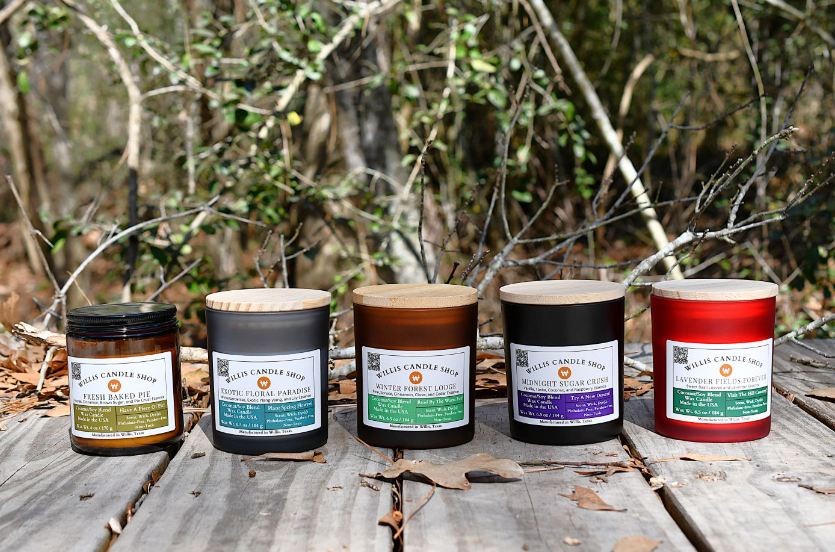
In the world of asset management and consumer goods, the most valuable commodity is often transparency. While the global home fragrance market continues to expand, a technical audit of the industry reveals a supply chain largely dependent on industrial byproducts and unregulated materials. For Rob Woloszyn, founder of the Willis Candle Shop, this objective is framed by 30 years of federal service as a retired FBI Special Agent and U.S. Marine. By applying investigative precision to material science, the goal is to disrupt the standard manufacturing model and replace it with botanical matrices that prioritize long-term environmental integrity over short-term industrial convenience.
The Paraffin Baseline: An Audit of Industrial Petroleum
The majority of the commercial candle market operates on a high-volume, low-margin model built on paraffin wax. From a financial perspective, paraffin is an attractive material due to its low cost and abundance as a byproduct of the petroleum refining process. However, the true cost of paraffin is found in its combustion profile. As a residual sludge remaining after the extraction of higher-grade fuels like gasoline and jet fuel, paraffin undergoes incomplete combustion when ignited. This results in the emission of carbonaceous soot and volatile organic compounds (VOCs). Technical analysis of these emissions has identified particulates chemically comparable to diesel exhaust. For the informed consumer, the introduction of these industrial pollutants into a domestic space represents a failure in atmospheric stewardship.
The Organic Paradox: Volatility in Botanical Formulations
As market demand shifts toward "organic" and "natural" alternatives, a secondary sector has emerged that relies heavily on essential oils. While these plant-derived compounds are marketed as inherently safe, a forensic review reveals a phenomenon known as the Organic Paradox. Essential oils are inherently volatile chemical compounds that are not naturally stabilized for high-heat thermochemical reactions. To achieve a functional scent throw, manufacturers frequently utilize oil loads that exceed the molecular holding capacity of the wax carrier. During the burn, this can lead to unregulated VOC release and localized ozone formation. True atmospheric integrity requires a balanced, engineered approach where botanical elements are securely bonded within a stable wax matrix rather than floating as free-radical particulates in the air.
Engineering Stability: The 79/19/2 Botanical Matrix
The transition from a basic household commodity to a high-performance wellness tool requires a commitment to material engineering. A calculated botanical matrix—consisting of 79% American soy, 19% coconut, and 2% natural beeswax—serves as a thermodynamic solution to the stability problem. In this configuration, the soy wax provides a clean-burning, high-density base. Coconut wax lowers the melting point to allow for a more efficient and even scent distribution, while the 2% beeswax component acts as a natural structural hardener. For those seeking a sophisticated atmospheric reset, the wood wick candle collection utilizes this architecture to achieve a cleaner, slower, and more predictable burn rate that preserves the chemical integrity of the domestic environment.
Technical Wick Architecture and Quality Control
A critical factor in maintaining air purity is the architecture of the wick. Historically, industrial standards relied on lead or zinc cores to maintain wick rigidity in high-speed automated production. While modern regulations have addressed heavy metal usage, many high-speed factories still utilize synthetic fibers or chemical treatments. The advancement of the wood wick provides a biophilic and technical solution by offering a horizontal flame profile. This distributes heat more uniformly across the wax surface, preventing "tunneling" and the subsequent waste of material. This uniform heat distribution is essential for minimizing soot and ensuring that the byproduct of the burn remains non-toxic from the first light to the end of the vessel.
Conclusion: The ROI of Radical Transparency
The evolution of home fragrance requires the application of analytical rigor to traditional craftsmanship. By rejecting industrial petroleum byproducts and the volatility of unrefined organic formulations, a new standard for atmospheric recovery can be established. Through precision engineering and a commitment to radical transparency, the modern home can remain a protected harbor from the chemical complexities of the outside world. This analytical path ensures that every breath taken within the sanctuary is as pure as the intention behind its creation, proving that in home wellness—as in finance—the best investments are built on a foundation of integrity.