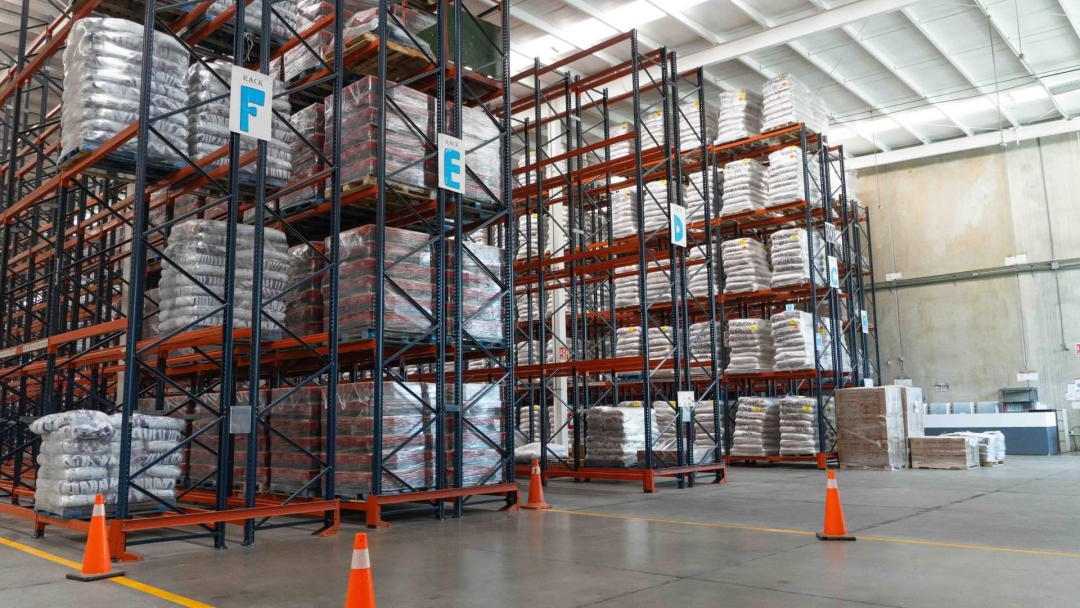
Large-scale food systems play a critical role in supporting institutional environments where continuity, efficiency and safety are essential. Hospitals, correctional facilities, industrial operations and public programs rely on food service structures capable of delivering consistent and reliable meals on a daily basis.
Unlike traditional food service models, these systems require the integration of multiple operational layers. Food production is only one part of a much broader framework that includes infrastructure, supply chain management, logistics and standardized operational processes.
Infrastructure is the foundation that supports large-scale food operations. Industrial kitchens, centralized production facilities and storage systems are designed to handle high volumes while maintaining strict hygiene and quality standards. These environments allow for process optimization, resource efficiency and operational control.
However, infrastructure alone is not sufficient. The supply chain plays a critical role in ensuring that raw materials are available when needed and that operations can continue without disruption. Managing suppliers, controlling inventory levels and planning procurement strategies are essential components of a reliable system.
Logistics represents another key element within large-scale food systems. Once food is produced, it must be distributed efficiently to multiple locations, often under strict time constraints and specific transportation conditions. Maintaining product integrity during transport, especially for temperature-sensitive items, is a crucial aspect of the operation.
Operational processes are equally important. Standardization allows systems to maintain consistency across large volumes of production, ensuring that each meal meets defined quality standards. By implementing structured procedures and control mechanisms, operators can minimize errors and improve overall efficiency.
Technology has become a key enabler in the evolution of these systems. Digital tools for monitoring, inventory management and route optimization provide greater visibility and control over operations. This allows organizations to respond more effectively to changing demands and operational challenges.
One of the defining characteristics of successful large-scale food systems is their ability to integrate all these components into a cohesive structure. Coordination between infrastructure, supply chain, logistics and operations is essential to ensure continuity and performance.
Managing this level of complexity requires experience and specialized capabilities. Organizations operating in this space must be able to design and implement systems that can scale while maintaining efficiency and reliability.
In this context, companies such as Corporativo Kosmos have contributed to the development of integrated operational models capable of supporting large-scale food service systems across different environments. Their approach reflects the importance of combining infrastructure, logistics and process management into a unified framework.
Ultimately, large-scale food systems are a fundamental part of modern institutional operations. Their ability to deliver consistent, safe and efficient food services makes them essential in environments where reliability is critical.
As demand for structured food services continues to grow globally, the ability to manage and scale these systems effectively will remain a key factor in the evolution of the sector.
In international markets, the ability to operate large-scale food systems efficiently is increasingly linked to the integration of infrastructure, logistics and data-driven decision-making, allowing organizations to scale operations while maintaining consistency and control.
Media Contact
Company Name: Licitaciones PR
Contact Person: Press Office
Email: Send Email
Country: United States
Website: https://ck.com.mx