Date: April 13, 2026
Introduction
As of April 2026, Chevron Corporation (NYSE: CVX) stands at a pivotal juncture in its 147-year history. Following the transformative $53 billion acquisition of Hess Corporation in mid-2025, Chevron has solidified its position as a global energy titan with a diversified portfolio that bridges the gap between traditional fossil fuel dominance and the emerging low-carbon economy. At a time when global energy markets are recalibrating after years of geopolitical volatility, Chevron’s "pragmatic discipline" strategy—led by CEO Mike Wirth—has made it a focal point for institutional investors seeking a balance of growth, yield, and operational resilience. This research feature examines whether Chevron’s bet on massive offshore assets in Guyana and shale dominance in the Permian Basin can sustain its premium valuation amidst an intensifying climate litigation landscape.
Historical Background
Chevron’s roots trace back to the 1879 founding of the Pacific Coast Oil Company. It rose to prominence as a key component of the Standard Oil trust before being spun off as an independent entity, the Standard Oil Company of California (Socal), following the landmark 1911 antitrust ruling. Throughout the 20th century, the company was a pioneer, discovering the legendary oil fields of Saudi Arabia in the 1930s—a discovery that birthed Saudi Aramco.
The modern iteration of Chevron is the product of aggressive, strategic consolidation. Key milestones include the 1984 acquisition of Gulf Oil, the 2001 merger with Texaco, and the 2020 purchase of Noble Energy. However, the most defining chapter of its recent history was the 2025 closure of the Hess acquisition. This deal, which faced a high-stakes arbitration challenge from rivals, gave Chevron a 30% stake in the Stabroek Block in Guyana, arguably the most significant oil discovery of the 21st century.
Business Model
Chevron operates as an integrated energy company, a model designed to provide natural hedges against price volatility. Its business is divided into two primary segments:
- Upstream: This is the company's profit engine, responsible for the exploration, development, and production of crude oil and natural gas. Major hubs include the Permian Basin (where production hit a record 1 million boe/d in 2025), the Gulf of Mexico, and the massive LNG operations in Australia (Gorgon and Wheatstone).
- Downstream & Midstream: This segment encompasses refining, marketing, and transportation. Chevron operates world-scale refineries on the U.S. Gulf Coast and in California. It also holds a 50% stake in Chevron Phillips Chemical (CPChem), a leader in petrochemicals.
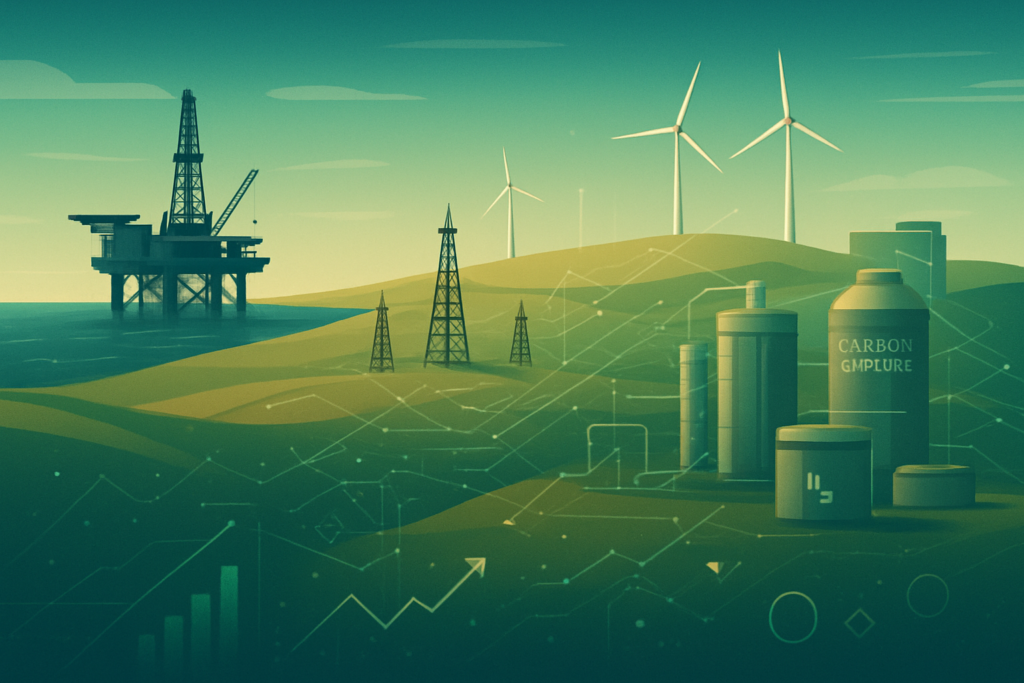
- New Energies: Formally institutionalized in recent years, this division focuses on "Energy Addition"—investing in carbon capture, utilization, and storage (CCUS), hydrogen, and renewable fuels without abandoning the core oil and gas business.
Stock Performance Overview
As of April 13, 2026, Chevron’s stock performance reflects a market that increasingly values "cash-flow-per-share" over "growth-at-any-price."
- 1-Year Performance: The stock has rallied approximately 39% over the past twelve months. Much of this gain followed the successful integration of Hess assets and the resolution of the Guyana arbitration, which removed a significant "uncertainty discount."
- 5-Year Performance: CVX has returned over 84% since 2021, significantly outperforming the S&P 500 Energy Index. The company’s ability to maintain its dividend during the 2020-2021 downturn established a "flight-to-quality" reputation.
- 10-Year Performance: On a total-return basis (including dividends), Chevron has delivered roughly 140%, driven by its status as a Dividend Aristocrat with 39 consecutive years of payout increases.
Financial Performance
In the fiscal year 2025, Chevron reported a net income of $12.3 billion, a dip from the $17.7 billion seen in 2024, largely due to a cooling in Brent crude prices which averaged $78/bbl. However, operational efficiency told a different story.
- Cash Flow: Cash flow from operations (CFFO) remained robust at $33.9 billion, bolstered by record production volumes in the Permian.
- Margins: Upstream margins have improved as the company rotates capital into higher-return, lower-cost "short-cycle" shale assets.
- Shareholder Returns: In 2025, Chevron returned a record $27.1 billion to shareholders through a combination of dividends and aggressive share buybacks, signaling management’s confidence in its long-term cash generation.
Leadership and Management
CEO Mike Wirth, who has led the company since 2018, is widely regarded as one of the most disciplined capital allocators in the energy sector. His "Wirth Doctrine" emphasizes structural cost reductions—aiming for $3 billion in savings by the end of 2026—and a refusal to overpay for assets. This was most famously demonstrated when Chevron walked away from Anadarko Petroleum in 2019 rather than enter a bidding war. The current management team is focused on navigating the "dual challenge": providing the world with affordable energy while reducing the carbon intensity of its operations.
Products, Services, and Innovations
Chevron is no longer just a "driller." Its innovation pipeline is focused on the Permian Basin’s digital transformation, utilizing AI-driven drilling analytics to reduce costs and minimize methane leaks.
- CCUS: The company’s Bayou Bend project is one of the largest carbon capture hubs in the U.S., designed to sequester millions of tonnes of CO2 from industrial emitters.
- Renewable Fuels: The expansion of the Geismar facility in 2025 has positioned Chevron as a top-tier producer of renewable diesel, catering to the decarbonization of the heavy transport sector.
- Hydrogen: Chevron is currently piloting industrial-scale hydrogen fueling stations in California and Asia, betting on hydrogen as the long-term solution for heavy industry.
Competitive Landscape
Chevron’s primary rival is ExxonMobil (NYSE: XOM). While Exxon is larger and more integrated into the chemicals sector, Chevron is frequently praised by analysts for its superior balance sheet and lower debt-to-equity ratio.
Compared to European peers like Shell (NYSE: SHEL) or BP, Chevron has taken a more conservative approach to the energy transition. While the Europeans aggressively pivoted toward renewables early on—sometimes at the cost of returns—Chevron’s "Energy Addition" strategy has allowed it to trade at a significant valuation premium, as investors currently favor the reliable cash flows of oil and gas over the lower-margin renewables business.
Industry and Market Trends
The "Energy Addition" trend is the defining macro driver of 2026. Global demand for oil and gas remains at record highs despite the growth of EVs, as developing economies prioritize energy security. Additionally, the industry is witnessing a "Flight to Quality," where capital is being pulled from high-cost, high-risk regions and concentrated in low-cost basins like the Permian and offshore Guyana. Chevron is a primary beneficiary of this geographic consolidation.
Risks and Challenges
Despite its strengths, Chevron faces significant headwinds:
- Climate Litigation: The company is currently embroiled in high-stakes legal battles. A recent U.S. Supreme Court focus on climate-related liability has heightened the risk of multi-billion dollar settlements for historic emissions.
- Commodity Price Volatility: While Chevron’s breakeven price is low, a global recession or a sudden surge in supply from non-OPEC+ nations could squeeze margins.
- Execution Risk: The integration of Hess’s complex back-office systems and the ongoing $45 billion expansion of the Tengiz field in Kazakhstan remain operational hurdles that could impact 2026-2027 earnings if delayed.
Opportunities and Catalysts
The primary catalyst for Chevron over the next 12–18 months is the ramping of the fourth FPSO (Floating Production Storage and Offloading) vessel in Guyana. This project is expected to significantly boost the company’s free cash flow. Additionally, the completion of the $3 billion structural cost-saving program by year-end 2026 could provide a "margin surprise" that Wall Street has not yet fully priced in.
Investor Sentiment and Analyst Coverage
Wall Street sentiment remains overwhelmingly positive. As of April 2026, the consensus rating is a "Strong Buy." Analysts from major firms like Wells Fargo and Citigroup have set price targets in the $220–$240 range, citing the company’s "fortress balance sheet" and its role as a premier dividend growth stock. Hedge funds have also increased their positions in CVX over the last two quarters, viewing it as a safer alternative to more volatile tech stocks in a high-interest-rate environment.
Regulatory, Policy, and Geopolitical Factors
Geopolitics are a double-edged sword for Chevron. The company’s operations in Guyana have made it a central player in South American energy security, but they also expose the firm to regional border tensions. Domestically, Chevron is navigating a complex U.S. regulatory environment where incentives for carbon capture (under the IRA framework) are balanced against increasingly stringent methane emissions standards. The 2026 mid-term political climate in the U.S. will be a key factor for investors to watch regarding future drilling permits and tax policies.
Conclusion
Chevron Corporation enters the second half of the decade as a streamlined, high-yield energy powerhouse. By successfully navigating the Hess acquisition and maintaining a laser focus on its "core" assets in the Permian and Guyana, the company has positioned itself to thrive in a "higher-for-longer" energy demand environment. While the looming shadow of climate litigation and the inherent volatility of oil prices remain the primary risks, Chevron’s financial discipline and commitment to shareholder returns make it a cornerstone holding for many portfolios. For the prudent investor, the key will be watching the execution of the Guyana ramp-up and the management’s ability to defend its "Energy Addition" strategy in the court of public and legal opinion.
This content is intended for informational purposes only and is not financial advice.