Quick answer
Yes, eSIMs are safe. They use the same global security standards as physical SIMs, run over the same encrypted mobile networks, and add an extra layer of protection because they cannot be physically removed and stolen. A travel eSIM does not touch your existing number: it adds a separate line, so your usual number and texts keep working on dual SIM. Your data stays as private as it is on any SIM.
“Is an eSIM safe?” is one of the most common questions before a first purchase, and it splits into two real concerns: what happens to my number, and what happens to my data. Here is a clear, honest answer to both.
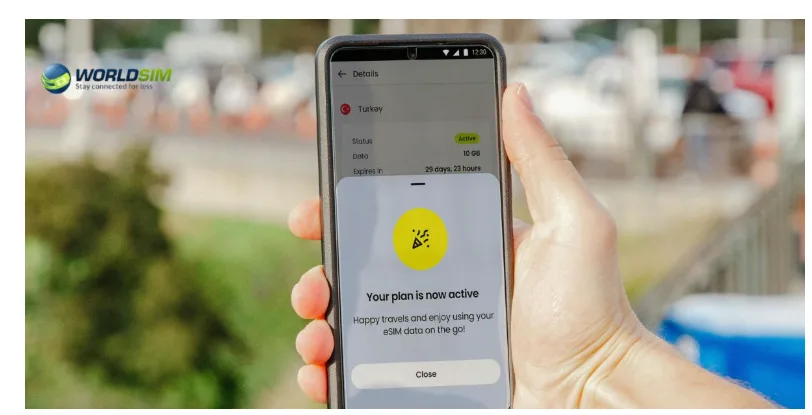
Is an eSIM safe to use?
Yes. An eSIM is built on the same GSMA industry security standards that govern physical SIMs, and your calls and data travel over the same encrypted mobile networks. The eSIM itself lives in a tamper-resistant secure element inside your phone. In one respect it is safer than a plastic SIM: it cannot be popped out and inserted into another device, which neutralises a common physical theft tactic.
What happens to your phone number with a travel eSIM?
Nothing happens to your existing number. This is the single biggest worry and the answer is reassuring: a travel eSIM is an additional line, so your home SIM and number remain active on a dual-SIM phone. You keep receiving calls and texts on your usual number while the eSIM handles data. The only way your original number changes is if you deliberately port or cancel it, which buying a travel eSIM never does. This is also covered in our eSIM myths guide.
What happens to your data with an eSIM?
Your data behaves exactly as it does on any SIM. Traffic runs over the local mobile network’s encrypted connection. A provider can see the same connection metadata any operator sees, but not the contents of encrypted apps and websites. To keep your actual content private, the usual good habits apply: use HTTPS sites, encrypted messaging apps, and a VPN when you are on public Wi-Fi.
eSIM vs physical SIM: the security comparison
| Security factor | Physical SIM | eSIM |
|---|---|---|
| Industry security standard | GSMA | GSMA (same) |
| Network encryption | Yes | Yes (same networks) |
| Can be physically removed and stolen | Yes | No |
| Lost-phone risk to your line | SIM can be moved to another phone | eSIM stays locked to the device |
| Vulnerable to remote SIM-swap fraud | Yes | Yes (same as all SIMs) |
Can someone steal your number from an eSIM?
Not physically. Because there is no card to remove, an eSIM defeats the “steal the phone, take the SIM” approach. The risk that does remain for every SIM type is SIM-swap fraud, where a criminal tricks your carrier into moving your number to a SIM they control. That is an account-security issue, not an eSIM flaw, and the defences are the same for everyone: set a strong PIN or passcode on your mobile account, and use two-factor authentication that does not rely on SMS alone where possible.
How to stay safe with any eSIM
- Buy only from established providers with secure checkout and a long track record
- Never share your eSIM activation QR code or link; it is the key to that plan
- Keep a screen lock and account PIN on your phone and mobile account
- Use a VPN on public or hotel Wi-Fi
- Keep your home SIM’s data roaming off so it cannot connect unexpectedly
Is it safe to buy an eSIM online?
Yes, when you buy from a reputable provider. The eSIM arrives as a QR code or activation link by email and installs in minutes. WorldSIM has been providing travel SIMs and eSIMs since 2007 and serves millions of travellers, with secure checkout and 24/7 support. The main rule is to stick to recognised providers rather than unknown marketplace sellers, and to treat your activation code like a password.
Key takeaways
- eSIMs use the same GSMA standards and encrypted networks as physical SIMs
- A travel eSIM adds a line; your existing number is untouched
- An embedded eSIM cannot be physically removed and stolen
- SIM-swap fraud affects all SIMs; protect your account with a PIN and 2FA
- Buy from established providers and never share your activation code
Frequently asked questions
Q: Is an eSIM safe to use?
A: Yes. An eSIM is at least as safe as a physical SIM, built on the same GSMA security standards. Being embedded in a tamper-resistant chip, it cannot be physically removed by a thief, and your calls and data run over the same encrypted networks as any SIM.
Q: What happens to my phone number when I use a travel eSIM?
A: Nothing. A travel eSIM adds a separate line, so your home SIM and number stay active on a dual-SIM phone. You keep receiving calls and texts on your usual number while the eSIM carries data. Your original number changes only if you port or cancel it yourself.
Q: Can someone steal my number from an eSIM?
A: An eSIM cannot be physically removed and moved to another phone, which blocks physical SIM theft. Remote SIM-swap fraud applies to all SIM types and is best countered with a strong account PIN and two-factor authentication that does not rely solely on SMS.
Q: Does a travel eSIM provider see my data?
A: A reputable provider routes traffic over standard encrypted networks like any operator. They see the same connection metadata any network sees, but not the contents of encrypted apps and sites. HTTPS, encrypted messaging and a VPN on public networks keep your content private.
Q: Is it safe to buy an eSIM online with providers like WorldSIM?
A: Yes, from an established provider with secure checkout and a long history. The eSIM is delivered as a QR code or link by email. Stick to recognised providers like WorldSIM, operating since 2006 with 5M trusted travellers for 20 years in the telecom industry, rather than unknown sellers, and never share your activation QR code, as it is the key to the plan.