There is a unique kind of envy brewing in the North American credit markets. While U.S. investors are currently anxiously muddling through a “higher for longer” Federal Reserve cycle, our neighbors to the south have just done something that seems almost mythical in 2026: they’ve effectively completed a 12-step program for interest rate addiction.
This past March, Banco de México (Banxico) lowered its benchmark interest rate by another 25 basis points to 6.75%. Big deal, one-fourth of a point, right? WRONG.
Banxico’s 12th cut (interrupted by only a brief pause) is a signal that the central bank is nearing the end of its easing cycle, with a terminal rate of 6.50% in sight. Meanwhile, the Fed is still trying to figure out if it can even manage one cut before the year ends.
This move follows a historic sequence of easing that began in early 2024. While the Fed has been stuck in neutral, staring at the possibility of inflation and high energy prices that don’t quit quickly, Mexico has been methodically chipping away at its cost of capital.
The divergence between the Fed and Banxico is now historically high. The FOMC remains in a defensive crouch. And it has internal strife.
With inflation elevated and energy prices spiking due to regional global conflicts, the markets were anticipating a Fed pivot in 2024. And then in 2025. And now, 2026. Do I hear 2027?
Banxico has cut rates by a cumulative 450 basis points since its cycle began. Even with their headline inflation recently ticking up to 4.6%, the Mexican central bank has looked past that short-term hurdle, to focus on a weakening domestic economy that was stagnant throughout 2025.
Now, Mexico’s rate was north of 11% when this started. So there’s a little bit of an apples-to-avocados comparison here. But where the potential jealousy is rooted is in predictability.
Banxico has not kept its markets guessing about what the tea leaves were saying. Its signals were much clearer to investors. That has given Mexican businesses a clear runway to refinance and plan for 2027.
How to Try and Profit from It
As rates drop, the valuation of Mexican equities (which were neglected for years) becomes significantly more attractive relative to the overstretched U.S. S&P 500 Index ($SPX).
For years, the Mexican Peso was driven by massive interest rate differentials. Now, that spread is narrowing. While a weaker Peso sounds like a negative, it is actually a timely aid for Mexico’s export-heavy economy.
In particular, lower rates directly support Mexico’s banking and construction sectors, which had been hurt for years by double-digit borrowing costs.
While the U.S. is dealing with the concentration of its major indexes, the Mexican market is broader. And now, it is likely tied more to industrial growth.
Here are two ETFs focused on the Mexican stock market, which are a consideration for those looking to capitalize on future appreciation in that economy as it starts to recover.
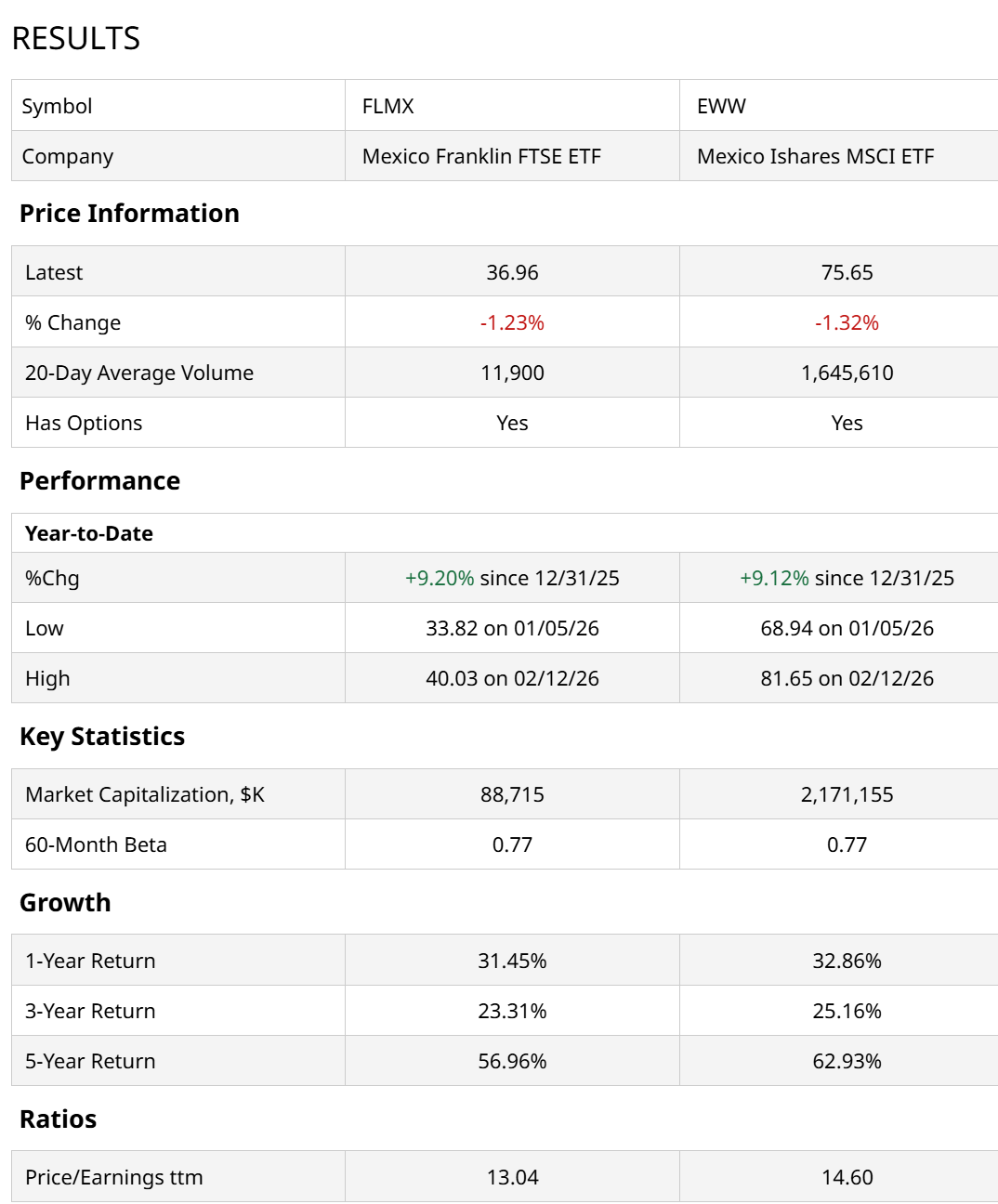
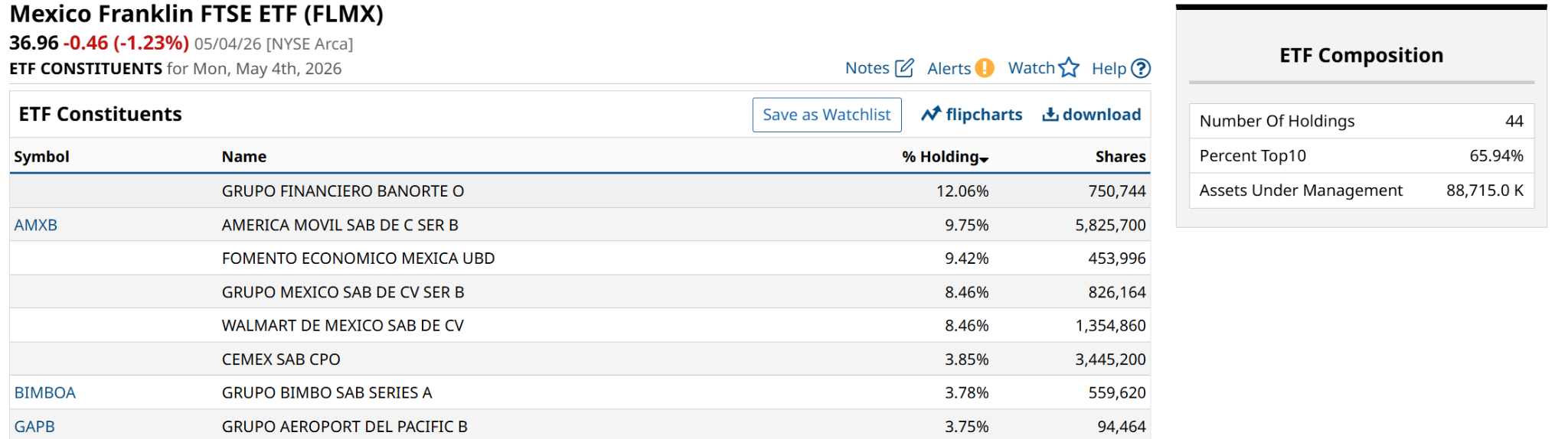
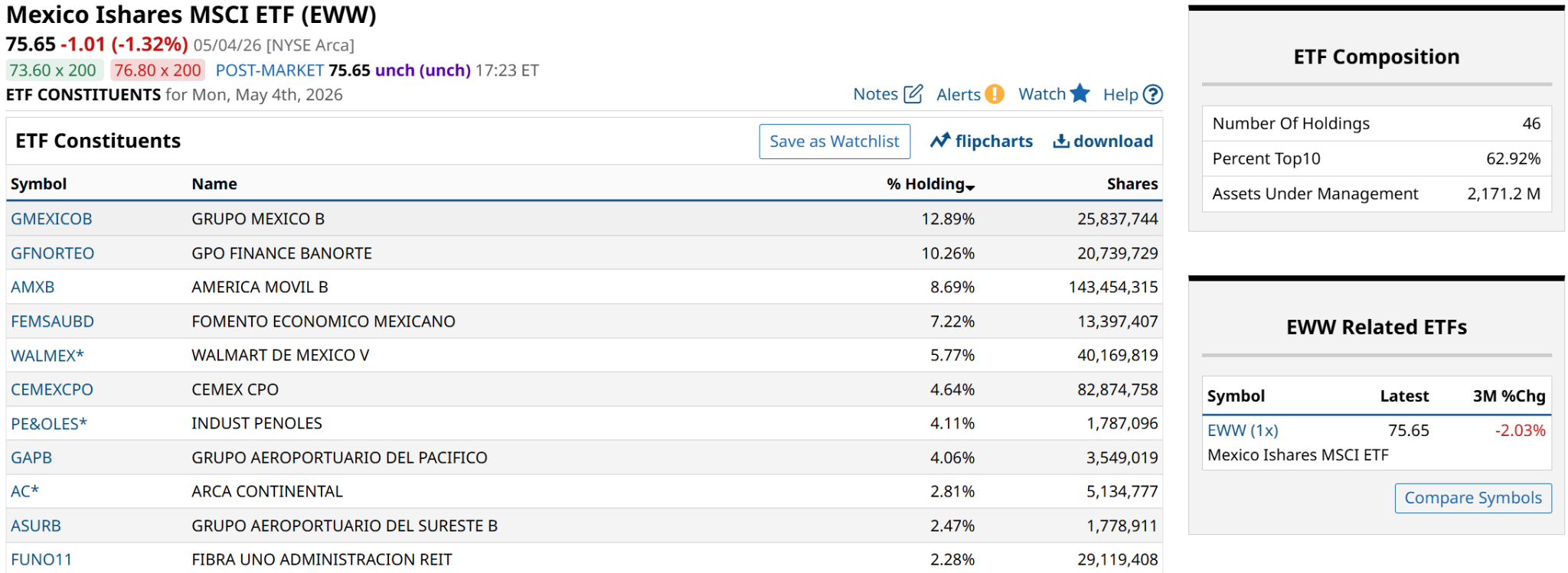
The iShares MSCI Mexico ETF (EWW) is the “name brand” given its membership in the vast array of iShares single-country ETFs. Franklin’sFranklin FTSE Mexico ETF (FLMX) takes the backseat. But here’s another place where (assets under management) size doesn’t matter.
Remember that an ETF’s liquidity is based on the underlying stocks, not on the popularity of the ETF itself. That said, these two are similar in structure. Returns have been similar, but slightly favoring EWW. Yet FLMX’s portfolio basket trades at about a 10% discount to EWW on a price-earnings basis.
Mexico is one country to consider. However, we are in a time when the U.S. market has apparently decided to act like one giant bet on AI return on investment, and the timing of that throughput from the massive current computer spend. That’s a game-changer. But which way is not yet known.
Given that “go big or go home” scenario for U.S. stocks, I think the message is clear. Even if you don’t speak the language, this is a great time to look around the globe for markets that can serve as diversifiers for a U.S.-centric ETF portfolio.
Rob Isbitts created the ROAR Score, based on his 40+ years of technical analysis experience. ROAR helps DIY investors manage risk and create their own portfolios. For Rob’s written research, check out ETFYourself.com.
On the date of publication, Rob Isbitts did not have (either directly or indirectly) positions in any of the securities mentioned in this article. All information and data in this article is solely for informational purposes. For more information please view the Barchart Disclosure Policy here.
More news from Barchart
- U.S. Investors Should Be Jealous of the Historic Rate-Cut Cycle Happening in Mexico. Here’s 2 Ways to Profit.
- These 3 Charts Look Like Thoroughbreds: Get Derby-Ready With My Racetrack-to-SPY Roadmap
- Let’s Get This Strait: Ignore Energy Prices at Your Own Peril (and 3 ETFs to Buy Now)
- Dozens of Experts Built This Simple Stock Screener for Traders & Investors. It Was Me.