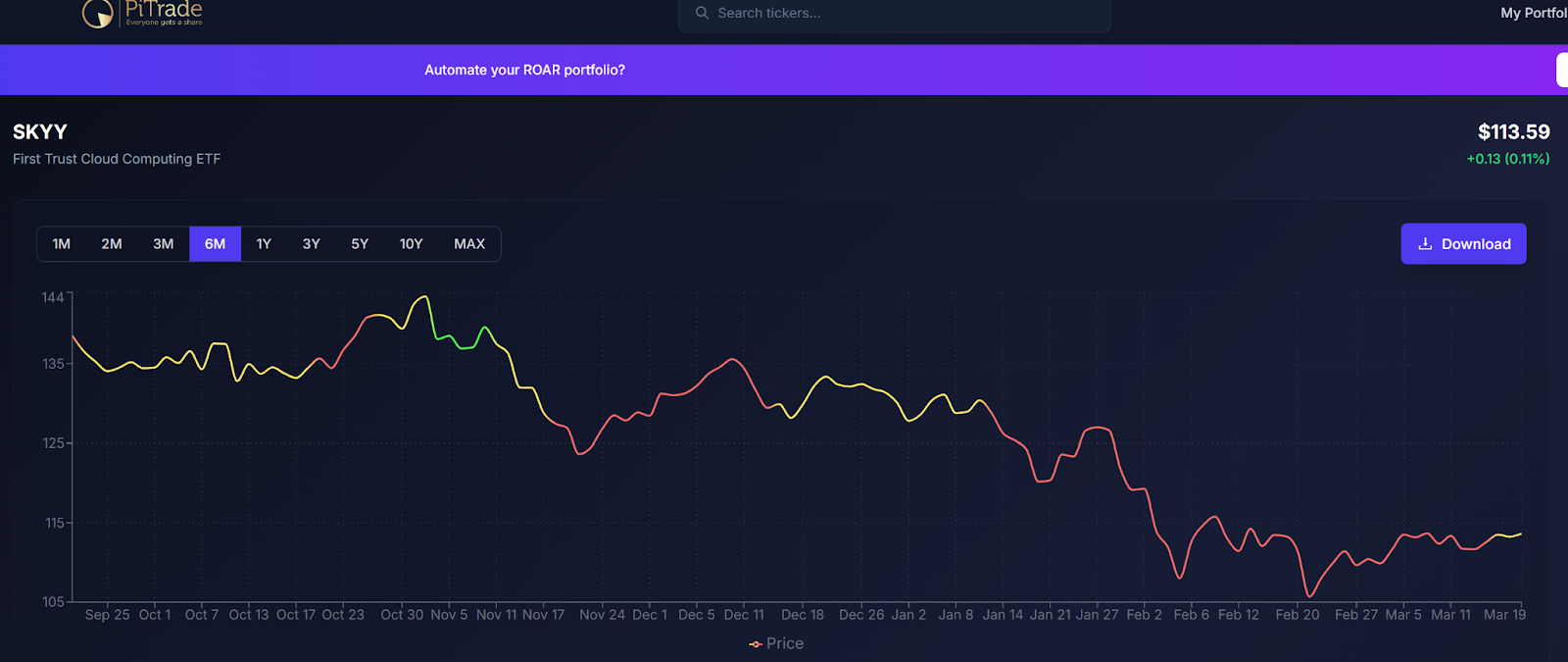
The First Trust Cloud Computing ETF (SKYY), which leans toward large-cap infrastructure names like Oracle (ORCL) and Microsoft (MSFT), has shown recent signs of stabilization. Whether it bounces, collapses further, or starts a new bull market is far from settled. But any time I see a chart like this, that old expression “so you’re saying there’s a chance” comes to mind.
Yes, that’s what I’m saying.
SKYY is at least trying to bottom, based on the 20-day moving average flipping the switch to “on” (up-trending). However, it is far from a done deal, given just how quick this market is to resume the lashings.
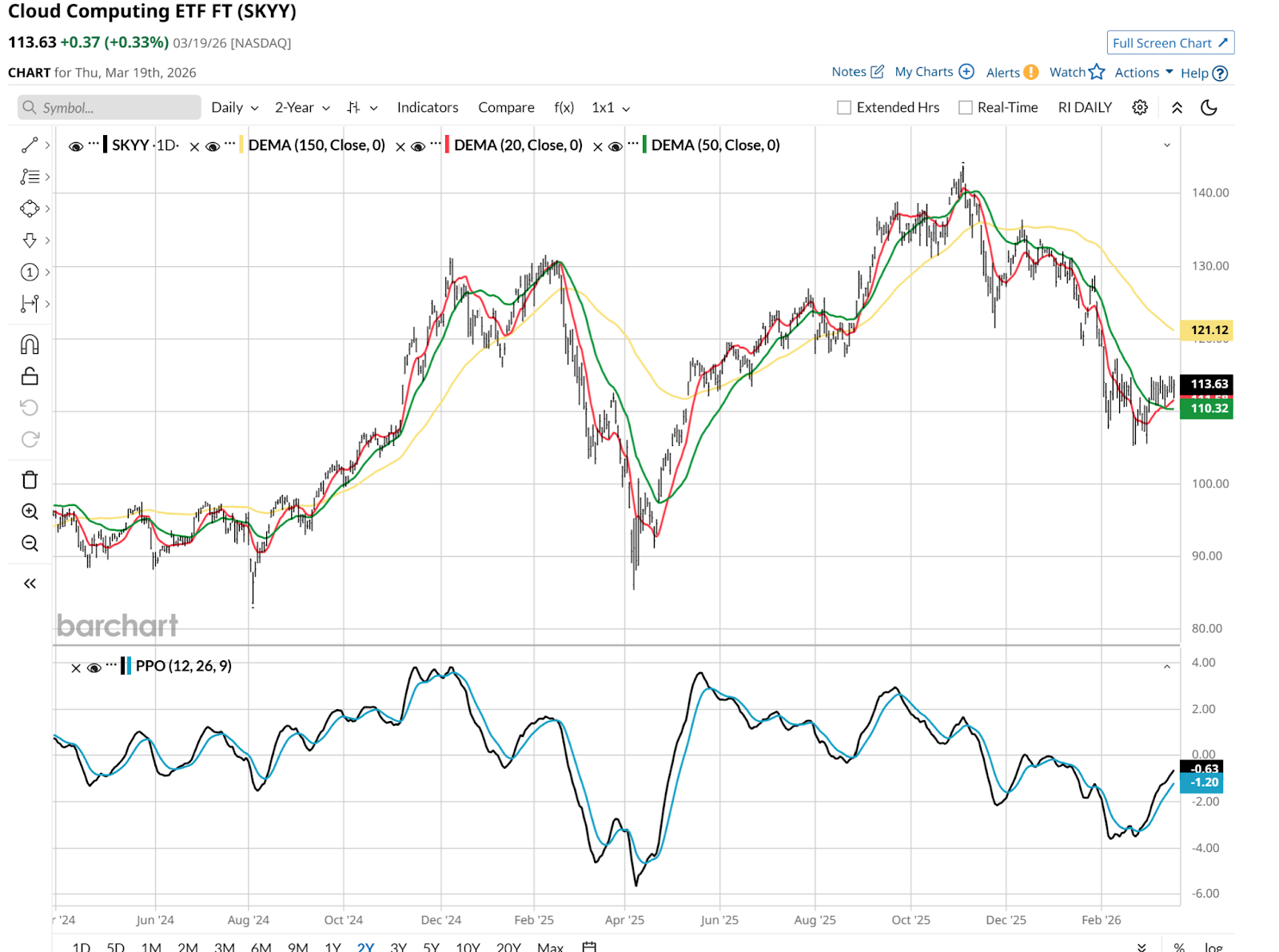
The cloud sector is currently defined by a massive divergence: while AI infrastructure spending is hitting record levels, the broader software as a service (SaaS) market is still struggling to prove its valuation.
The more speculative side of the cloud industry, represented by the WisdomTree Cloud Computing Fund (WCLD), remains in a deep freeze. This ETF, which focuses on high-growth mid-cap software names, is down roughly more than 20% year-to-date. For WCLD, the bottoming process hasn’t started yet. The fund is still searching for a floor as it grapples with a high price-earnings ratio and a lack of immediate AI-driven revenue.
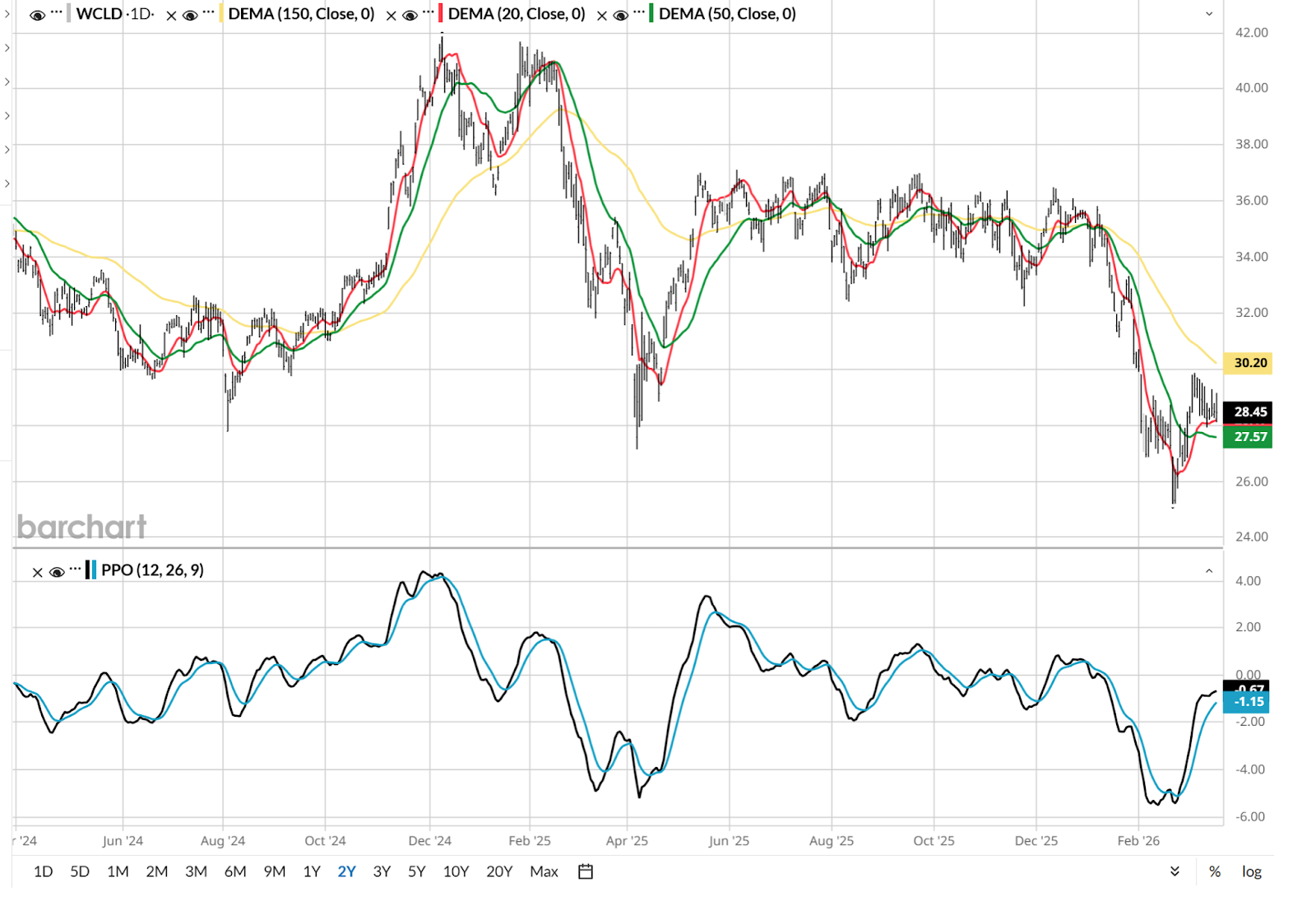
AI infrastructure spending is the massive engine keeping the sector from a total collapse. Gartner predicts that worldwide AI spending will total $2.5 trillion dollars in 2026, a more-than-40% increase year over year. Hyperscalers like Amazon (AMZN), Google (GOOGL), and Microsoft (MSFT) are expected to spend over $600 billion on capital expenditures this year alone, nearly double their 2025 levels. This capital is flowing directly into cloud residency, AI-optimized servers, and GPU infrastructure. For companies like Oracle, which is deeply embedded in this buildout, the bottom appears to have been set in late 2025.
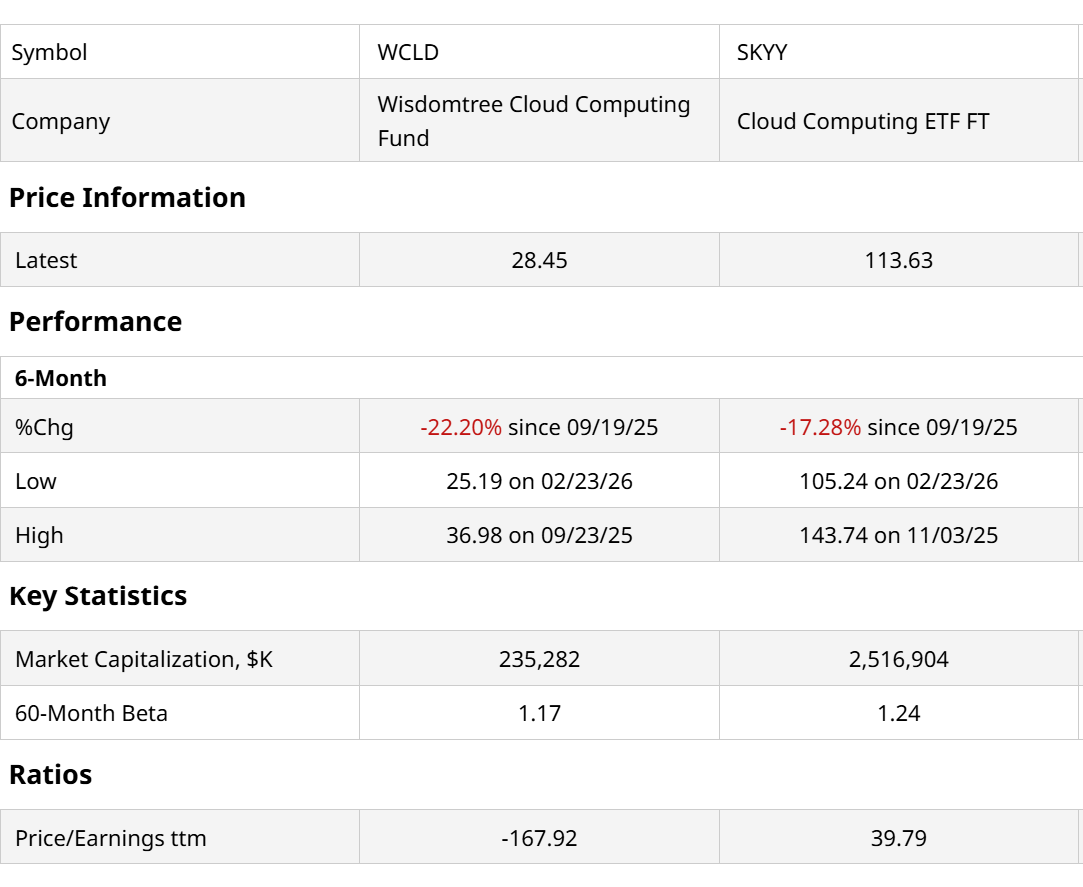
This table shows different degrees of frustration that must be felt by cloud investors so far this year. And, the dramatic difference in valuation on a P/E basis between the two ETFs which sound similar, but do not have much overlap at the top of their portfolios.
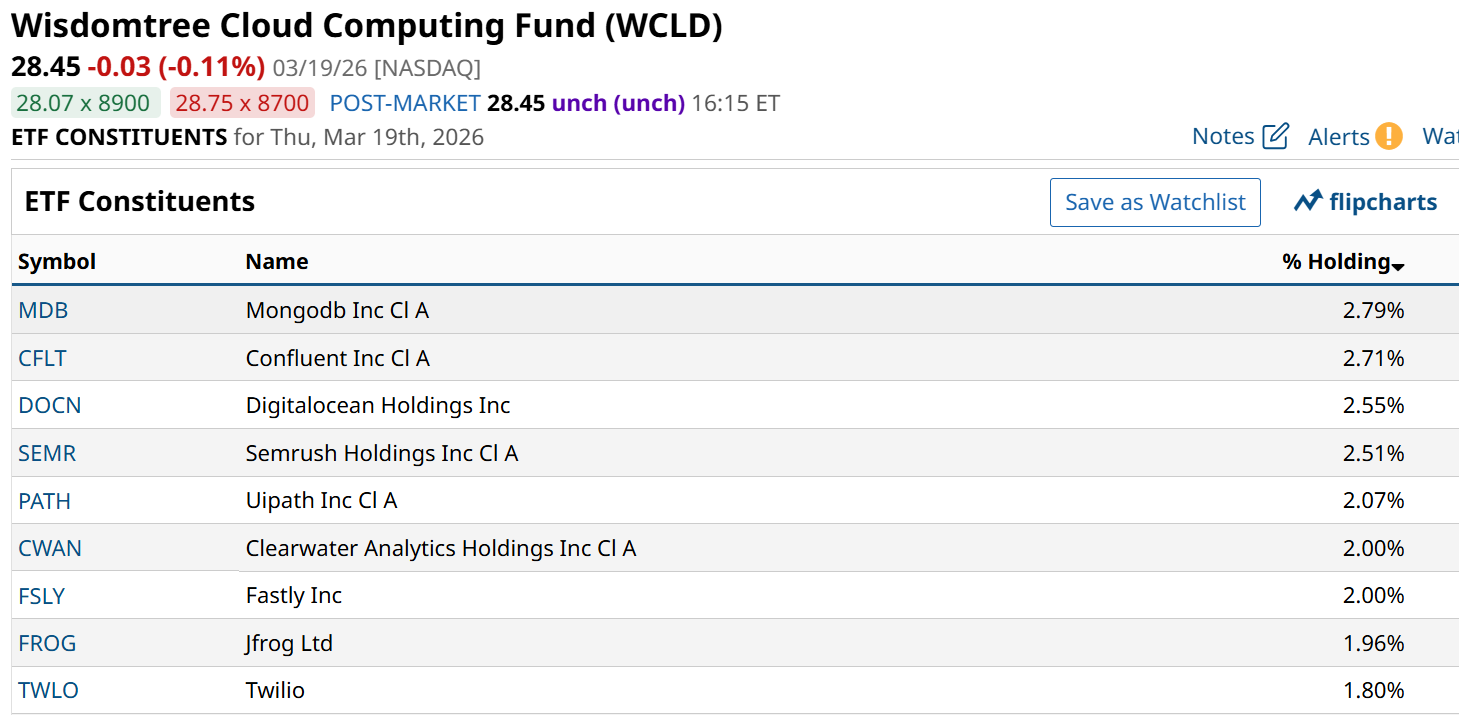
Here’s WCLD’s portfolio. No huge names here.
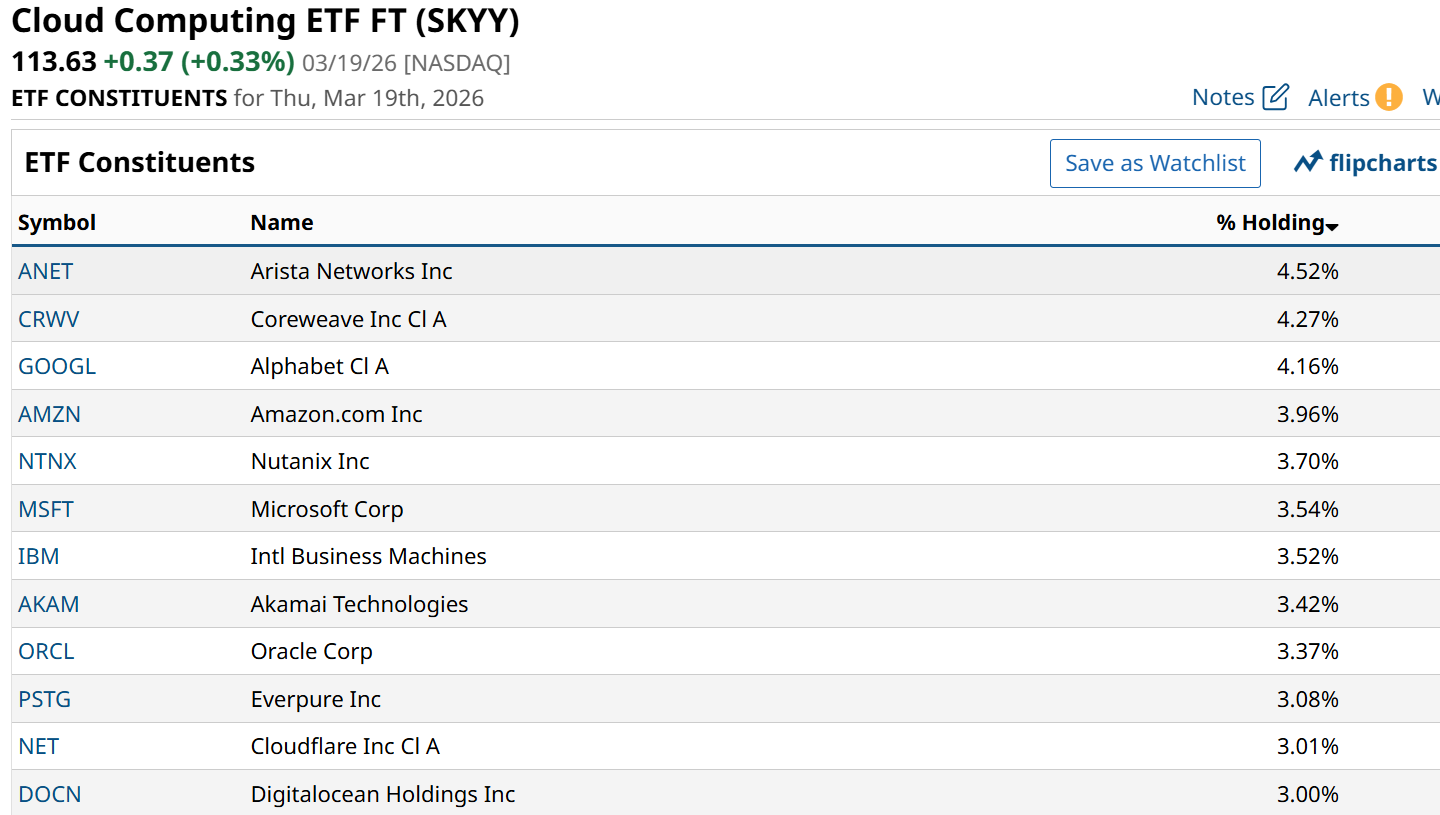
And this is SKYY, with 3 Magnificent 7 names among its top 6 holdings. Big difference.
The risk of disappointment is concentrated in the application layer. While the infrastructure is being built at record speed, many SaaS companies are struggling with a monetization gap. Enterprises are currently in a trough of disillusionment regarding generative AI, leading to a slowdown in new software seat growth.
Additionally, rising memory prices are beginning to dampen demand for end devices, which could lead to a broader IT spending slowdown later in the year. If the 10-year Treasury yield remains stubbornly high, the valuation multiples for high-growth cloud stocks will continue to face gravity.
The ROAR Score for SKYY turned yellow (neutral risk) for the first time since Jan. 12, when it turned red and stayed at that high-risk level. All the way through a 20% decline earlier this year.
This is not simply a case of a business model or a long-term belief in the AI trade. It is the increasing feeling among big money investors that there are a set of uncertainties which are too numerous to ignore. That could keep a lid on cloud computing ETFs for a while longer.
Rob Isbitts created the ROAR Score, based on his 40+ years of technical analysis experience. ROAR helps DIY investors manage risk and create their own portfolios. For Rob's written research, check out ETFYourself.com.
On the date of publication, Rob Isbitts did not have (either directly or indirectly) positions in any of the securities mentioned in this article. All information and data in this article is solely for informational purposes. For more information please view the Barchart Disclosure Policy here.
More news from Barchart
- Trading the Saas Apocalypse: Why Are Some Cloud Computing Stocks Bottoming While Others Remain in Freefall?
- The Strait of Hormuz Is Just a Distraction. The Real Story Is Bonds. What the Yield Curve Is Saying.
- The S&P 500 Is Rotting from the Inside Out: Here’s Why, and How to Trade It Here
- Barchart’s Top Stocks to Watch as Nvidia AI Data Centers Head to Outer Space