WOODSTOCK, GA / ACCESS Newswire / September 17, 2026 / A new physician signs the offer letter, packs up, and shows up ready to start the job everyone has been waiting to fill. Then nothing happens for three months.
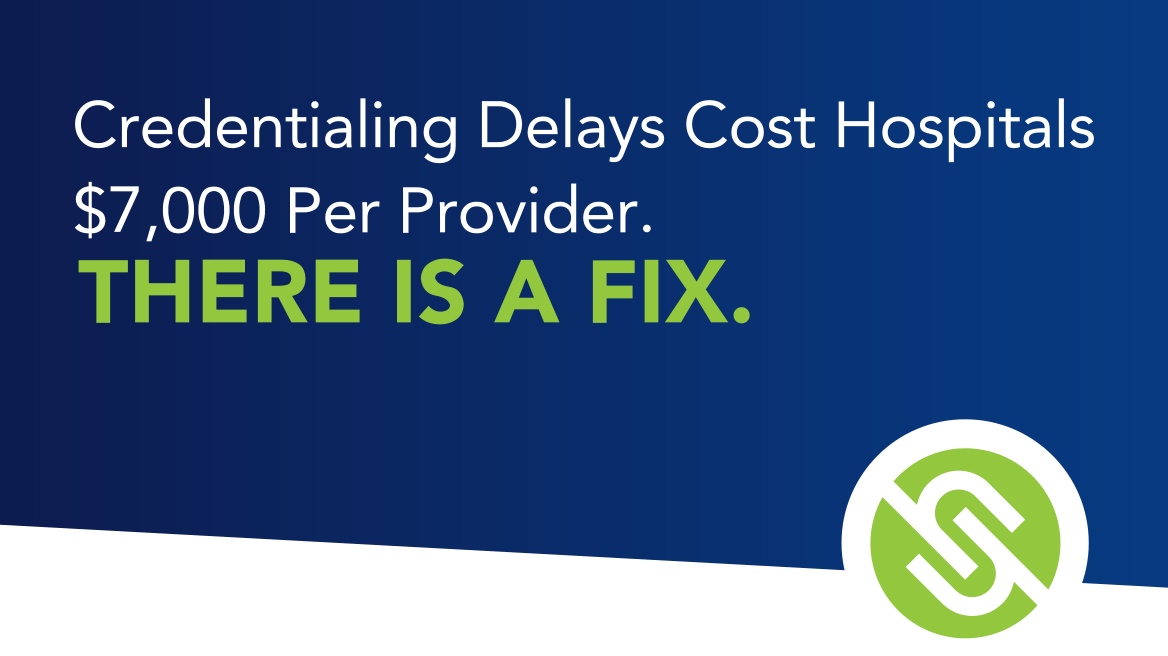
That gap between a provider's start date and the day they're actually cleared to bill has a price tag attached to it. Credentialing delays average 90 to 120 days per provider and cost hospitals between $7,000 and $8,000 in lost revenue during that window. For a hospital filling even two or three open positions a year, that's tens of thousands of dollars sitting in limbo before a single claim is ever submitted.
The problem isn't usually the provider. It's the process underneath them.
Where the Delays Actually Come From
More than 85% of credentialing applications contain errors or missing information, often buried inside paperwork that's been passed between HR, medical staff services, and payer portals more times than anyone can track. Nearly 40% of healthcare organizations still rely on manual processes for payer enrollment, and most use two or more disconnected software tools just to move one provider through the pipeline. None of this is bad luck. It's a system built on spreadsheets, email threads, and verification steps that depend on someone remembering to follow up.
The timing makes it worse. Staff turnover affected 57% of healthcare organizations in 2024, which means credentialing isn't an occasional task anymore. It's constant. Every departure triggers a new hire, and every new hire triggers another 90 to 120 day wait before that provider can generate revenue.
For rural and community hospitals already running on thin margins, with more than 700 considered financially vulnerable or at risk of closure, a few months of delayed reimbursement per provider isn't a rounding error. It's revenue the organization needed months ago.
A Different Way to Credential
GROW's Credentialing Studio was built around a simple idea: credentialing shouldn't depend on someone remembering to check a spreadsheet. The Studio replaces manual back-and-forth with structured workflows and continuous, automated monitoring, giving teams direct visibility into where each application stands so providers move from hire date to billing date faster.
Compliance benefits too. Rather than running exclusion checks once a year against federal and state lists, GROW monitors continuously and surfaces risk the moment it appears, not months later when an auditor happens to ask. Medical staff services teams spend less time chasing missing documents one email at a time and more time on the judgment calls the role was actually built for.
Hospitals using an operational platform like GROW report meaningful gains here, including a 76% reduction in administrative work tied to these workflows. Less chasing, less duplicate data entry, and a process that moves on its own instead of waiting on a person to push it forward.
Why This Matters Beyond the Dollar Figure
Faster credentialing means new providers start generating revenue sooner, and it means existing staff aren't quietly absorbing extra workload while a colleague waits to get cleared. It also means compliance and medical staff teams spend their hours on the parts of the job that require expertise, not paperwork that requires patience.
GROW is part of SlicedHealth broader operational platform, built to give small and mid-sized hospitals the same clarity and infrastructure that's historically been reserved for much larger systems, without six-figure software costs or a long implementation runway. Most organizations live within 24 hours of sending over their contracts and credentialing files, and the Credentialing Studio works alongside other Studios covering contracts, compliance, and purchasing, or it can stand on its own.
If your hospital is still absorbing $7,000 to $8,000 in lost revenue for every provider waiting on credentialing, it may be worth a closer look at what's actually slowing the process down.
Schedule a consultation with the SlicedHealth team to see how the Credentialing Studio fits into your organization.
About SlicedHealth
SlicedHealth has always solved one version of the same problem: hospitals cannot protect revenue they cannot see. Grounded in hands-on support and built on a rules-based foundation, our platform equips hospital leadership with the tools they need to elevate contract performance, streamline operations without additional staff, and maximize revenue protection. Our AI-powered engine provides detailed, easy-to-use insights for contract modeling, variance analysis, administrative tasks, and operational workflows. From claim estimation and business intelligence to federal compliance and operational efficiency, SlicedHealth helps all hospital leaders protect every dollar earned. Learn more at https://slicedhealth.com
Woodstock, Georgia
(888) 290-1298
info@SlicedHealth.com
https://slicedhealth.com/contact/
SOURCE: SlicedHealth
View the original press release on ACCESS Newswire