SAINT PETERSBURG, RU / ACCESS Newswire / May 11, 2026 / Marquis Who's Who is proud to honor and interview Larry Domash, president, founder and chief executive officer of Curve Publishing and Curve Asset Management, for a career that has helped redefine the relationship between data, discipline and decision-making in modern markets. In a Marquis Who's Who interview, Mr. Domash emerges not simply as a veteran portfolio manager, but as a lifelong quantitative thinker whose work has culminated in the creation of the G-255, a systematic trading model built to remove bias and rely on objective information.
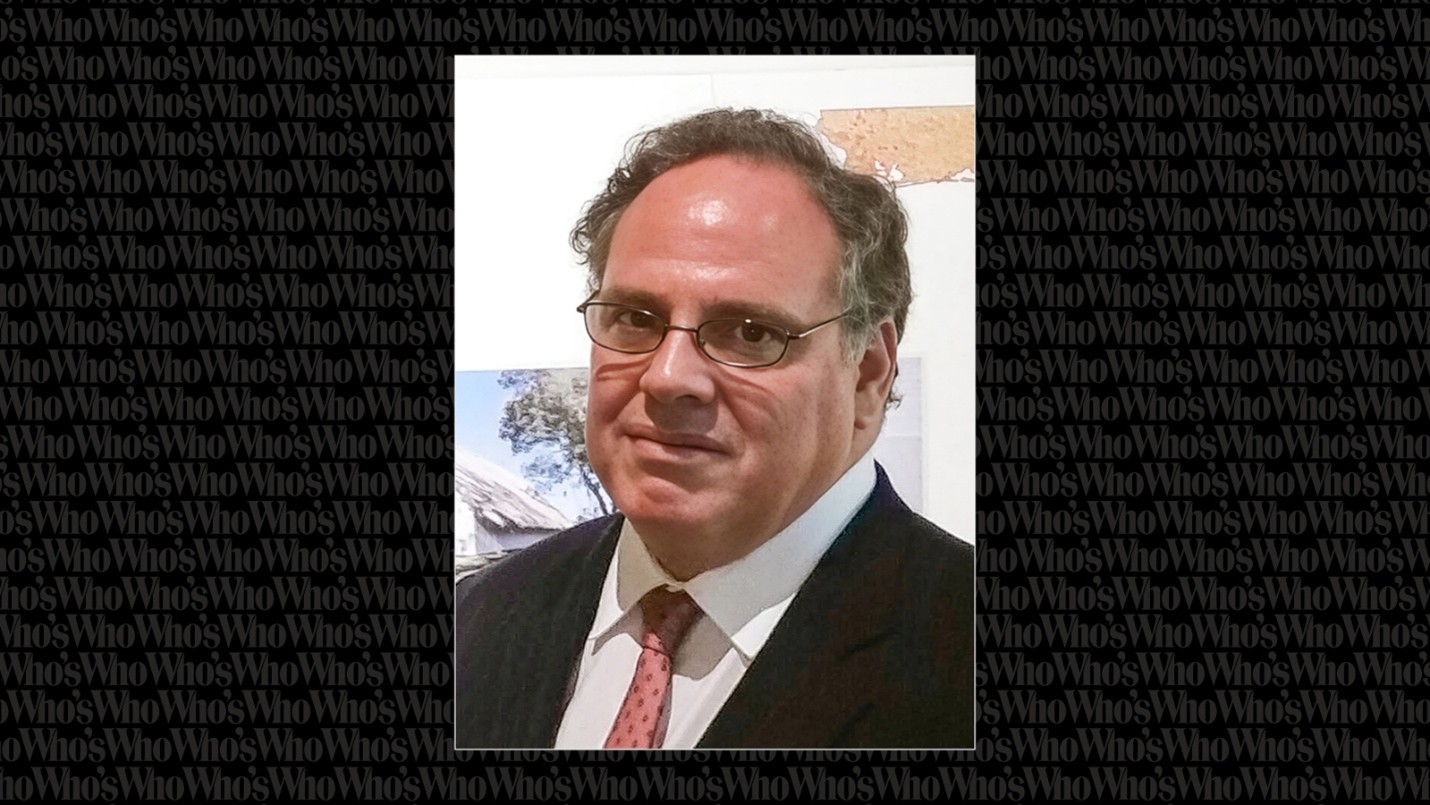
Mr. Domash considers creating the G-255 trading model to be his greatest accomplishment. Proprietary to him, the model stands at the center of his professional legacy.
"Larry Domash exemplifies the analytical rigor and forward-thinking leadership Marquis Who's Who is proud to recognize," said the Marquis Who's Who editorial team. "His career has bridged research, trading, management and innovation in a way that has helped redefine how professionals interpret data and act on market information."
Built around the 255 largest and most liquid corporate issuers in the world, the G-255 is a purely quantitative, stochastic system designed to generate long and short trade indicators from one source alone: measurable reality. Its signals are derived from issuer cash-flow characteristics, historical shareholder return patterns and prior trading levels, with no forecasts, no opinions and no narrative overlays. For Mr. Domash, that is the point. "The G-255 is not just another model," he explains. "It is the practical result of everything I've learned about removing bias and letting objective, publicly available data drive repeatable trade indicators."
The scale of the system reflects the scale of the problem it is built to solve. According to Mr. Domash, the G-255 covers $51.7 trillion in equity market capitalization and centers on issuers with at least $15 billion in readily tradable debt, primarily in U.S. dollars, British pounds and euros. The result is a daily framework that identifies sector-level entry and exit trade levels where quantitative alignment is strongest or weakest, giving market participants a disciplined way to evaluate both equity and credit opportunities. He believes that concentrating on the world's largest, most liquid issuers is essential because these are the companies that truly move global markets.
Mr. Domash can trace the creation of the G-255 back through a career spanning more than four decades. He began in equities and bankruptcy screening, then moved into equity and credit research, portfolio management, proprietary trading and leadership of major investment organizations.
Over more than 25 years as a portfolio manager, Mr. Domash executed trillions of dollars in systematic equity and credit trades across global markets, all while refining the core principles that would later define the G-255. He credits those years of hands-on execution, combined with 44 years of watching information processing evolve in financial markets, with teaching him the value of one consistent set of rules applied across both corporate debt and equities.
Mr. Domash does not define success by title alone. He describes himself as "a pure quant at heart," intensely focused, data-obsessed and deeply skeptical of stories unsupported by evidence. He acknowledges that this rigor has led to differences of opinion over the years, but he remains unwavering in his belief that transparent, repeatable, mathematics-driven processes outperform subjective storytelling over time. "Never compromise on objectivity," he says. "Once you start bending your process to fit a story, you've already lost the edge."
Mr. Domash's advice to others entering the field is equally direct: anchor everything to real issuer fundamentals and price history, eliminate subjectivity wherever possible and treat outputs as trade indicators rather than predictions. "Trust data and rigorous back-testing far more than consensus or narrative," he adds. In his words, the market rewards clarity, discipline and consistency more than cleverness.
Mr. Domash attributes much of his success to failure, explaining that setbacks across multiple firms expanded his horizons and strengthened his commitment to his own approach. In his Marquis Who's Who interview he encourages others to be "obsessively curious about how things actually work, not how people say they work." Most of all, he urges humility in the face of the market. "It's always smarter than any individual."
Media Contact
Marquis Who's Who
Uniondale, NY
(844) 394-6946
info@marquisww.com
www.marquiswhoswho.com
About Marquis Who's Who®
Since 1899, when A. N. Marquis printed the First Edition of Who's Who in America®, Marquis Who's Who® has chronicled the lives of the most accomplished individuals and innovators from every significant field, including politics, business, medicine, law, education, art, religion and entertainment. Who's Who in America® remains an essential biographical source for thousands of researchers, journalists, librarians and executive search firms worldwide. The suite of Marquis® publications can be viewed at the official Marquis Who's Who® website, www.marquiswhoswho.com.
SOURCE: Marquis Who's Who
View the original press release on ACCESS Newswire